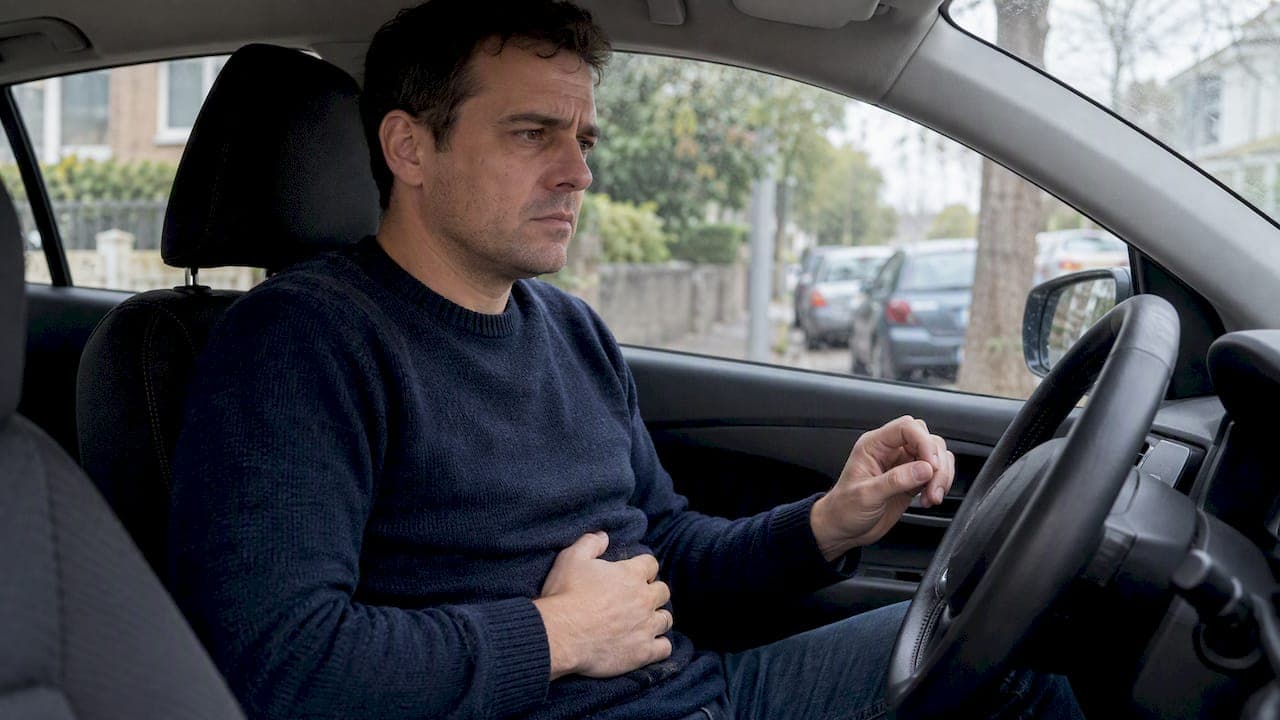
You are standing in the kitchen at 9 p.m. Your chest is tight. Your hand is already moving toward the cabinet, the pack, or the vape. You told yourself this time would be different. It was not.
That moment is not a character flaw. It is a fast, automatic alarm. NLP (neuro-linguistic programming) techniques try to change how your mind responds to that alarm, and they can be a useful tool. The research behind NLP is thin, though, and you deserve to hear that before you spend money. This article explains what NLP does with a craving, what the evidence says, and how clinical hypnotherapy fits in.
We will use a simple structure here, the PAS framework: Problem, Agitate, Solution. First the problem, then why it keeps going, then what actually helps.
TL;DR
- A craving is a body signal, often paired with anxiety. It is not a decision, and willpower alone rarely stops it.
- NLP techniques such as the swish pattern aim to change how a trigger looks, sounds and feels in your mind so the urge loses grip.
- A systematic review of NLP studies found little evidence for health outcomes, mostly because the studies were weak, not because NLP was proven useless.
- Cravings are time-limited. Learning to watch one rise and fall is a skill with better research behind it.
- We combine NLP methods with clinical hypnotherapy over Zoom for adults across the U.S.
Table of Contents
- The problem: a craving that feels like an emergency
- Why it keeps happening
- What NLP actually does with a craving
- What the research says, honestly
- Agitate: why DIY phrase lists rarely hold
- Solution: change the response, not just the behavior
- A worked example
- Perspective: what we see in practice
- Cravings in specific habits
- What to try on your own tonight
- Working with us
- FAQ
- Sources
The problem: a craving that feels like an emergency
Most people describe a craving in body terms. A knot in the stomach. Shallow breathing. Restless hands. A sense that something is wrong and only one thing will fix it.
That is close to what the fight-or-flight response feels like. The amygdala flags a threat, the body mobilizes, and the habit you learned long ago offers relief in about thirty seconds. Your brain remembers that relief. Next time, it reaches for it faster.
Researchers describe cravings as interoceptive signals, meaning physical sensations your brain interprets as a need. In the triadic model of addiction, three systems interact:
- the amygdala and striatum, which run automatic habits,
- the prefrontal cortex, which handles self-regulation and planning,
- the insula, which reads body signals and makes an urge feel like a necessity.
When the automatic system is loud and the prefrontal system is tired or stressed, you act before you think. That is why "just stop" fails so often. You are arguing with a loop that runs below conscious thought.
Why it keeps happening
Anxiety and cravings feed each other. You feel tense, the habit calms you, and the habit becomes your main way to exit tension. Then you feel guilty, which adds tension.
There is a second trap. If you see the urge as a permanent threat, you fear it. Fear activates the same alarm system, and the urge gets louder. Clinicians who teach urge surfing make this point: the signal peaks and fades when you stop treating it as a command. People who believe it will never end stay stuck in the fear.
And there is a third problem. Many approaches try to remove the urge. The research on prefrontal control suggests a more realistic goal: build the capacity to stay regulated while the urge is present. You do not need the craving to vanish. You need it to stop steering.

What NLP actually does with a craving
NLP is a set of mental techniques built around how you represent experience internally. It works with the pictures, sounds and feelings attached to a trigger. Here are three common ones.
The swish pattern
You picture the trigger, such as the cookie jar or the first cigarette after coffee. Then you build a second image of the person you want to be. The technique quickly swaps the first picture for the second, repeated many times, so the old cue starts pulling you toward the new image. Practitioners use it for sugar and snacking habits in particular.
Submodality shifts
You notice how the craving appears in your mind. Is the image bright and close? Is the voice loud? You then change those qualities: dim it, push it back, turn the volume down. The idea is that a smaller, farther away image carries less pull.
Dissociation and anchoring
You watch the craving as if from across the room. You also build a calm physical cue, like pressing thumb and finger together while recalling a steady moment, so you have something to reach for other than the habit.
None of these are magic. They are structured ways to interrupt a loop and practice a different response. Done once at home from a list of phrases, they tend to fade. Done with a trained person, repeated and tied to your actual triggers, they have more chance of sticking.

What the research says, honestly
This part matters, so here it is plainly.
A systematic review of NLP and health outcomes looked at 10 experimental studies, five of them randomized trials, published up to 2012. It found little evidence that NLP improves outcomes such as anxiety or substance misuse. The authors pointed to high or unclear risk of bias. That means the studies were not good enough to say either way. It is not proof that NLP fails. It is also not proof that it works.
There is stronger evidence for related ideas:
- A 2025 meta-analysis of 24 controlled trials with 1,920 participants found that mindfulness-based interventions reduced food craving intensity (Hedges' g = 0.28). Decentering, which means seeing a thought or urge as an event rather than a fact, was the most effective component. Craving frequency did not change significantly. In plain terms: the urges still show up, but they hit less hard.
- Mindfulness training is thought to work at the attention, appraisal and emotion interface, loosening the link between stress and the habitual response.
On hypnosis specifically, the picture is mixed. For smoking, a Cochrane review pooled 14 studies and 1,926 participants. The NIH's NCCIH summary says there is insufficient evidence that hypnotherapy beats other behavioral support for quitting smoking. The same page describes a 2023 trial of 378 veterans in which hypnotherapy reduced the risk of daily cannabis use by 82% at six months compared with an education control group. So results vary by behavior, and no one should promise you a guaranteed outcome.
What we take from all this: the mechanism that has the best support is changing your relationship to the urge, not fighting it. The NLP techniques above can be one way to practice that. They are not a proven standalone cure.
Agitate: why DIY phrase lists rarely hold
Search results for this topic are full of lists of calming phrases to repeat when a craving hits. Repeating a phrase can help you pause. That pause is worth something.
But a phrase works at the level of conscious thought. The craving loop starts earlier, in body signals and learned associations. If you say a calm sentence while your chest is tight and your amygdala is on alert, the sentence often loses. Then you decide you failed again. That belief becomes one more trigger.
The pattern we hear from adults in their first consultation goes like this: they have tried apps, willpower, nicotine products or diets, and each worked for a while. The anxiety underneath never got addressed, so the habit came back as soon as stress did.
Solution: change the response, not just the behavior
A workable plan has four parts.
- Calm the nervous system first. Slow exhales, longer than your inhales, tell the body the threat is over. This lowers the volume before you try anything clever.
- Name the sensation. Where do you feel it? Throat, stomach, hands? Rate it from 1 to 10.
- Watch it rise and fall. Most cravings crest and ease within minutes. Track the number. Seeing it drop teaches your brain the signal is temporary.
- Rehearse the replacement. This is where NLP-style imagery and hypnosis come in. You practice the new response in a relaxed state until it is the easier path.
Where hypnosis fits
Hypnosis is a state of focused, relaxed attention. In that state, the critical, worried part of your thinking quiets down, and you can work with imagery and suggestion more directly. In a session we use guided imagery, NLP methods and hypnotic suggestion to rehearse calm responses to your specific triggers: the 3 p.m. slump, the argument with your partner, the drive home.
The goal is to link the trigger to a different body response. Not suppression. Not a promise that you will never feel an urge. A practiced alternative that fires before the old loop does.
A worked example
Say your trigger is the drive home after a hard day, and the habit is stopping for fast food. Here is how a session plan might look.
- Map the loop. Trigger: traffic and a replaying conversation from work. Body: jaw clenches, stomach tightens. Habit: drive-through. Payoff: five minutes of relief.
- Relax. Guided breathing and progressive relaxation bring your body out of alert mode.
- Rework the image. Using a swish-style technique, the drive-through image is replaced with an image of you arriving home with your shoulders down.
- Rehearse. You imagine the traffic, feel the first tightness, and run the new response: slow exhale, name the sensation, let it peak.
- Practice between sessions. You use the same breathing and rating steps in real life and note what happens.
Notice what is missing: no claim that you will never want the food again. The target is that wanting no longer decides for you.
Perspective: what we see in practice
We work with adults who come in for anxiety, smoking and vaping, weight, and stuck patterns, and the craving is almost never the whole story. It is the visible part. Under it sits a stress response that learned a shortcut.
That is why we do not treat NLP as a trick. We use it as one tool inside clinical hypnotherapy, alongside relaxation, imagery and plain education about how your nervous system works. When someone understands that the craving is a body signal with a beginning, a peak and an end, the fear drops. When the fear drops, the urge usually gets smaller on its own.
We also tell clients what we cannot promise. The evidence for NLP alone is limited, the evidence for hypnosis varies by behavior, and nobody can guarantee a result. What we can promise is a structured plan, built around your triggers, delivered one on one.
— Kirk
Cravings in specific habits
Smoking and vaping
Nicotine cravings combine a chemical pull with a strong habit loop: coffee, driving, stress, social breaks. The habit portion is where imagery and hypnosis can help. If you are curious about the numbers, we wrote about what studies show on smoking cessation hypnosis success rates and how many sessions people typically plan for. For vapers, there is a guide to stopping vaping with hypnosis, and for smokeless tobacco, a chewing tobacco quit plan.
Once you quit, your mouth may be the next thing you want to take care of. A dental guide on whitening teeth after smoking explains why a cleaning and assessment comes first. Some people find a concrete reward like that helps motivation.
Food and emotional eating
Food cravings often spike under stress, boredom or tiredness. The meta-analysis above is encouraging here: stepping back from the urge reduced its intensity. Hypnotherapy for weight is built on that same idea, and you can read more on our weight loss hypnotherapy page.
Anxiety as the engine
If your cravings spike when you feel panicky or on edge, treating the anxiety is often the real work. Our online hypnotherapy for anxiety focuses on calming the alarm response so you are not reaching for a habit to turn it off.
What to try on your own tonight
These are low-risk and take five minutes. They are not a treatment.
- When the urge hits, set a timer for ten minutes.
- Breathe in for four counts, out for six. Do this ten times.
- Rate the craving from 1 to 10. Write the number down.
- Check again at minute five and minute ten.
- Note the drop. Next time, you will have proof it passes.
If you notice panic attacks, chest pain, or you are using alcohol or drugs heavily, talk to your doctor or a licensed mental health professional first. Stopping some substances suddenly, alcohol in particular, can be medically risky and should be supervised.
Working with us
We offer online clinical hypnotherapy over Zoom with Kirk Hoffman, a Certified Clinical Hypnotherapist, for clients across the United States. Sessions cover anxiety, smoking and vaping, weight, and subconscious blocks. You can start with a free consultation to ask questions and see whether it fits. Visit our services page or go straight to booking an appointment.
FAQ
Does NLP work for cravings?
The evidence is limited. A review of 10 NLP studies found little proof of benefit for anxiety or substance misuse, though the studies were low quality. Some people find techniques like the swish pattern useful as part of a broader plan.
How do I rewire my brain to end food cravings?
You do not erase the craving. You weaken its automatic hold and strengthen the prefrontal control that lets you choose. Mindfulness-based approaches reduce craving intensity, and hypnotherapy rehearses new responses to your triggers.
How long does a craving last?
Most urges rise, peak and fade. Timing varies by person and substance, so track your own with a 1 to 10 rating. Seeing the number fall is one of the most useful things you can learn.
Can hypnosis help with cravings during recovery?
It may help some people as a supportive tool, and results differ by behavior. It should not replace medical care or a treatment program, especially for alcohol or opioids. Tell your doctor or counselor you are considering it.
Sources
- Neurolinguistic programming: a systematic review of the effects on health outcomes
- Effects of mindfulness-based interventions on food craving in adults
- A Triadic Neurocognitive Approach to Addiction for Clinical Interventions
- Smartphone-Based, Momentary Intervention for Alcohol Cravings
- Mindfulness Training Targets Neurocognitive Mechanisms of Addiction
- Hypnotherapy for smoking cessation (Cochrane review)
- Psychological and Physical Approaches for Substance Use Disorders, NCCIH
- Teeth whitening for smokers