Yes, hypnosis can reduce sugar cravings for many people, especially when paired with behavior changes and reinforcement. It works best on cravings tied to stress or habit rather than pure biology, and results depend on how responsive you are to hypnotic suggestion. Professional sessions and structured self-hypnosis both show measurable benefit, though neither erases cravings overnight.
TL;DR:
- Hypnosis can help reduce sugar cravings linked to stress and habit, but its effectiveness varies based on individual responsiveness and reinforcement.
- Laboratory studies show hypnosis can temporarily influence food choices toward lower-calorie options, especially when combined with other behavior changes.
- Professional hypnotherapy tends to yield faster and more personalized results, but self-hypnosis recordings are suitable for mild, situational cravings.
- Most clients notice changes within three to six sessions, with reinforcement and daily practice crucial for maintaining long-term benefits.
- Hypnosis is not a standalone treatment for severe eating disorders or mental health issues, requiring integration into broader clinical care.
Table of Contents
- How Hypnosis Changes Sugar Cravings: What's Actually Happening
- What the Research Actually Shows About Hypnosis and Cravings
- Professional Hypnotherapy or a Self-Hypnosis Recording: Which Fits You?
- How Many Sessions Does It Take to See a Change?
- Daily Habits That Make Hypnosis Actually Stick
- When Hypnosis Isn't Enough on Its Own
- What I See in Session Work With Cravings
- How Hypnotic Transformations Can Help You Break the Pattern
- Sources
How Hypnosis Changes Sugar Cravings: What's Actually Happening
Sugar cravings often start in the nervous system, not the stomach. Stress raises cortisol, your body looks for fast relief, and sugar triggers a dopamine response that feels calming in the moment. Research on reward-related eating shows this pattern can become compulsive-like in people who lean on sweets to self-soothe, which is why willpower alone rarely fixes it.
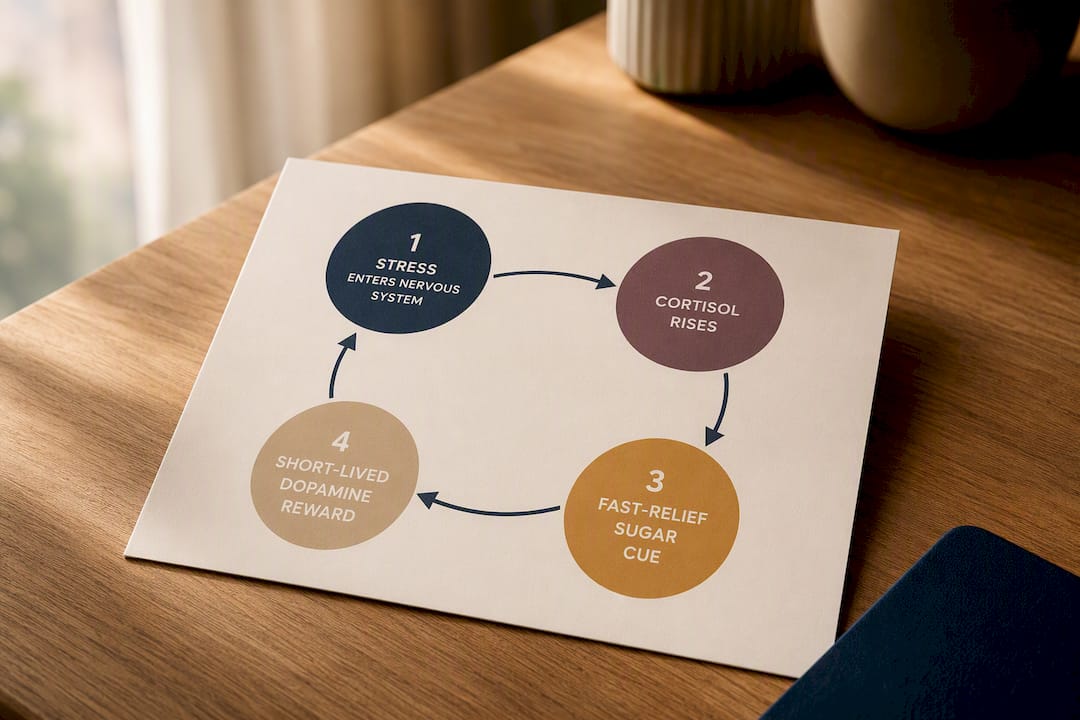
Hypnosis works by talking directly to the part of your brain running that habit loop. A hypnotherapist guides you into a relaxed, focused state, then plants specific suggestions your subconscious mind can act on later, even when you're not thinking about it consciously. That's a posthypnotic suggestion, and it's the mechanism doing most of the work.
A typical session includes:
- Induction: guided relaxation that lowers nervous system arousal
- Imagery work: picturing sugar losing its pull, or picturing yourself calm without needing it
- Anchoring: linking a physical cue (like a hand gesture) to a feeling of control
- Cue-control training: rehearsing calm responses to known triggers, like the office candy bowl
- Homework: short daily self-hypnosis to reinforce the suggestion between sessions
What the Research Actually Shows About Hypnosis and Cravings
Controlled studies back up part of the claim, and they're honest about the part they can't prove yet. In lab studies using posthypnotic suggestions to shift food preferences, participants chose healthier, lower-calorie options more often when the suggestion was active than when it wasn't. Interestingly, people didn't always report liking sweets less. The suggestion changed their choices before it changed their stated preferences, which points to hypnosis working on decision pathways you don't consciously control.
What the studies actually found: Posthypnotic suggestions increased selection of low-calorie foods in controlled trials, and the effect showed some persistence over repeated testing, though not permanently.
The limits matter too:
- Sample sizes in these trials are small
- Participants are often screened for being at least moderately responsive to hypnosis, so real-world results vary more than lab results suggest
- Effects can fade without reinforcement
The practical takeaway: hypnosis is a legitimate tool, not a guarantee. It performs best stacked with other behavior change. Meta-analytic reviews found hypnosis combined with cognitive-behavioral therapy produced better weight-related outcomes than CBT alone in several trials. Pair the mechanism, don't rely on it solo.
Professional Hypnotherapy or a Self-Hypnosis Recording: Which Fits You?
Both formats work. The right choice depends on how complicated your cravings are.
One-on-one sessions, whether in person or online with a certified clinician, let a hypnotherapist target your specific triggers. If your sugar cravings show up mostly at 9 p.m. after a stressful workday, or spike when you're anxious about a specific situation, a clinician can build suggestions around that exact pattern. Recordings can't do that. They're built for the average listener, not your nervous system.
Recordings and apps win on cost and convenience. They're a reasonable starting point if your cravings are mild and situational, not tied to deeper anxiety or years of failed diet attempts.
Before trusting a recording, check for:
- A named, credentialed author (certified hypnotherapist, not an anonymous voice)
- A script focused on the actual mechanism (subconscious revaluation, not vague relaxation)
- Any stated basis in clinical practice or research, even briefly
If you've tried recordings and nothing changed after a few weeks, that's usually the signal to book a real session instead of buying a different app.
How Many Sessions Does It Take to See a Change?
Clinical practice generally runs 4 to 10 sessions, with many clients noticing a shift by session 3 to 6. A realistic 6-week plan looks like this:
- Week 1: Intake, where the hypnotherapist identifies your specific triggers and hypnotizability
- Weeks 2 to 4: Three core sessions building and reinforcing suggestions
- Week 5: A reinforcement session addressing anything that slipped
- Week 6 and beyond: Maintenance, mostly self-hypnosis practice at home
Reinforcement is what makes the change stick. Clinical reports suggest early behavioral shifts often show up fast, but durable change needs repetition, the same way a new gym habit needs more than one workout to hold.
Pro Tip: Record your own five-minute self-hypnosis audio after your third session, using your therapist's exact wording. Hearing it in your own voice between sessions reinforces the suggestion faster than a generic recording ever will.
Daily Habits That Make Hypnosis Actually Stick
Hypnosis plants the suggestion. What you do between sessions decides whether it survives contact with a stressful Tuesday.
- Practice a 5-minute self-hypnosis routine daily, same time, same place, so your brain treats it as a habit, not a chore
- Reduce obvious exposure: don't keep trigger foods in the house for the first few weeks
- Use a 60-second breathing reset (four counts in, six counts out) when a craving hits, since that alone can lower the stress response driving the craving
- Track frequency, not perfection: count how many days you didn't reach for sugar, not how many days were flawless
Small, sustainable habit changes around food environment tend to outlast dramatic all-or-nothing plans. If sugary drinks are your main trigger, a structured plan to cut soda pairs well with hypnosis homework, since it gives you a concrete daily target instead of just "trying to eat less sugar."
Pro Tip: Pick one specific food or drink to target first, not "sugar" in general. Suggestions land better on a specific target your subconscious can picture, like soda or the afternoon candy bowl, than on an abstract category.
When Hypnosis Isn't Enough on Its Own
Hypnosis is not the right standalone tool for everyone. If you're dealing with severe binge eating, cycling rapidly between weight loss and regain, suicidal thoughts, or symptoms of psychosis, hypnosis needs to sit inside a broader clinical treatment plan, not replace one.
Hypnotherapy pairs well with CBT, medical care, or ADHD treatment when eating is tangled up with those conditions. If any of these red flags apply to you, get a clinical assessment before starting hypnosis so the right level of care is in place first. Anxiety-driven cravings specifically respond well to combined anxiety and hypnotherapy support, since the craving often is the anxiety response in disguise.
What I See in Session Work With Cravings
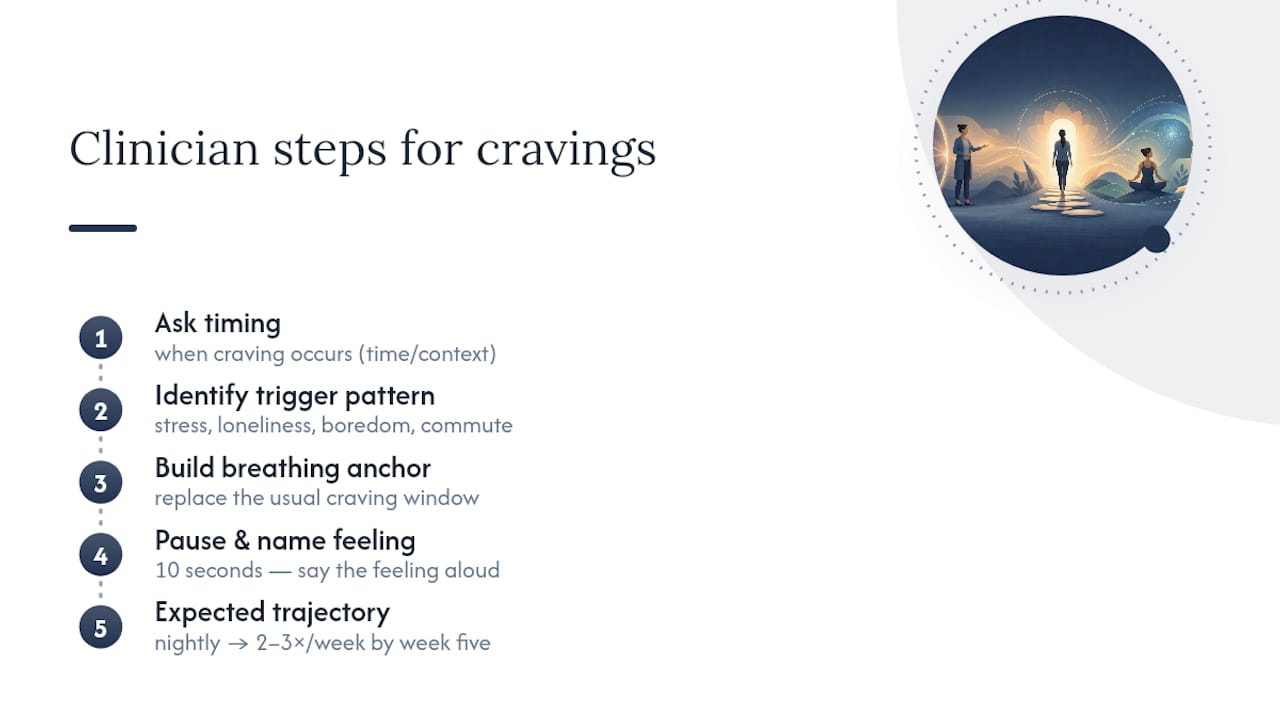
Most intake sessions start the same way. I ask when the craving hits, not just what food it's for. That answer almost always points to a nervous system pattern: a stressful commute, a lonely evening, a boring afternoon at a desk. Sugar becomes the fastest available exit from an uncomfortable feeling.
One client came in reaching for sweets every night around 8 p.m., tied directly to unwinding from work stress. By the third session, she'd replaced that window with a breathing anchor we built together, and her self-reported cravings dropped from nightly to two or three times a week by week five. That's a typical trajectory, not an outlier.
Here's something you can try tonight: next time a craving hits, pause for ten seconds and name the feeling underneath it out loud. Bored, tired, anxious, lonely. Cravings driven by emotion tend to lose some intensity the moment you name what's actually happening.
— Kirk
How Hypnotic Transformations Can Help You Break the Pattern
Online clinical hypnotherapy can help address sugar cravings and the anxiety that often drives them, led by a Certified Clinical Hypnotherapist. Sessions run over Zoom, allowing one-on-one work targeting your specific triggers remotely.
Sessions are built around intake findings and include multi-session plans with reinforcement to help suggestions hold. Homework between sessions includes short daily self-hypnosis practice starting early in the plan.
If sugar cravings are tangled up with stress or anxiety, that's worth naming during your first conversation. Book a consultation to talk through your specific pattern and find out what a realistic session plan looks like for you.
Sources
For deeper reading on the research behind this article, see the posthypnotic suggestion food preference trial, the hypnosis and CBT weight outcomes review, and the CDC's added sugars data for context on why cutting sugar matters.
This article is general information, not a substitute for advice from a qualified doctor. Consult a qualified healthcare professional about your own circumstances before acting on anything here.
- The Nature and Persistence of Posthypnotic Suggestions' Effects on Food Preferences
- PubMed entry for hypnosis plus CBT weight outcomes (meta-analytic sources)