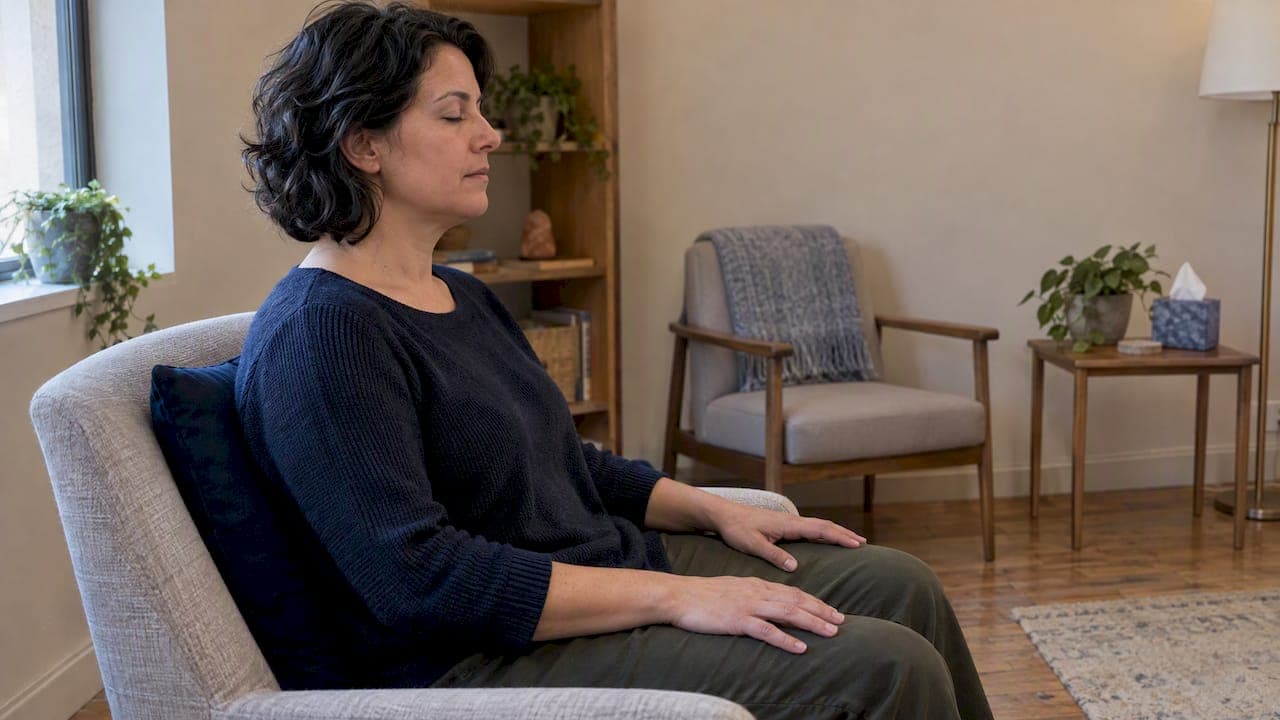
Yes, guided imagery can reduce anxiety, and a 5–10 minute nature-based visualization is a practical first step you can try today. Systematic reviews of randomized trials support it, and longer sessions tended to show larger effects. Stop if you feel worse, and seek a clinician's help if you live with trauma or psychosis.
TL;DR:
- The 2025 review of 2,090 patients found sessions longer than 20 minutes worked better for anxiety; extend practice gradually after short sessions feel easy.
- One trial found both nature and urban scenes reduced state anxiety, but nature imagery produced a larger reduction; choose a scene that feels calming.
- People with PTSD, active psychosis, hallucinations, or severe dissociation should seek clinician guidance before practicing, and anyone experiencing flashbacks or intense emotion should stop.
- Rate anxiety from 0 to 10 before and after each session to track your personal response, since study results vary across groups and protocols.
Table of Contents
- What guided imagery is and how it calms an anxious body
- What the research shows about guided imagery for anxiety
- A 5–10 minute guided imagery script for anxiety
- How often to practice and what to do when it feels hard
- When guided imagery alone is not enough
- When clinical hypnotherapy makes more sense than recordings
- A note from Kirk, Certified Clinical Hypnotherapist
- Ready to stop managing anxiety and start changing it?
- FAQ
- Sources
What guided imagery is and how it calms an anxious body
Guided imagery means using a voice or script to walk your mind through sensory scenes: what you see, hear, smell and feel. Vivid imagery can feel absorbing, though people respond to it differently. That matters when anxiety has your nervous system stuck in fight-or-flight, with a racing heart and tight chest.
The Veterans Health Administration describes guided imagery as a technique that can induce relaxation and alter physiological stress responses such as heart rate and cortisol. It may help you relax and alter physiological stress responses.
You will run into a few common forms:
- Safe-place imagery: you build a calm spot, real or invented, and return to it.
- Nature-based imagery: beaches, forests and meadows, with sensory detail.
- Goal-oriented imagery: you rehearse handling a feared situation calmly.
- Recordings vs. clinician-led: a recording is the same for everyone, while a clinician adapts the scene to you as you respond.
What the research shows about guided imagery for anxiety
A 2025 systematic review of randomized controlled trials covering 2,090 patients found guided imagery efficacious for reducing psychological distress, with sessions longer than 20 minutes working better for anxiety than shorter ones.
Anxiety reduction SMD = -0.91, 95% CI: -1.23 to -0.58, P < 0.001, as reported in that 2025 review. A negative value here means anxiety went down, and the interval stays clear of zero.
Other work points the same way. A review of perioperative anxiety found consistent benefits before surgery, though protocols varied in content, length and frequency. In a trial comparing nature and urban imagery, both reduced state anxiety, and the nature scenes reduced it more. A 2025 Bayesian meta-analysis in athletes suggested 45-minute weekly sessions over 100 days, with an anxiety effect of SMD = 0.52 (95% CI: 0.11 to 0.96).
Keep the limits in view. Studies differ in design, some are small, and the groups range from surgical patients to athletes. Your results may differ.

A 5–10 minute guided imagery script for anxiety
Set up first. Sit or lie somewhere comfortable and quiet. Headphones help. Take one slow breath in, and let it out longer than it went in. That breath becomes your cue.
- Close your eyes. Breathe in for four counts, out for six. Repeat three times.
- Picture yourself at the edge of a quiet forest path in soft morning light. Notice the colors of the leaves.
- Listen. Hear birdsong, wind in the branches, your footsteps on soft ground.
- Smell the air. Notice damp earth and pine.
- Feel the path under your feet and a light breeze on your skin. Walk slowly.
- Find a place to sit, a log or a flat stone. Sit and let your weight settle.
- Scan your body from forehead to feet. Where you find tension, imagine it softening like warm wax.
- Stay here for a few minutes. If a worry arrives, watch it drift past like a leaf on a stream.
- Count backward from five. Feel the room around you and wiggle your fingers and toes.
- Open your eyes slowly.
Pro Tip: Use the same breath cue at the start every time. Over a few weeks, your nervous system learns to associate it with calm.
To close, press your feet into the floor, name three things you can see, and stretch or jot one line in a journal. If strong emotion rises, stop and open your eyes. Our post on quick practice and safe scripts has more scripts and safety checks.
How often to practice and what to do when it feels hard
Start with short sessions at a frequency that feels manageable. Because the evidence favors sessions past 20 minutes, extend your practice gradually once the short version feels easy.
- Pair it with breathing: slow diaphragmatic breaths plus a consistent cue build conditioned relaxation.
- Images won't form: start with one sense, such as sound, and add others slowly. Many people aren't visual.
- You fall asleep: try sitting upright or practicing earlier in the day.
- Thoughts intrude: that is normal. Notice the thought, then return to the scene without scolding yourself.
- Track it: rate your anxiety from 0 to 10 before and after, so you see what the practice does for you.
When guided imagery alone is not enough
Guided imagery can sometimes bring up negative emotions, so some people may need clinician support. The VA guidance says imagery may be relatively contraindicated for people with PTSD, active psychosis, hallucinations or severe dissociation without clinician oversight.
- If you have active psychosis or hallucinations, seek clinician guidance before trying imagery.
- Get support first if you have unprocessed trauma or severe dissociation.
- If imagery triggers flashbacks or intense emotional release, stop and contact a mental health professional.
- If you have concerns about how imagery may affect you, seek clinician guidance before trying it.
Our screening questions for hypnotherapy contraindications can help you check where you stand. A light supportive habit such as magnesium is a separate question and no substitute for care.
When clinical hypnotherapy makes more sense than recordings
A recording cannot see how you react. In our sessions, we assess you first, build imagery from your own cues, set the pace, and help you process emotion safely. We use imagery to explore the thoughts and feelings connected to your anxiety.
- Persistent anxiety that returns despite regular practice.
- Distress, panic or intrusive memories during self-practice.
- A wish to address the cause, not only calm the symptom.
A first visit typically covers your history, what triggers your anxiety, and a first guided session. See what to expect in our overview of first-session length, or read our evidence guide on generalized anxiety hypnosis.
A note from Kirk, Certified Clinical Hypnotherapist
I use imagery in anxiety sessions. It can help settle the nervous system, and I encourage you to practice it. But calming your body does not always reach the beliefs underneath the fear. If your practice stirs up strong feelings, that is not a failure. It is a sign to bring in a clinician, and you are welcome to contact me.
— Kirk
Ready to stop managing anxiety and start changing it?
Picture the moment your chest tightens before a call, a drive or a crowded room. You breathe, you visualize, and sometimes it fades. Often it comes back. That is the problem we address, using the Problem, Agitate, Solution approach: name the fear, show why management alone keeps it alive, then offer a way through.
Our online hypnotherapy for anxiety works on the subconscious patterns that trigger fight-or-flight. Sessions are personalized and led by Kirk Hoffman, a Certified Clinical Hypnotherapist, over Zoom. Start with a free consultation, and we will cover what you are facing and what your first session would look like. Book your consultation here.
This article is general information, not a substitute for advice from a qualified doctor. Consult a qualified healthcare professional about your own circumstances before acting on anything here.
FAQ
Does guided imagery really reduce anxiety?
Yes, trials suggest it can. A 2025 systematic review of randomized trials reported an anxiety reduction of SMD = -0.91, 95% CI: -1.23 to -0.58. Results vary by group and by how the sessions are designed.
How long should a guided imagery session last?
Begin with 5 to 10 minutes. The same review found sessions longer than 20 minutes more effective for anxiety, so build up as you get comfortable.
Is guided imagery safe for everyone?
No. It can rarely trigger negative emotions, and the VA guidance lists PTSD, active psychosis, hallucinations and severe dissociation as reasons to work with a clinician. Stop if you feel worse.
Is nature imagery better than other scenes?
One trial found nature-based imagery lowered state anxiety more than an urban scene. That is a single study, so choose whatever scene feels calm to you.