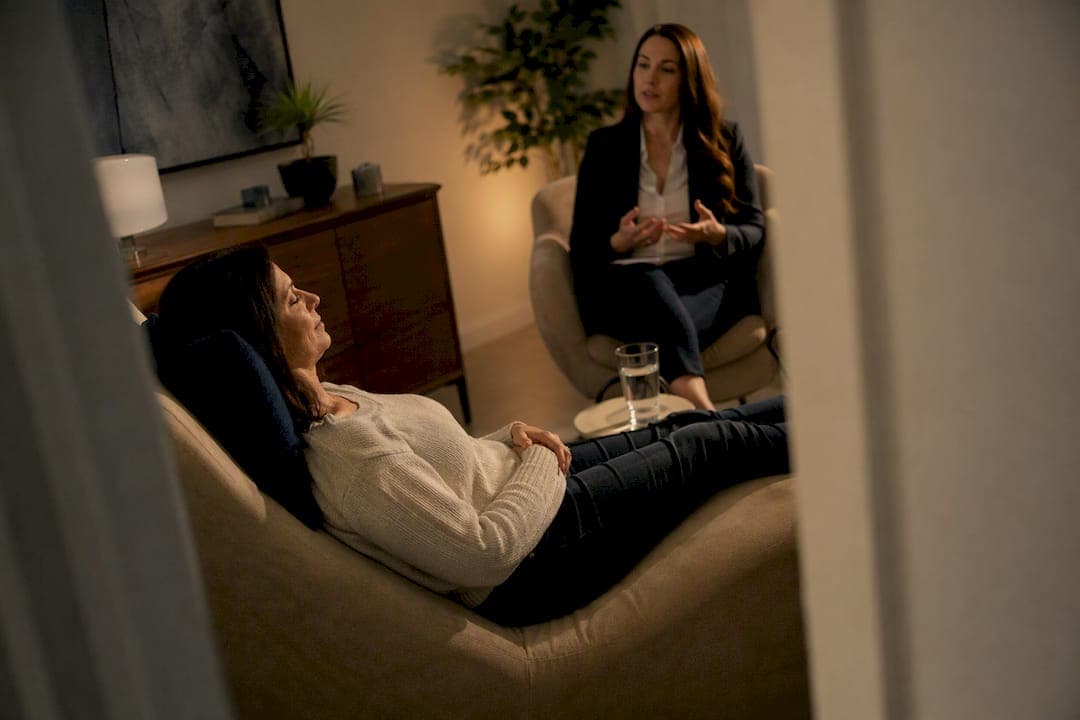
Most clinical hypnotherapy appointments run about one hour. First sessions usually run longer, often 60 to 120 minutes, to leave room for intake and planning. Follow-up sessions typically settle into a 45 to 60 minute rhythm, with the actual hypnosis work filling only 20 to 40 minutes of that time.
TL;DR:
- The majority of hypnotherapy sessions last around 50 to 60 minutes, with actual trance work typically taking only 20 to 40 minutes of that time.
- First appointments often extend to 60 to 120 minutes due to intake, history, consent, and rapport-building, while follow-ups usually run 45 to 60 minutes.
- Session content is structured into phases, including check-in, goal setting, induction, trance work, grounding, and debriefing, with shorter sessions omitting some steps.
- Factors like the complexity of anxiety triggers, individual responsiveness, and session format influence the overall length needed for effective treatment.
- Preparing by wearing comfortable clothes, finding a quiet space, and practicing homework exercises can significantly impact the session's effectiveness.
Table of Contents
- Hypnotherapy Session Length: What the Ranges Actually Mean
- What Happens Minute by Minute in a Typical Session
- Why Your First Session Runs Longer Than the Rest
- How Many Sessions Will You Actually Need?
- What Actually Changes the Length of Your Session
- Getting Ready For Your Session and What Comes After
- Is Hypnosis Safe, and Will You Remember What Happened?
- How Hypnotic Transformations Structures Sessions for Anxiety
- Ready to Book Your First Session?
- A Clinician's Note on Pacing
- Sources
Hypnotherapy Session Length: What the Ranges Actually Mean
If you've searched around, you've probably seen three different numbers thrown at you: 50 minutes, 60 minutes, 90 minutes. They're all correct, just describing different things. Most hypnotherapy sessions last 50 to 60 minutes but can run anywhere from 30 minutes to two hours, and where you land in that range depends on what the appointment is actually for.
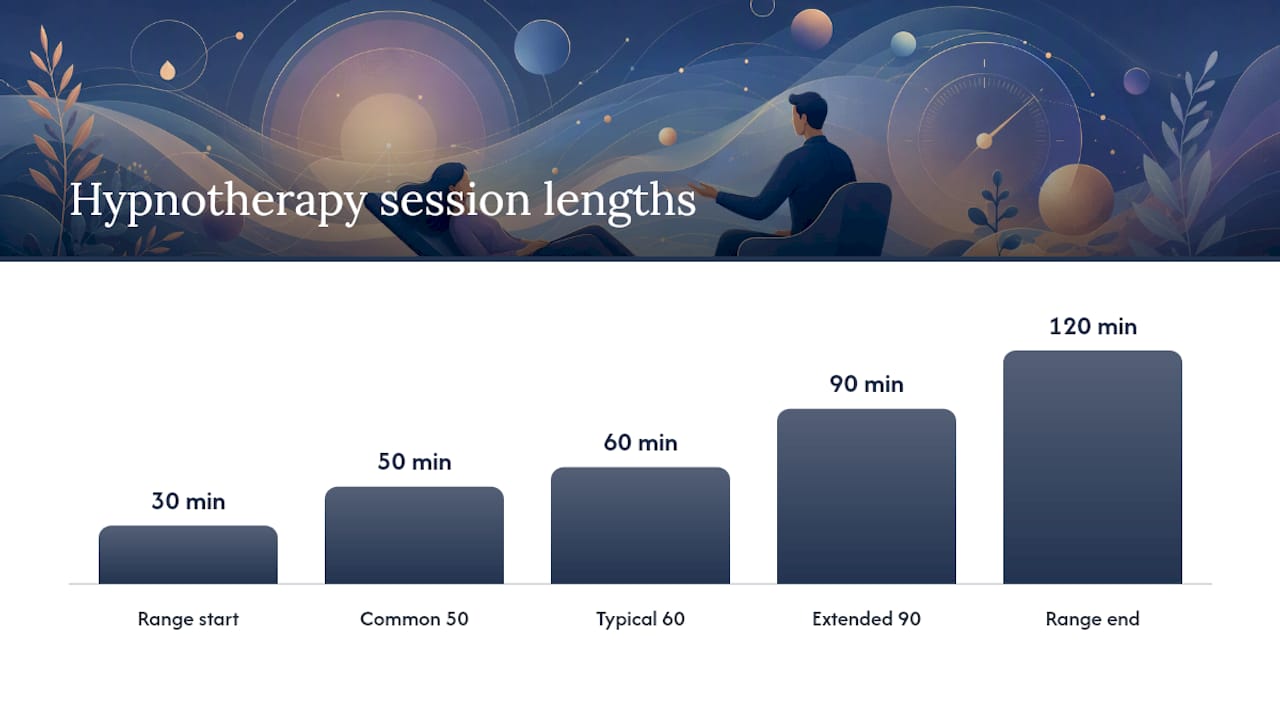
The number that matters more than total appointment time is how much of it involves you being in trance. A clinician might book you for a 60 minute slot, but only 20 to 40 minutes of that is active hypnotic work. The rest goes to conversation, check-ins, and grounding you back to full alertness.
Session length breaks down roughly like this:
- Standard sessions: 50 to 60 minutes, the most common format for anxiety and phobia work
- Extended sessions: 60 to 90 minutes, often used for first appointments or complex trauma history
- Maintenance sessions: 15 to 30 minutes, used to reinforce progress once the main work is done
- Intensive sessions: 2 to 4+ hours, reserved for specific single-session phobia protocols or concentrated program formats
Hypnosis sessions usually last around an hour, and that hour is rarely a straight, uninterrupted trance. It's a structured appointment with a beginning, middle, and end, each doing different work.
What Happens Minute by Minute in a Typical Session
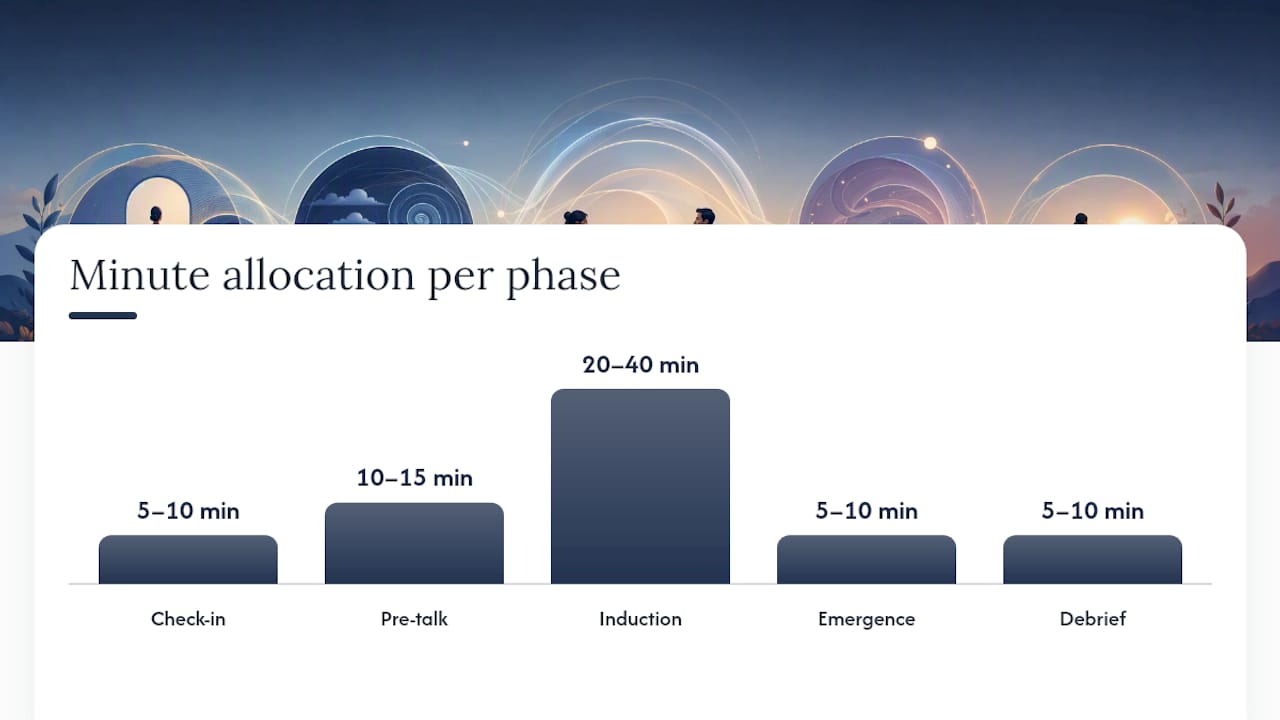
A 60 minute session isn't 60 minutes of hypnosis. It's closer to five distinct phases, each with a job to do.
- Check-in (5 to 10 minutes): Your clinician asks how the week went, what came up since last time, and whether anything changed with your anxiety triggers.
- Pre-talk and goal setting (10 to 15 minutes): You and your clinician agree on what today's session targets, whether that's a specific panic pattern, a phobia response, or a fight-or-flight trigger that fired recently.
- Induction, deepening, and suggestion (20 to 40 minutes): This is the trance work itself. Your body relaxes, your focus narrows, and your clinician delivers suggestions aimed at the subconscious patterns driving the anxiety response.
- Emergence and grounding (5 to 10 minutes): You come back to full alertness gradually, not with a snap of fingers.
- Debrief and homework (5 to 10 minutes): You talk about what you noticed, and you get a specific self-hypnosis exercise or recording to practice before the next session.
Shorter sessions compress or skip steps, usually the check-in or debrief, not the induction itself. Practical session-structure guides confirm this pacing pattern holds across most standard clinical formats.
Pro Tip: If a session feels rushed, ask your clinician directly how many minutes were spent in actual trance versus talking. A good practitioner will tell you without hesitation.
Why Your First Session Runs Longer Than the Rest
Your first appointment is not a shorter version of everything that follows. It's a different kind of session entirely.
A typical first appointment runs 60 to 90 minutes, sometimes stretching to 120, because your clinician needs to cover intake, history, and consent before any hypnosis begins. Follow-up sessions, once that foundation exists, usually run 45 to 60 minutes.
Here's what fills that extra time in session one:
- A full history of your anxiety, panic episodes, or specific fears, including when they started
- Informed consent and a plain-language explanation of what hypnosis is and isn't
- Baseline goal setting, so both of you know what "better" looks like
- A test induction, to see how you personally respond to relaxation and focus techniques
- Safety planning, especially if panic attacks or acute fear responses are part of the picture
For anxiety-focused work specifically, that longer first session buys something you can't rush: rapport. A nervous system that's spent months or years in fight-or-flight doesn't relax for a stranger on command.
How Many Sessions Will You Actually Need?
This is the question underneath the question. Session length matters less than total course length, and that number varies more than most people expect.
Course length varies widely: on average, someone might need three or four sessions, but complex or chronic issues can call for up to 20. A simple, specific phobia sometimes resolves in a single focused session. Generalized anxiety that's been building for years usually takes longer.
A few things shrink that number:
- Consistent practice with self-hypnosis recordings between sessions
- A clear, specific target (fear of flying resolves faster than free-floating chronic worry)
- How quickly you personally settle into a relaxed, focused state, since responsiveness affects both outcomes and pacing
Clinicians often build tiered plans around this. Smoking cessation, for instance, is commonly addressed in a defined short series rather than an open-ended commitment. Weight management and chronic anxiety patterns typically need a longer arc, with homework doing real work between appointments.
What Actually Changes the Length of Your Session
Not every anxious client needs the same clock time, and that's by design, not inconsistency.
The presenting issue drives a lot of it. A single specific phobia (elevators, needles, public speaking) often needs less time per session than layered generalized anxiety with multiple triggers. The modality matters too: brief suggestion work moves faster than techniques involving deeper regression or processing.
- Complexity of the presenting issue and how many triggers are involved
- How quickly you personally respond to induction, since not everyone reaches trance at the same speed
- Telehealth versus in-person format (online sessions run on nearly identical timing once technical setup is accounted for)
- Your individual clinician's pacing preference and training background
Always ask upfront what a quoted session time actually covers. "Sixty minutes" means something different from one practitioner to the next.
Getting Ready For Your Session and What Comes After
Preparation is simple, and it makes a real difference in how much you get out of the time.
Before the session: wear comfortable clothes you can sit or recline in, find a quiet space free of interruptions if you're meeting online, skip heavy caffeine, and keep a glass of water nearby. For a first appointment, have your intake forms filled out, a short list of any medications, and a brief note on your specific anxiety symptoms and when they started.
After the session, give yourself a few quiet minutes before jumping back into your day. Skip driving right away if you feel drowsy. Practice whatever self-hypnosis exercise or recording your clinician gives you, since that homework is often what shortens your total course length.
Pro Tip: Listen to your session recording at the same time each day for a week. Consistency trains your nervous system faster than sporadic practice.
Is Hypnosis Safe, and Will You Remember What Happened?
Most people remember the session clearly, though how vividly varies from person to person. Clinicians generally do not suggest that clients forget what happened; memory during hypnosis works more like being deeply absorbed in a book than being unconscious.
Hypnosis performed by a trained clinician is considered safe for most adults. A few things worth knowing:
- Mild, brief discomfort can surface when a session touches a genuinely difficult memory or fear, and that's normal, not a warning sign
- A trained practitioner watches for distress and adjusts pacing or brings you out of trance early if needed
- You stay aware and in control throughout, able to speak or open your eyes at any point
- Emergence is always gradual and grounded, never abrupt
How Hypnotic Transformations Structures Sessions for Anxiety
Kirk Hoffman, a Certified Clinical Hypnotherapist, structures first sessions to run long enough for a real intake conversation before any hypnosis begins. That means understanding your specific triggers, whether that's panic in crowds, a fear response tied to a past event, or generalized worry that won't switch off.
The work itself targets subconscious patterns that keep your nervous system stuck in fight-or-flight, rather than just talking about the anxiety in the abstract. Follow-up sessions run shorter once that foundation is set, and homework between sessions, usually a recorded self-hypnosis exercise, does real work toward reducing the total number of appointments you need. For a fuller walkthrough of what each stage covers, see the four stages of an anxiety session.
Ready to Book Your First Session?
Every first appointment includes a genuine intake to understand your anxiety day to day, allowing the clinician to build the session plan specifically for you rather than using a generic script.
Sessions are conducted online, requiring only a quiet space on your end and a scheduled time that fits your week. The anxiety-focused online hypnotherapy service page walks through what a first appointment includes and how follow-up sessions are typically spaced. If smoking or weight concerns sit alongside your anxiety, the full services page covers those programs too.
Booking takes a few minutes. Visit the appointments page to find a time that works, and come with a short note on what your anxiety looks like right now. That's enough for a real first session, not just a getting-to-know-you call.
A Clinician's Note on Pacing
I don't set session length by a clock first. I set it by what the nervous system in front of me needs that day. Someone deep in a panic pattern gets a slower induction and more grounding time at the end. Someone further along in their work moves faster, because their body already knows how to drop into that calm, focused state. The minutes shift session to session. The safety and pacing don't.
— Kirk
This article is general information, not a substitute for advice from a qualified doctor. Consult a qualified healthcare professional about your own circumstances before acting on anything here.
Sources
- Hypnosis: What It Is, How It Works, Benefits & Risks
- Is Hypnosis Real? Here's How It Works
- Hypnosis and hypnotherapy
- Hypnosis - Mayo Clinic