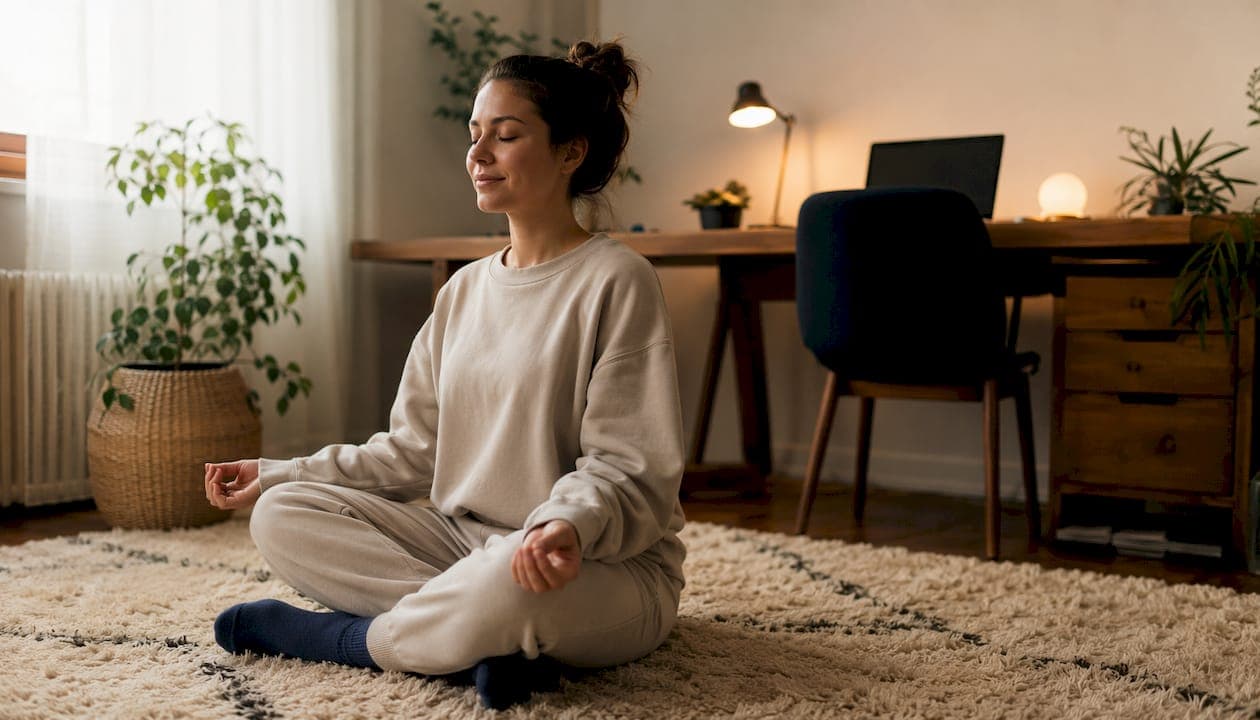
Which mindfulness exercises give you real anxiety relief?
Four practices consistently show up in clinical research as reliable starting points for anxiety reduction: breath focus, body scan, mindful walking, and the 5-4-3-2-1 grounding technique. Each one works by pulling your attention out of the future, where anxiety lives, and anchoring it in what your body is experiencing right now.
Here is what each one does:
- Breath focus (4-7-8 method): Inhale through your nose for 4 counts, hold for 7, exhale through your mouth for 8. This directly calms the nervous system by shifting your body from fight-or-flight into parasympathetic response. Daily 5-minute practice is enough to notice a difference.
- Body scan: Starting at your feet and moving upward, you notice physical sensations without trying to fix them. Anxiety often hides in a clenched jaw or tight shoulders. The scan makes that tension visible so the nervous system can release it.
- Mindful walking: Attention goes to the physical sensations of each step, the swing of your arms, the ground under your feet. For people whose anxiety spikes when sitting still, movement-based mindfulness offers the same grounding effect without the activation risk.
- 5-4-3-2-1 grounding: Name 5 things you can see, 4 you can touch, 3 you can hear, 2 you can smell, and 1 you can taste. This interrupts a panic spiral by forcing the brain to process present sensory data instead of catastrophic predictions.
Daily 5-minute sessions beat occasional longer ones. Consistency is the mechanism, not duration.
Table of Contents
- How to build a mindfulness routine that actually sticks
- How mindfulness actually changes your nervous system
- How clinical hypnotherapy works alongside mindfulness for lasting change
- Step-by-step guide for your first mindfulness session
- What the research actually says about mindfulness and anxiety
- Mindfulness meditation vs. structured therapy: what is the difference?
- Key Takeaways
- Anxiety relief that goes deeper than symptom management
How to build a mindfulness routine that actually sticks
Anxiety does not respond to one-time interventions. The nervous system learns through repetition. That is why clinical protocols like MBSR and MBCT use an 8-week structure as the minimum commitment for meaningful anxiety reduction.
Here is a practical week-by-week framework:
- Week 1: Five minutes of breath focus every morning, same time, same chair. No exceptions.
- Week 2: Add a 2-minute body scan before bed. Keep the morning session.
- Week 3: Replace one phone-scroll break with a mindful walk, even just around the block.
- Week 4: Practice the 5-4-3-2-1 technique once during a genuinely stressful moment, not just in calm conditions.
- Weeks 5-8: Extend morning breath focus to 10-15 minutes. Add one informal practice daily: a mindful shower, a mindful meal, a mindful pause before opening email.
Pro Tip: Start with 5 minutes, not 20. A 5-minute session you actually do every day produces better nervous system regulation than a 30-minute session you do twice a week. Consistency outperforms duration every time.
| Common challenge | What actually helps |
|---|---|
| Mind wanders constantly | That IS the practice. Noticing the wander and returning is what builds resilience. |
| Sitting still increases anxiety | Start with mindful walking or a 2-minute body scan lying down. |
| Forgetting to practice | Attach it to an existing habit: coffee, brushing teeth, the commute. |
| Feeling like you are doing it wrong | There is no wrong. If you noticed your mind wandered, you were mindful. |
Practicing mindfulness alongside routine activities trains the brain to stay grounded during non-stressful moments, which is exactly when you build the capacity to use it during anxious ones.
How mindfulness actually changes your nervous system
When anxiety fires, your amygdala triggers the fight-or-flight response: cortisol spikes, heart rate climbs, breathing shallows. The prefrontal cortex, which handles rational thought and emotional regulation, gets partially overridden. You are not being irrational. Your nervous system is doing exactly what it was designed to do.
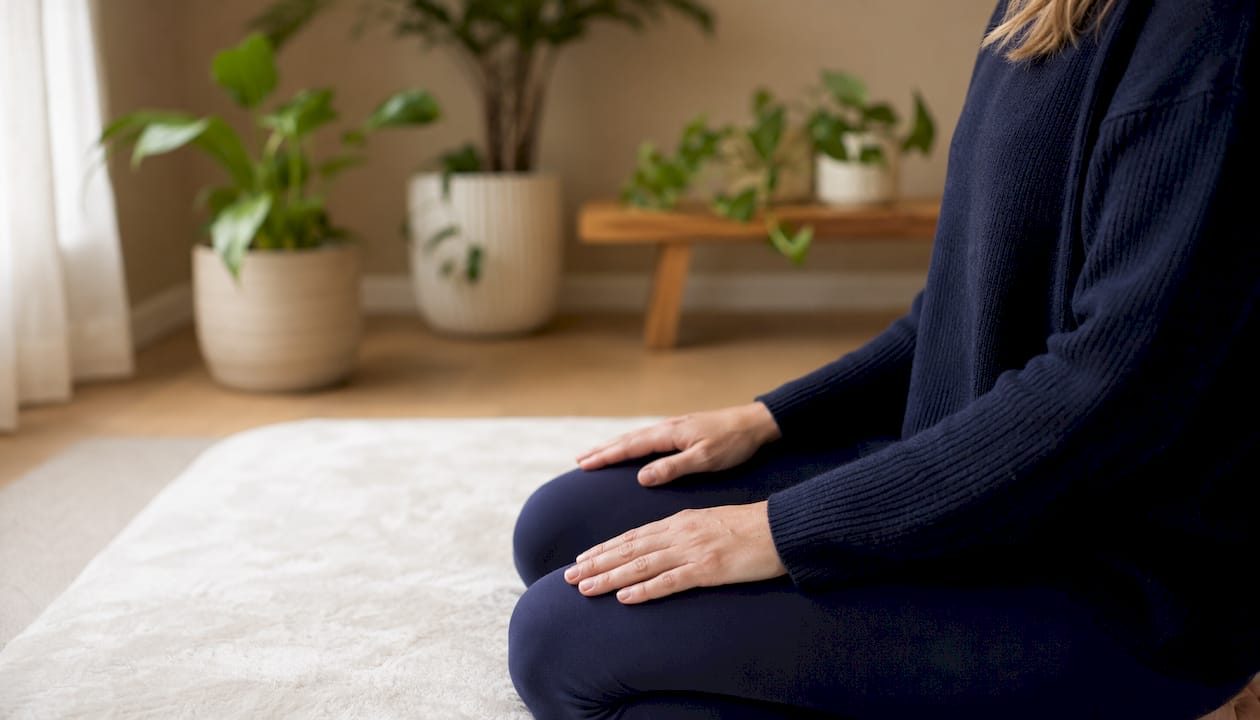
Mindfulness interrupts that sequence at a specific point. By directing attention to present-moment sensory experience, breath focus and body scans activate the parasympathetic nervous system, which counteracts cortisol and slows the heart rate. The physiological shift is measurable within a single session.
Over weeks of consistent practice, something more structural happens. The repeated act of noticing a thought and returning to the breath builds what researchers call metacognitive awareness: the ability to observe your own thinking rather than be pulled inside it. You start to notice "I am worrying" as a fact, not an emergency. That observational distance does not make the thought disappear, but it changes the thought's grip on your body.
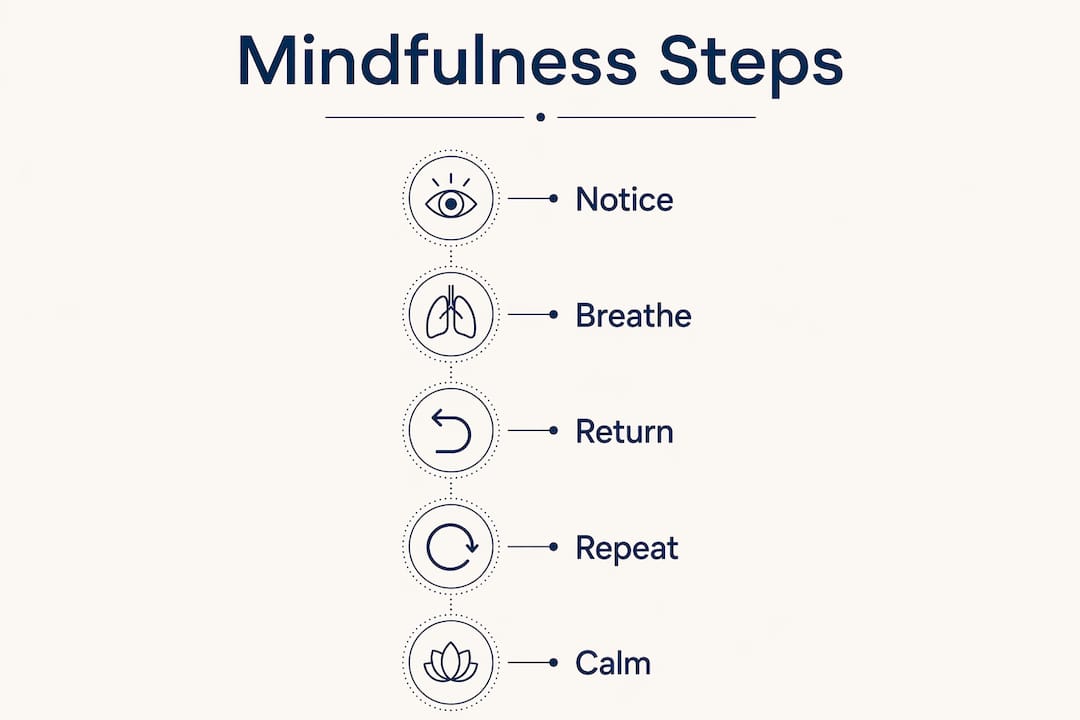
Pro Tip: If seated meditation consistently spikes your anxiety rather than calming it, that is a signal, not a failure. Movement-based practice like mindful walking is a clinically recognized alternative that carries the same nervous system benefits without the activation risk.
How clinical hypnotherapy works alongside mindfulness for lasting change
Mindfulness builds conscious regulation skills. You learn to notice anxious thoughts, return to the breath, and tolerate discomfort without reacting. That is genuinely useful. But for many people with anxiety, the fear response is not just a habit of attention. It is rooted in subconscious patterns formed long before the person had any conscious awareness of them.
Clinical hypnotherapy targets those subconscious patterns directly. While mindfulness works at the level of conscious attention, hypnotherapy accesses the subconscious state where the original fear response was encoded. The two approaches address different layers of the same problem.
Kirk Hoffman, Certified Clinical Hypnotherapist at Hypnotictransformations, uses techniques including NLP, guided imagery, and advanced hypnotic modalities to reach the root of anxiety rather than managing its surface symptoms. Sessions are conducted online via Zoom, making the work accessible regardless of location.
The combination of mindfulness and clinical hypnotherapy addresses anxiety at two levels simultaneously: conscious regulation of attention and nervous system state, and subconscious restructuring of the patterns that trigger the anxiety response in the first place.
The practical difference shows up in what each approach can and cannot do on its own. Mindfulness can reduce the intensity of an anxious episode in the moment. It can build long-term resilience through consistent practice. What it typically cannot do is reach the specific subconscious memory or belief that keeps the anxiety returning despite years of conscious effort. That is where structured clinical hypnotherapy fills the gap.
Step-by-step guide for your first mindfulness session
If you have never practiced before, start here. No cushion required. No prior experience needed.
Breath awareness: your first 5 minutes
- Sit in a chair with your feet flat on the floor. Back reasonably straight, not rigid.
- Close your eyes or soften your gaze toward the floor.
- Bring your attention to the physical sensation of breathing: the rise of your chest or belly, the air at your nostrils.
- When your mind wanders (it will, within seconds), notice where it went. Then gently return to the breath.
- Repeat that noticing-and-returning for 5 minutes. That cycle is the entire practice.
The goal is not a blank mind. The goal is the return. Every time you notice the wander and come back, you are doing it correctly. Guided resources like Headspace or Insight Timer can help beginners stay on track during those first few sessions.
What the research actually says about mindfulness and anxiety
The evidence base for mindfulness-based anxiety reduction is substantial. Researchers reviewed more than 200 studies of mindfulness among healthy people and found mindfulness-based therapy was especially effective for reducing stress, anxiety, and depression. People who completed MBCT were less likely to react with negative thoughts or unhelpful emotional reactions under stress.
Regular practice also strengthens memory, attention, and reduces repetitive negative thinking common in anxiety disorders. The cognitive benefits compound over time, which is why an 8-week protocol matters. Early practice produces some shifts, but eight weeks is the minimum commitment consistently used in clinical protocols to observe significant anxiety reduction.
Neuroscience research shows consistent practice reduces amygdala reactivity and increases prefrontal cortex regulation. The brain physically changes. That is not a metaphor.
Mindfulness meditation vs. structured therapy: what is the difference?
Casual mindfulness practice, the kind you do with an app for 10 minutes a day, is genuinely useful. Structured mindfulness-based therapies like MBSR and MBCT are something different. MBSR involves weekly group sessions, a full-day retreat, and 45 minutes of daily home practice over 8 weeks. MBCT adds cognitive therapy elements specifically designed to interrupt the thought patterns that sustain anxiety and depression.
The distinction matters because the outcomes differ. App-based practice builds a useful habit. MBSR and MBCT produce clinically validated changes in biological stress response. For mild to moderate anxiety, daily self-directed practice is a reasonable starting point. For clinically significant anxiety, working with a trained therapist or hypnotherapist alongside independent practice produces meaningfully better outcomes.
Key Takeaways
Consistent daily mindfulness practice, grounded in specific techniques and supported by clinical guidance, produces measurable anxiety reduction through direct changes to the nervous system and brain structure.
| Point | Details |
|---|---|
| Start with 5 minutes daily | Short daily sessions produce better nervous system regulation than occasional longer ones. |
| Commit to 8 weeks | Clinical protocols like MBSR and MBCT require at least 8 weeks of mindfulness practice before evaluating results, as this is the minimum commitment for meaningful anxiety reduction. |
| Mindfulness calms cortisol | Present-moment focus activates the parasympathetic nervous system and reduces stress hormones. |
| Structured therapy goes deeper | MBSR and MBCT produce clinically validated changes beyond what casual app-based practice achieves. |
| Hypnotictransformations addresses the root | Kirk Hoffman's clinical hypnotherapy targets subconscious anxiety patterns that mindfulness alone cannot reach. |
Anxiety relief that goes deeper than symptom management
Mindfulness exercises give you real tools for calming your nervous system in the moment. They work. But if you have been practicing consistently and still feel like the anxiety keeps coming back from somewhere you cannot quite reach, that is not a failure of effort.
Hypnotictransformations offers online clinical hypnotherapy sessions with Kirk Hoffman, Certified Clinical Hypnotherapist, conducted via Zoom from anywhere in the country. Where mindfulness builds conscious regulation skills, Kirk's sessions work at the subconscious level, addressing the specific patterns and fear responses that keep anxiety running in the background regardless of how much you breathe through it. This is not talk therapy. It is direct access to the subconscious state where anxiety is encoded, using NLP, guided imagery, and clinical hypnotic techniques to create lasting change at the source.
If you are ready to go beyond managing symptoms, book a session with Kirk Hoffman and find out what changes when the subconscious pattern shifts.