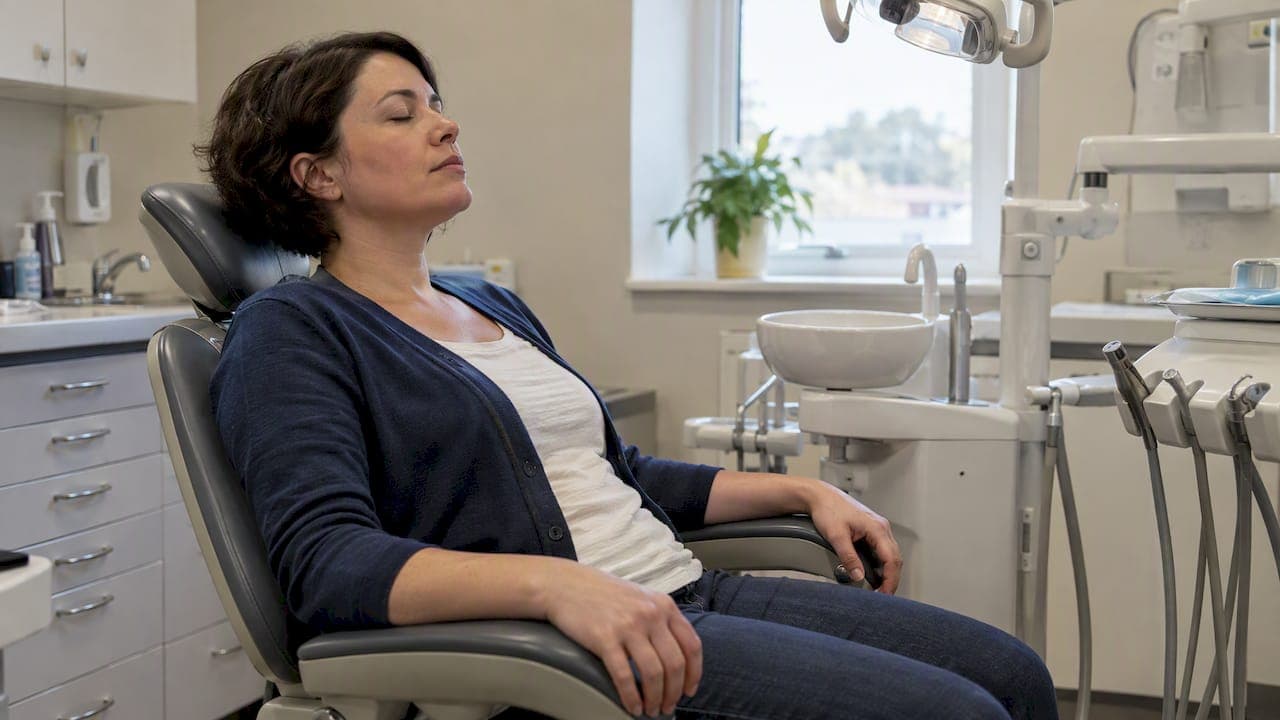
Clinical evidence supports hypnosis as a way to reduce dental anxiety for many patients, though results vary from person to person. It is delivered live by a trained clinician or through audio recordings, and it works best as an adjunct to dental care, not a replacement. Brief self-hypnosis routines and recordings are options you may encounter.
TL;DR:
- A 2024 review found moderate certainty evidence of lower oral surgery anxiety, with a standardized mean difference of −0.31 (95% CI, −0.56 to −0.05).
- With years of avoidance, panic, or fear across medical settings, consider a mental health specialist; CBT has stronger evidence than standardized hypnosis.
- Individualized hypnosis sometimes outperformed standardized tracks, while studies used varied methods; ask whether a clinician can tailor sessions rather than relying only on generic audio.
- Practice a recording for 3 to 5 sessions, then choose a breathing cue and agree on a hand signal that pauses treatment.
- Hypnosis remains separate from anesthesia; tell the dental team about your anxiety and agree that raising your hand will pause treatment.
Table of Contents
- What does the research say about hypnosis for dental fear?
- How is hypnosis used in dental care?
- Who benefits most, and when should you choose something else?
- What can you do before and during your appointment?
- What is it like to work with a hypnotherapist online?
- A clinician's view: start with the fear itself
- Want clinician-led help? Here is how we work
- FAQ
- Sources
What does the research say about hypnosis for dental fear?
If your stomach drops at the sound of a drill, your body is running a fight-or-flight response. Your heart speeds up, your muscles tighten, and your mind starts predicting pain. The question is whether hypnosis can interrupt that loop. Here is what the studies report.
A 2024 systematic review and meta-analysis of randomized controlled trials found moderate-certainty evidence that hypnosis reduces state anxiety during oral surgery.
Standardized mean difference of -0.31 (95% CI -0.56 to -0.05), a small-to-moderate reduction in state anxiety during oral surgery. In plain terms: on average, patients who received hypnosis felt measurably calmer than those who did not, but the effect is not a cure-all.
A separate 2025 exploratory trial looked at 39 patients having restorative dental treatment. Those who had a hypnosis session beforehand averaged a Corah Dental Anxiety Scale score of 5.58, compared with 8.28 for those who did not (p < .001). The published trial report describes the same comparison. It is a small study, so treat it as a promising signal, not a final verdict.
Not every review is equally glowing. A critical review of hypnosis for dental anxiety and phobia found positive effects in some trials but reported that cognitive behavioral therapy (CBT) showed stronger evidence than standardized hypnosis in direct comparisons. It also noted that individualized hypnosis sometimes beat standardized tracks. That detail matters if you are choosing between a generic recording and personal sessions.
Why do results vary? Experts point out that studies use different hypnosis techniques and inconsistent outcome measures, so the evidence is fragmented. One trial might use a live induction with a clinician, another a recorded script played through headphones. Comparing them is like comparing a private lesson with a YouTube video.
A systematic review of management strategies for adults with dental anxiety reports that audio-based hypnosis has reduced anxiety and markers such as blood pressure in some studies. That fits what you would expect: when the nervous system downshifts, the body follows.

How is hypnosis used in dental care?
Hypnosis shows up in dental settings in a few distinct ways. Knowing the difference helps you ask for the right thing.
A narrative review of hypnosis in dental treatment reports that face-to-face sessions made up 63% of the delivery modes it covered, audio CDs 32%, and audio pillow devices made up the rest. Common script elements include progressive muscle relaxation and safe-place imagery.
Here is what those formats and techniques look like in practice:
- Live clinician-led induction: a trained professional guides you into a focused, relaxed state, either before the visit or in the chair.
- Hypnotic communication in the chair: the dental team uses calm, suggestive language ("you may notice your hands getting heavier") without a formal induction.
- Pre-recorded audio scripts: you listen at home in the days before the appointment, and sometimes during treatment.
- Audio pillows and headphones: the same recordings delivered while you are in the chair.
- Self-hypnosis practice: a short routine you learn once and repeat on your own.
- Common script elements: progressive muscle relaxation, safe-place imagery, dissociation (mentally stepping back from the sensations), and protective-hand or glove anesthesia, where you imagine your hand numb and a sense of distance spreads.
Informal hypnotic language from a friendly hygienist is not the same as hypnotherapy. Staff using soothing words can help, but formal hypnotherapy involves screening, goal setting, and skills you practice. If a fear runs deep, the second option usually fits better.
Who benefits most, and when should you choose something else?
Hypnosis tends to work best for mild to moderate dental anxiety: the racing thoughts in the waiting room, the dread the night before, the tight jaw in the chair. If you can get through an appointment but hate every minute, this is your range.
Severe dental phobia (odontophobia) often needs more. If you have canceled appointments for years, or the thought of a dental office triggers panic, CBT or a combined approach is a stronger starting point. The critical review above is why: CBT showed the stronger evidence in head-to-head comparisons.
In clinical practice, hypnosis is usually an adjunct. Practitioner guidance describes it as an add-on to other behavior-management methods, with clear communication and agreed stop signals. It is also a common choice when you would rather avoid sedation.
Some signs suggest you should see a mental health specialist before or alongside any hypnosis:
- Panic symptoms such as chest tightness, dizziness, or a feeling of losing control at the thought of treatment
- A pattern of avoiding the dentist for years, even with pain or visible problems
- Anxiety that spreads into other medical settings
- A history of trauma connected to dental or medical care
Hypnosis does not replace anesthesia or the clinical safeguards your dental team uses. It sits next to them.
What can you do before and during your appointment?
You can start today. These tools aim at the same target: lowering physical arousal so your nervous system stops treating the chair as a threat. For more imagery practice, our guided imagery scripts for anxiety are a good companion.
A 60 to 90 second in-chair grounding routine
Rehearse this at home first so it is automatic when you need it.
- Feet and hands (10 seconds): Press your feet flat on the footrest and rest your hands loosely. Notice the chair holding your weight.
- Slow breath: Breathe in through your nose and out through your mouth, making each exhale longer than the inhale. Repeat at a comfortable pace.
- Release: Drop your shoulders, unclench your jaw, and let your tongue rest on the floor of your mouth.
- Safe place: Picture one calm place in detail. Add a color, a sound, and a temperature.
A short pre-appointment self-hypnosis script
Read this slowly into your phone and listen to it in a quiet room, ideally lying down.
"Settle back and let your eyes close. Take a slow breath in, and let it go. With each breath out, your body grows heavier and softer. Feel your forehead smooth out. Feel your jaw loosen. Let your shoulders sink. Now picture a place where you feel completely safe. See it clearly. Notice the light, the colors, the sounds. Let that calm fill you. On the day of your appointment, you can return here any time by taking one slow breath. Your body knows how to relax. You are in control, and you can raise your hand whenever you need to. Now take a deep breath, and when you are ready, open your eyes."
Paced breathing and muscle relaxation with timing cues
- Paced breathing: Breathe in gently and make each exhale longer than the inhale. The longer exhale may help your body settle.
- Progressive muscle relaxation: Tense each group for 5 seconds, then release for 10. Go feet, calves, thighs, stomach, hands, arms, shoulders, face.
- Pairing: Do both together, and finish with the safe-place image.
A 3 to 5 session practice plan
Plan several listening sessions before the visit, spaced out in the lead-up to your appointment. Use the recording at the same time each day, such as bedtime. By the final session, pair the recording with your one-breath cue. On appointment day, listen once on the way there, then use the grounding routine in the chair.

Setting stop signals with your dental team
Tell the staff you are anxious when you book and again when you sit down. JADA's guide to coping skills for dental fears lists the same basics: tell your team about your anxiety, agree on a stop signal, use music for distraction, breathe, and relax your muscles. Raising your left hand is common. Agree on what happens when you raise it, such as a pause, a breath, and a check-in. Hypnosis should never replace this conversation, and a dental fear resource on relaxation techniques names that assumption as a common pitfall.
If you or a family member also needs help finding a therapist, practical steps for accessing therapy and what to expect can make the first call easier.
What is it like to work with a hypnotherapist online?
A clinician-led program adds structure that a free recording cannot. Here is how it typically runs.
The first session is an intake. We ask about your dental history, when the fear started, what triggers it, and any health conditions or medications. We screen for panic symptoms, trauma history, and anything that would make hypnosis a poor fit. If something falls outside our scope, we say so and point you to the right professional.
Sessions run by video, and each one follows a pattern: a short check-in, a guided hypnosis segment, and a debrief. You get a recorded script for home practice, so the work continues between sessions. Research supports teaching you the skill: clinical reviews emphasize that teaching patients self-hypnosis and guided imagery tends to work better long term than relying on a dentist to perform inductions.
We also set goals you can measure, such as rating your anxiety from 0 to 10 before each practice and watching the number fall. If you want, we help you plan what to tell your dentist about stop signals and pacing. Online sessions can teach a repeatable routine you carry into the chair.
Wondering whether it works over video? Our article on whether you can be hypnotized online covers the evidence, and our piece on hypnosis myths and screening questions covers what to ask any practitioner.
A clinician's view: start with the fear itself
Most dental anxiety is not about teeth. It is about losing control while lying back with your mouth open. I write and work on the Problem, Agitate, Solve (PAS) framework: name the fear, show how it keeps itself alive, then give a tool. With anxious dental patients I focus on careful screening, practice, and helping them agree on a stop signal with their dentist. If self-help is not moving the needle, get a professional consult.
— Kirk
Want clinician-led help? Here is how we work
Our online clinical hypnotherapy targets the subconscious patterns that keep your fear response running. In a first consultation, we talk through your dental history, your goals, and what a plan could look like before your next appointment.
-
Live video sessions with a Certified Clinical Hypnotherapist
-
A plan for your dental visit, including stop signals
Ready to take the next step? Book online hypnotherapy for anxiety or see our full services overview.
This article is general information, not a substitute for advice from a qualified doctor. Consult a qualified healthcare professional about your own circumstances before acting on anything here.
FAQ
What is dental anxiety?
Dental anxiety is a fear or worry about dental visits that can range from mild nervousness to full phobia. It triggers the body's stress response, which is why you may feel a racing heart or tense muscles. A systematic review of interventions for dental anxiety evaluated treatments across this whole range.
Can hypnosis really help with fear of the dentist?
Yes, hypnosis may help, though results vary. A systematic review and meta-analysis found moderate-certainty evidence that hypnosis reduces anxiety during oral surgery. A critical review noted that individualized approaches performed better than standardized ones in some comparisons. Hypnosis works best alongside regular dental care.
What should you listen to at the dentist for anxiety?
A calming audio script with progressive muscle relaxation and safe-place imagery is a common choice. Headphones with a recording you practiced beforehand work well. Audio-based hypnosis has reduced anxiety and blood pressure in some studies.
Where does fear of the dentist come from?
It often starts with a painful or frightening past experience, or with stories heard from others. The mind learns to link the dental setting with threat. Hypnosis aims at that learned association.
Sources
- Interventions to reduce adult state anxiety, dental trait anxiety, and dental phobia: A systematic review and meta-analyses of randomized controlled trials
- Pubmed
- Pubmed
- Efficacy of Hypnosis on Dental Anxiety and Phobia: A Systematic Review and Meta-Analysis