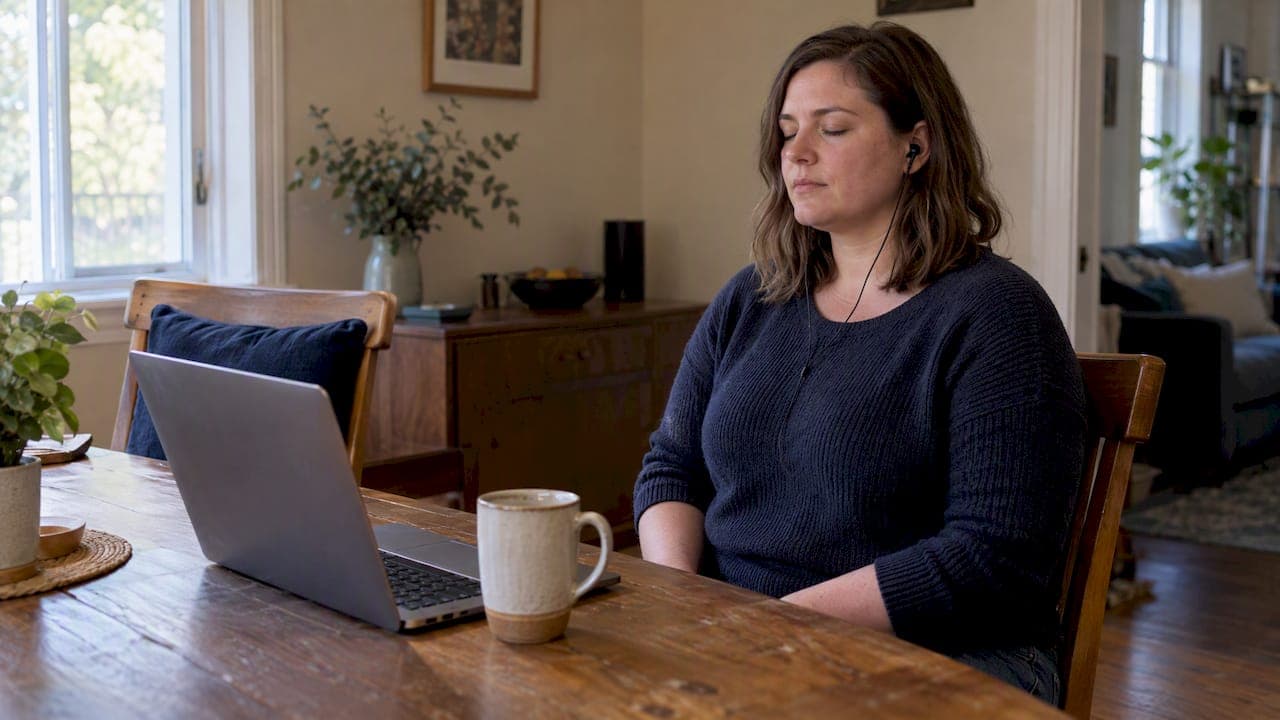
Yes, you can be hypnotized online, and for most people it works as well as sitting in an office with a therapist. The conditions that matter are your own willingness, a private quiet space, and whether you are working with a trained clinician rather than a generic recording. If you have a history of seizures, psychosis, or dissociation, screening with a qualified provider first is important.
TL;DR:
- Online hypnotherapy, especially guided by a trained clinician, can be as effective as in-person sessions, with some users feeling more in control at home.
- Guided programs with real therapist oversight show significant results, such as a 71% remission rate for generalized anxiety disorder at 10 weeks.
- Candidates with a history of seizures, psychosis, or dissociative disorders should undergo screening before starting online hypnosis.
- Effective sessions typically involve screening, induction, targeted suggestions, and a debrief, with preparation of a quiet, private space essential.
- Credentialed practitioners with recognized hypnotherapy training and clear screening protocols are crucial to ensure safety and treatment quality.
Table of Contents
- How Online Hypnosis Works: Live Video, Recorded Audio, and Self-Hypnosis
- What the Evidence Shows About Online Effectiveness
- Safety, Screening, and Who Should Avoid Unsupervised Online Hypnosis
- What to Expect and How to Prepare for a Session
- How to Choose a Qualified Online Hypnotherapist
- A Clinical Note on Treating Anxiety Remotely
- A Direct Next Step if You Want Professional Support
- FAQ
- Sources
How Online Hypnosis Works: Live Video, Recorded Audio, and Self-Hypnosis
Hypnosis is not something done to you. It is a state your own mind produces through focused attention, imagery, and suggestion, which is why a screen does not block it any more than an office door helps it. A trained hypnotherapist guides that process. The platform is just the delivery method.
Three formats show up in practice:
- Live video sessions let the therapist watch your breathing and responses in real time, screen for fit, and adjust the pace of induction.
- Recorded audio works for reinforcement between sessions but depends entirely on your own ability to follow along without feedback.
- Self-hypnosis uses the same imagery and relaxation techniques but removes the clinician's judgment calls, which matters more for complex anxiety cases.
The techniques are the same across formats: progressive relaxation, guided imagery, and carefully worded suggestions aimed at the nervous system's fear response rather than the symptom alone.
What the Evidence Shows About Online Effectiveness
Outcomes for online hypnotherapy are comparable to face-to-face sessions, and some clients actually reach a deeper state at home, where they feel more in control of their surroundings than they would in an unfamiliar office.
The broader evidence on remote therapy backs this up. A randomized trial found internet-delivered CBT noninferior to face-to-face CBT for health anxiety, while using less therapist time per client.
A 2025 randomized clinical trial found smartphone-delivered treatment for generalized anxiety disorder produced a 71.0% remission rate at 10 weeks, compared with 34.6% in the control group. That gap shows what a well-structured, therapist-guided digital program can do when it is not just a passive recording.

The caveat matters: these trials test guided programs with real clinician oversight, not generic unguided recordings pulled from an app store. Treatment fidelity, screening, and a therapist who adjusts to your response are what the research actually measured. A recording with no screening and no feedback loop is a different product, even if it uses similar language.
Safety, Screening, and Who Should Avoid Unsupervised Online Hypnosis
Hypnosis is generally safe for most adults when a trained professional runs the session, but it is not appropriate for everyone. A few conditions call for medical clearance first:
- A diagnosis of schizophrenia or another psychotic disorder.
- A history of dissociative disorders.
- A seizure history, since induction involves altered states of attention.
Side effects are usually mild and short-lived: dizziness, headache, or a brief spike in anxiety right after a session. These typically resolve within a day.
Pro Tip: Before booking, ask the practitioner how they screen new clients for these conditions. If they skip this question entirely, treat that as a warning sign, not a convenience.
If you have any of the conditions above, or you are currently in psychiatric treatment, check with your primary care provider or mental health clinician before starting hypnotherapy online or in person.
What to Expect and How to Prepare for a Session
A session is predictable once you know the shape of it.
- Intake and screening. The therapist asks about your history, current symptoms, and anything that might rule out hypnosis.
- Induction. You settle into a relaxed state through guided breathing and attention narrowing, usually over several minutes.
- Therapeutic suggestion. The clinician works on the specific fear response or pattern you came in for, using phrasing tailored to that target.
- Debrief. You come back to full alertness and talk through what came up.
Set up your space beforehand: a quiet private room, headphones, stable internet, and a chair where you can sit or recline comfortably. Never drive right after listening to a hypnotic recording. Most sessions run 45 to 60 minutes, and clinicians often provide a short recorded track for practice between appointments to reinforce the work.
How to Choose a Qualified Online Hypnotherapist
Credentials matter more online than in person, since you cannot walk into an office and check a wall of diplomas.
- Look for clinical hypnotherapy training and a recognized certification such as CCHt.
- Confirm healthcare licensing where the practitioner's scope requires it.
- Ask directly about their screening process for conditions like seizures or dissociation.
Red flags are easy to spot once you know what to look for: no screening questions at all, promises of a guaranteed cure, high-pressure upsells before you have even had a consultation, or no clear plan for what happens if something goes wrong mid-session.
Before booking, ask a prospective therapist how many anxiety clients they have worked with, what a typical session looks like, how they screen new clients, and what follow-up support they offer between sessions. Their answers will tell you more than any website bio.
A Clinical Note on Treating Anxiety Remotely
As a Certified Clinical Hypnotherapist, I see anxiety clients reduce the frequency and intensity of their fight-or-flight responses over a course of online sessions, not just feel calmer for an afternoon. Every new client goes through a screening call before we schedule anything, so I can rule out conditions that need a different kind of care first. You stay aware and in control the entire time. Hypnosis cannot make you do anything you do not want to do.
— Kirk
A Direct Next Step if You Want Professional Support
We work with clients on anxiety, smoking and vaping cessation, weight management, and law-of-attraction work, all delivered through online sessions built around your specific subconscious patterns rather than generic scripts.
Every new client begins with a consultation to review your history and screen for any issues requiring alternative care before scheduling a session. From there, we schedule sessions aimed at the root pattern driving your anxiety response, not just the symptom you notice day to day.
- Review our full range of services to see which focus fits you.
- Book a free consultation through our appointments page to ask about screening and session format.
If you are ready to talk through what online hypnotherapy could look like for your own anxiety, schedule your consultation and we will walk you through the next step.
This article is general information, not a substitute for advice from a qualified doctor. Consult a qualified healthcare professional about your own circumstances before acting on anything here.
FAQ
Is it possible to actually get hypnotized?
Yes. Hypnosis is a real, measurable state of focused attention that most people can enter under the guidance of a trained practitioner. It is not stage magic or mind control, just a deep state of relaxed concentration.
Can I be hypnotized through my phone?
Yes, live video sessions on a phone or computer work through the same induction techniques used in person, since the state comes from your own attention and imagery rather than physical proximity to a therapist. A stable connection and a quiet private space matter more than the device itself.
Can you hypnotize me for real, or is it just suggestion?
Hypnosis is a genuine altered state produced by your own mind in response to guided suggestion, not a trick or a performance. You remain aware and in control throughout, and a qualified clinician screens you first to confirm you are a good candidate.
Is there a way to self-hypnosize safely?
Self-hypnosis is possible using recorded guidance and the same relaxation and imagery techniques used in clinical sessions, though it lacks the real-time screening and feedback a therapist provides. For anxiety or any condition involving seizures, dissociation, or psychosis, work with a trained clinician first rather than starting with unguided recordings.
Sources
- Please explain: can I be hypnotised online? | The Lighthouse
- Digital Cognitive Behavioral Treatment for Generalized Anxiety Disorder: A Randomized Clinical Trial
- Hypnosis: What It Is, How It Works, Benefits & Risks | Cleveland Clinic
- Effect of Internet vs Face-to-Face Cognitive Behavior Therapy for Health Anxiety