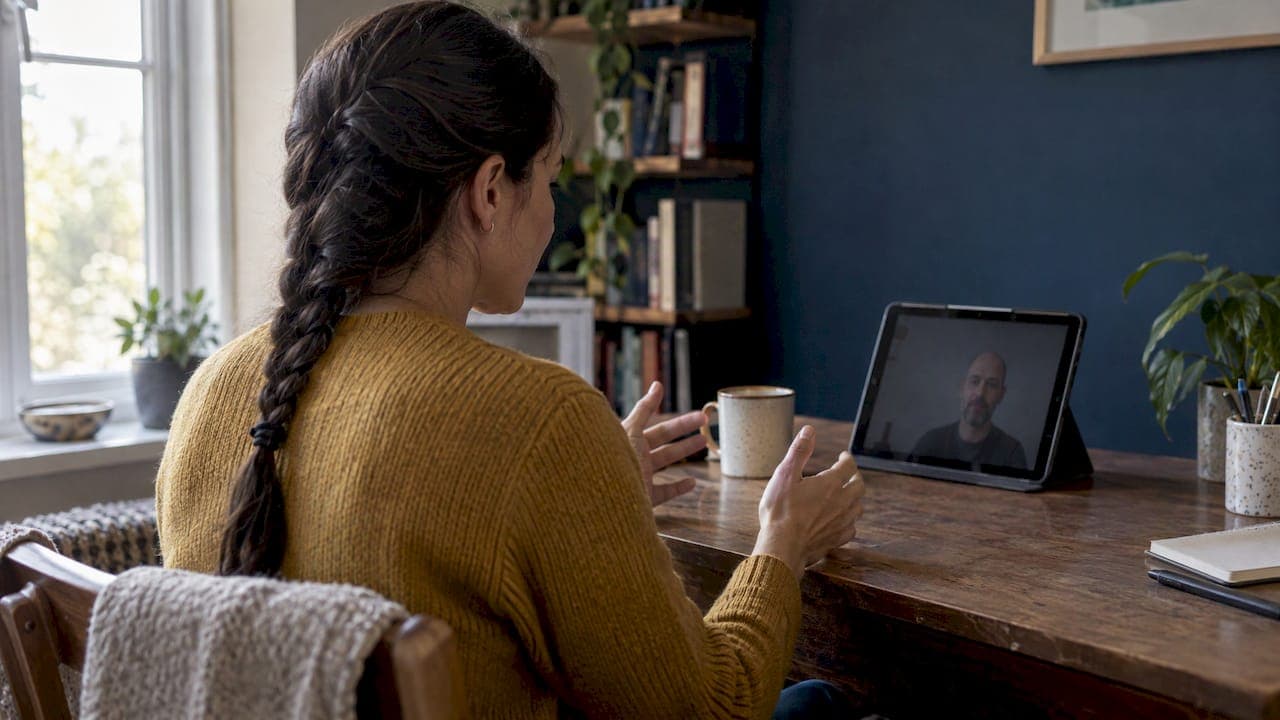
You have a panic attack in the grocery store line. Your heart pounds, your hands go cold, and you tell no one. Now you are thinking about telling a hypnotherapist over Zoom, and a new fear shows up: who else will hear this, and where will it be written down? That fear is reasonable. This article answers it in plain terms. It uses the PAS framework (Problem, Agitate, Solution) to name the worry, show why it matters for a nervous system already stuck on alert, and then give you a short checklist for protecting yourself.
TL;DR
- HIPAA protects health information held by covered providers, but most hypnotherapists who are not also in another regulated profession are generally not required to follow it. Ethics codes and your signed consent form fill much of that gap.
- Professional hypnotherapy codes call for written limits of confidentiality before work begins, secure technology, and your consent before any recording or third-party observer.
- Confidentiality has legal limits, such as mandatory abuse reporting and duty-to-warn situations. A good practitioner tells you these in writing up front.
- Before you book, ask about recordings, where notes are kept, how long they are kept, and which video platform is used.
- Your own room matters as much as the therapist's software: a closed door, headphones, and a private network.
Table of Contents
- The problem: anxiety makes privacy feel like a threat
- Agitate: what happens when you assume the wrong thing
- Solution, part one: know what a practitioner can collect
- Solution, part two: who can see or hear what you share
- What professional codes require
- Retention and deletion: how long records live
- Your checklist: seven questions before you book
- Your side of the screen
- Privacy and your insurance
- What privacy does not change: safety and results
- Perspective
- Ready to talk about your anxiety in private?
- FAQ
- Sources
The problem: anxiety makes privacy feel like a threat
Anxiety is a fight-or-flight response running when no tiger is in the room. Your amygdala flags a situation as dangerous, adrenaline rises, your heart rate climbs, and your thinking narrows to escape routes. People with panic, phobias or fear-based thinking often live with this alarm on a low setting all day.
When the alarm is already on, talking about the thing you fear feels risky. Common versions of the worry sound like this:
- "My partner or roommate will hear me describe my panic attacks."
- "My employer will find out I sought help for anxiety."
- "A recording of me in a deeply relaxed state will end up somewhere."
- "My notes will be sold, leaked, or used against me."
These thoughts are not silly. They are the same threat-detection system doing what it was built to do. And they can stop people from booking at all, which leaves the original anxiety untouched.
The good news is that privacy in online hypnotherapy is something you can check and shape. You do not have to trust blindly.
Agitate: what happens when you assume the wrong thing
Most people assume that anything said to a health practitioner is covered by HIPAA. That assumption is where trouble starts.
HIPAA's Privacy Rule protects individually identifiable health information held or transmitted by a covered entity or its business associate. That includes information about your mental health, your care, or payment for care. But the rule applies to covered entities. The National Guild of Hypnotists says that Consulting Hypnotists who are not also practicing another regulated profession generally are not obligated to comply with HIPAA.
That does not mean your information is free for the taking. It means the protection comes from other places, and you need to know which ones apply to the person you hire.
The same gap exists for apps and websites. Information entered into health-related websites or apps generally is not protected by HIPAA unless the app acts on behalf of a healthcare provider, according to Consumer Reports. So if you fill out a long intake on a random form builder, or download a free hypnosis app that asks about your symptoms, you may have fewer protections than you think.
There is a federal backstop for some of those cases. The FTC's Health Breach Notification Rule covers vendors of personal health records. The FTC's 2021 policy statement said the rule covers most health apps and similar technologies that are not covered by HIPAA. Under it, a vendor must notify affected consumers without unreasonable delay and no later than 60 calendar days after discovering a breach. Telehealth.HHS.gov adds that some state privacy laws apply to entities not subject to HIPAA. Which state laws apply depends on where you live.
The cost of getting this wrong is not abstract. If you assume full legal coverage and skip the questions, you may agree to a recording you did not want, or send sensitive details by plain email. Then the fear you started with gets a real-world reason to grow.

Solution, part one: know what a practitioner can collect
A hypnotherapist needs some information to work with you safely. For anxiety work, that usually means your name and contact details, how you want to be reached, a short health history, medications, what your anxiety looks like day to day, and a safety screening. Payment details go through a payment processor.
Three rules of thumb apply.
- Minimum necessary. Under HIPAA, covered entities must make reasonable efforts to use, disclose, and request only the minimum amount of PHI needed. Non-covered practitioners are not bound by that rule, but a careful one follows the same habit. You can ask: "Why do you need this item?"
- Written permission for extras. The International Board of Hypnotherapy's code expects the intake form to include the client's written permission for voicemail, email, or emailed MP3 files of customized self-hypnosis. If a practitioner will send you audio files, you should have agreed to how.
- Screening is for your safety. Questions about your history are not nosy. They help the practitioner decide whether hypnosis fits you. Our article on five screening questions to spot hypnotherapy contraindications explains what is asked and why.
Session notes versus psychotherapy notes
If you do work with a provider covered by HIPAA, a special category applies. HHS explains that the Privacy Rule applies uniformly to all PHI, with one exception: psychotherapy notes, which are a mental health professional's notes analyzing the contents of a private counseling session and kept separate from the rest of the record. Those notes get extra protection, and a covered entity needs your authorization before disclosing them for almost any reason.
You also generally have a right to see the rest of your file. HHS lists medical records, billing records, consent forms for treatment and clinical case notes as examples, though psychotherapy notes are not included in that right of access.
Solution, part two: who can see or hear what you share
The default for professional practice is simple: what you say stays between you and your practitioner. The exceptions are narrow and should be spelled out before the first session.
A telemental health consent form published through Wayne State University, based on the NASW model, says all information disclosed in online sessions and the related written records are confidential and may not be disclosed without written authorization, except where permitted or required by law. That is the standard pattern. Your signature, or your yes, is the gate.
The typical legal exceptions are:
- Mandatory reporting. Abuse of a child or vulnerable adult, depending on state law.
- Duty to warn. A serious, specific threat to another person.
- Court orders and other legal requirements. Your practitioner can explain how these work in your state.
- Care coordination. Under HIPAA, a covered entity may disclose PHI for the treatment activities of any health care provider without your authorization. If your hypnotherapist is not covered, they should still ask you before speaking to your doctor or therapist.
Notice what is not on that list: employers, family members, advertisers. None of them gets your information without your written consent.
What professional codes require
Hypnotherapy has no single federal license, so ethics codes from professional bodies do a lot of the work. Two are worth knowing.
The International Board of Hypnotherapy code, according to the research behind this article, requires members to inform clients in writing about confidentiality limits before the client-therapist relationship begins, use HIPAA-compliant video conferencing software for video sessions, and obtain consent before recording sessions or permitting others to be present.
The American Council of Hypnotist Examiners code (May 2021) asks members to keep information confidential within the legal limits of reporting requirements, disclose those limits before providing services, do their best to ensure secure technology, and get informed consent before audio or video recording or third-party observation.
Both codes ask for the same four things: written limits up front, secure technology, consent for recording, and consent for observers. That is your checklist, and it is a fair standard for any practitioner, including us.

Retention and deletion: how long records live
People rarely ask how long notes are kept. They should. Retention rules vary. One large teletherapy company, for example, says it keeps transcripts like medical records for 10 years and notes that all 50 states designate 7 to 10 years as the required medical records retention period. That figure applies to licensed healthcare settings. A solo hypnotherapist who is not in a licensed health profession may follow a different schedule.
So ask two plain questions: how long do you keep my file, and what happens to it afterward? A good answer names a number of years, a storage method, and a deletion step.
If a breach ever happens at a vendor covered by the FTC rule, the clock is no more than ten business days to notify the FTC when 500 or more people are affected. That is the legal floor, not a reason to be careless with where your details go.
Your checklist: seven questions before you book
One article from the results Google shows for this topic suggests asking a remote therapist where they are, who could overhear, and how secure their device is. That is solid advice. Here is a fuller list you can bring to any first call.
- Do you give me confidentiality limits in writing before we start? The answer should be yes, with the reporting exceptions named.
- Do you record sessions? If yes, why, where is the file stored, and can I say no? Both codes above require your consent.
- Which video platform do you use, and are its security settings turned on? Ask about waiting rooms, passcodes, and whether the meeting link is unique to you.
- Is anyone else ever present or listening? Supervisors, assistants and observers need your consent under the codes above.
- What do you keep in my file, and for how long? Ask for a number of years.
- How will you send me audio files or reminders? Voicemail, text and email each carry risk. Choose the channels you are comfortable with and say so in writing.
- Where will you be during our session? A private room, with the door closed.
A practitioner who welcomes these questions is showing you how they run their practice. If you want to talk through them with us, our free consultation is a no-pressure place to do it.
Your side of the screen
Even a perfect setup fails if your living room is not private. Hypnosis asks you to relax deeply, and you cannot do that if you are listening for footsteps. A few specifics help:
- Pick a room with a door that closes. A parked car works if your home does not offer one. Do not drive during the session.
- Wear headphones. They keep the practitioner's voice from carrying and help you settle.
- Use your home network or a mobile hotspot. Avoid public Wi-Fi at a cafe or workplace.
- Update your device. Install pending updates before the session, then close other apps and notifications.
- Silence alerts. A message preview popping up on a shared screen can disclose more than you intended.
- Tell the people at home it is a quiet hour. You do not owe them details.
This also calms your body. A predictable, closed-off space tells your nervous system it is safe to drop the guard. That is the state hypnosis works with: relaxed, focused attention in which the subconscious mind is more open to new associations with the thing you fear.
Privacy and your insurance
If you plan to submit a claim, a third party enters the picture. Insurers collect information to process claims, and that is a different privacy question. Our guide on hypnotherapy insurance coverage explains what to expect. Paying out of pocket keeps the paper trail shorter, but compare that with your own needs.
What privacy does not change: safety and results
Privacy worries sometimes sit on top of a deeper one: loss of control. Hypnosis is not mind control. You stay aware and can end a session whenever you choose. Our pages on whether hypnosis is safe and why you cannot get stuck in hypnosis go through this for first-timers. If you want to see how online sessions have performed, read about a study of 31 people in clinician-screened Zoom hypnotherapy.
After a session, a few habits help too. We cover them in our hypnotherapy aftercare guide, including what to do with any audio file you are given so it stays private on your device.
Perspective
Most people who write to us do not ask first about techniques. They ask whether anyone will know.
We understand why. Anxiety teaches the body to scan for exposure. Telling a stranger about your worst moments can feel like handing over a weapon.
Our view is that privacy is part of the treatment. When your nervous system trusts the room, the fight-or-flight response can settle, and the work on the subconscious patterns behind your anxiety can begin. We design our online sessions around Zoom so you can sit in your own space, with your own door closed.
We also think you should hear about confidentiality in plain words before you commit, including its legal limits. Bring your questions to the free consultation. Ask about recordings, notes and how we communicate. You should leave that call knowing exactly how your information is handled.
Our aim is lasting relief from anxiety, not just a calmer week. That starts with you feeling safe enough to speak.
Kirk
Ready to talk about your anxiety in private?
We offer online clinical hypnotherapy for anxiety, panic and fear-based thinking, led by Certified Clinical Hypnotherapist Kirk Hoffman and delivered over Zoom to clients across the United States. We use hypnosis, NLP and guided imagery to work on the subconscious patterns that keep the alarm switched on. The first step is a free consultation where you can ask every question on the checklist above.
Read about online hypnotherapy for anxiety or see all of our services. To see how online work fits anxiety, you can also read what a Zoom study of 31 people shows.
FAQ
Is online hypnotherapy covered by HIPAA?
It depends on the practitioner. HIPAA applies to covered entities, and the National Guild of Hypnotists says Consulting Hypnotists not also practicing another regulated profession generally are not obligated to comply. Confidentiality still comes from professional ethics codes, state law and the consent form you sign. Ask your practitioner which apply.
Can my hypnotherapist record our session?
Only with your consent under the professional codes cited above. The American Council of Hypnotist Examiners code requires informed consent before audio or video recording or third-party observation. You can say no. If you agree, ask where the file lives and when it is deleted.
Are there cases where my information must be shared?
Yes, but they are narrow. Mandatory reporting of abuse and duty-to-warn situations are the usual ones, along with other disclosures required by law. HHS notes these exceptions even for psychotherapy notes. A practitioner should list them in writing before you begin.
What if someone at home overhears my session?
Plan the space ahead. Choose a room with a closing door, wear headphones, and tell the household it is a quiet hour. If privacy at home is truly hard, a parked car works for a session, as long as you are not driving. Raise this on the consultation call so we can plan around it.
Is a free hypnosis app as private as a session with a practitioner?
Not necessarily. Consumer Reports notes that information entered into health apps generally is not protected by HIPAA unless the app acts for a provider. Read any app's privacy policy for what it collects and shares before you enter symptoms.
Sources
- Summary of the HIPAA Privacy Rule, HHS.gov
- Does HIPAA provide extra protections for mental health information, HHS.gov
- What personal health information do individuals have a right to access, HHS.gov
- Uses and Disclosures for Treatment, Payment, and Health Care Operations, HHS.gov
- 2025 NGH State Law Guide, National Guild of Hypnotists
- Privacy laws and policy guidance, Telehealth.HHS.gov
- Health Breach Notification Rule, FTC
- Health Breach Notification Rule NPRM and Appendix A, FTC
- Guess What? HIPAA Isn't a Medical Privacy Law, Consumer Reports
- Telemental Health Informed Consent, NASW form via Wayne State University
- International Board of Hypnotherapy Code of Ethics
- ACHE Code of Ethics, American Council of Hypnotist Examiners
- Retention Policy, Talkspace