
Yes, hypnosis is generally safe for most adults when performed by a trained clinician. The Mayo Clinic describes it as a safe complementary treatment, and the Cleveland Clinic calls it a low-risk option for managing symptoms in appropriate candidates. That said, "generally safe" comes with real qualifiers.
The most common side effects are mild and short-lived: dizziness, drowsiness, headache, nausea, and brief anxiety. They typically resolve within hours. More serious psychological reactions are rare but possible, particularly in people with certain psychiatric histories.
People who need extra caution before booking a session:
- Anyone with active psychosis or a history of schizophrenia
- People with severe, untreated major depression or active suicidal ideation
- Those currently intoxicated or in active substance misuse
- People with significant cognitive impairment
Pro Tip: Before you book anything, ask the clinician directly: "What is your clinical license, and what conditions do you screen for before starting?" A qualified provider will answer both questions without hesitation.
Key Takeaways
Hypnosis is generally safe for most adults when delivered by a trained clinician, with mild and transient side effects being the most common outcome.
| Point | Details |
|---|---|
| Safety verdict | Hypnosis is generally safe for most adults when performed by a licensed, trained clinician. |
| Main contraindications | Avoid hypnosis with active psychosis, uncontrolled bipolar disorder, active suicidal ideation, or substance intoxication. |
| Biggest clinical risk | False memory creation from suggestive techniques; ethical clinicians do not use memory-recovery protocols. |
| Choosing a provider | Verify a clinical license through your state board; ASCH or SCEH membership confirms clinical-level training. |
| Hypnotictransformations | Kirk Hoffman CCHt offers online anxiety-focused hypnotherapy with a structured intake and contraindication screening before any session begins. |
Table of Contents
- What is hypnosis, and what does it actually do?
- How does a hypnotherapy session actually work?
- What conditions does hypnosis help, and how strong is the evidence?
- What are the real risks and side effects of hypnosis?
- Who should avoid hypnosis or take special precautions?
- Is self-hypnosis safe to try on your own?
- How to prepare for your first session and what to expect after
- How to choose a qualified hypnotherapy clinician in the United States
- What does the research actually say about hypnosis safety and effectiveness?
- When should you stop hypnotherapy and get medical help?
- A clinician's note on how safety works in practice
- Clinical hypnotherapy for anxiety, available online nationwide
- Sources
What is hypnosis, and what does it actually do?
Clinical hypnotherapy is a structured, therapist-guided process that shifts your attention inward and increases your responsiveness to suggestion. You stay conscious and in control throughout. The Cleveland Clinic is clear on this: hypnosis is not sleep, and you cannot be made to do anything against your will.
The gap between stage hypnosis and clinical practice is significant. Stage hypnosis is entertainment. Clinical hypnotherapy is a health intervention delivered by a trained provider, aimed at reducing symptoms like anxiety, chronic pain, or unwanted habits by working with the subconscious mind rather than the conscious, analytical layer of thinking.
Three things that actually happen during clinical hypnosis:
- Your attention narrows and external distractions fade
- Your nervous system shifts toward a parasympathetic, lower-arousal state
- Your responsiveness to therapeutic suggestions increases
Common myths worth correcting: hypnosis does not give a therapist control over your mind, you cannot be forced to reveal secrets, and you will not get "stuck" in a trance. For a deeper look at how clinical hypnosis differs from the mind-control narrative, see hypnosis vs. mind control.
How does a hypnotherapy session actually work?
A standard clinical session follows a predictable structure. Knowing it in advance reduces the anxiety many people feel before a first appointment.
The session flow:
- Pre-session intake: The clinician reviews your health history, current medications, mental health diagnoses, and treatment goals. This is where contraindications get screened.
- Induction: The therapist guides you through a relaxation or focused-attention exercise. Breathing slows, muscle tension drops, and the fight-or-flight response quiets.
- Deepening: A series of suggestions deepen the relaxed state. This is not unconsciousness. You remain aware.
- Targeted suggestions or guided imagery: The therapeutic work happens here. The clinician delivers suggestions aligned with your goal, whether that is reducing anticipatory anxiety, changing a habitual response, or managing pain.
- Emergence: You are guided back to full alert awareness, usually over two to three minutes.
- Debrief: A short conversation covers what you noticed and what to expect next.
Sessions generally last around an hour to an hour and a half. Some goals may be addressed in a few sessions, while anxiety and habit change often involve multiple sessions with progress reviewed regularly.
Neuroscience research summarized by Psychology Today suggests hypnosis engages brain networks involved in attention and pain regulation and activates the parasympathetic nervous system, which is the biological opposite of the fight-or-flight response.

Pro Tip: Write down your three most specific symptoms before your first session. "I feel anxious" is hard to target. "I wake at 3 AM with a racing heart before work presentations" gives the clinician something precise to work with.
What conditions does hypnosis help, and how strong is the evidence?
Hypnosis is not a treatment for everything. The evidence is strong for some conditions, conditional for others, and thin for a few areas where it gets oversold.
| Condition | Evidence Strength | Realistic Outcome |
|---|---|---|
| IBS (gut-directed hypnotherapy) | Conditional — promising | Reduced symptom frequency and severity |
| Procedure-related anxiety | Promising but variable | Lower pre-procedure distress |
| Chronic pain management | Conditional | Reduced pain perception, improved coping |
| Menopausal hot flashes | Emerging | Frequency reduction in some studies |
| Smoking cessation | Mixed | Useful as adjunct; not standalone cure |
| Generalized anxiety | Conditional | Reduced arousal, improved coping skills |
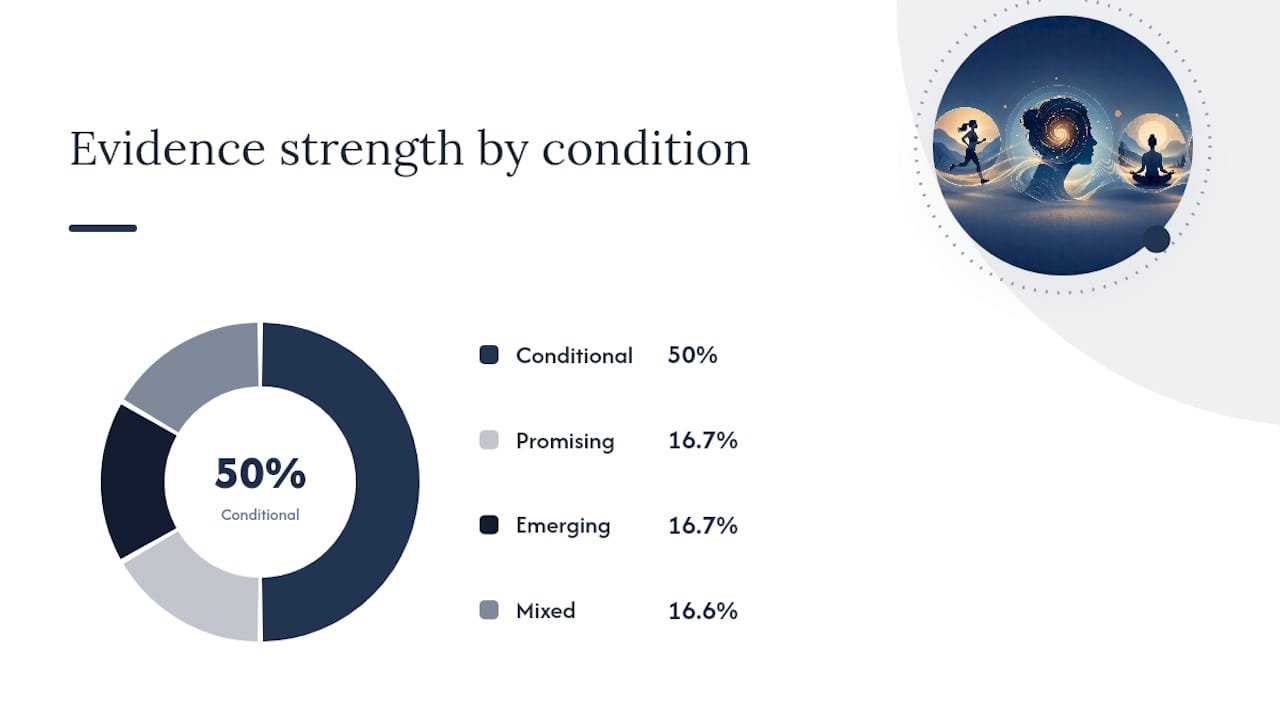
The NCCIH notes that gut-directed hypnotherapy for IBS and some pain and procedure-related anxiety applications show genuine promise, while overall recommendations remain conditional because evidence quality varies by condition.
What hypnosis can reasonably deliver: reduced physiological arousal, improved coping responses, and symptom relief for specific, well-defined problems. What it cannot do alone: replace medication for severe psychiatric disorders, cure trauma without proper trauma-focused care, or produce permanent change without the client's active participation between sessions.
For anxiety specifically, the subconscious patterns that drive panic and avoidance respond well to hypnotic suggestion because those patterns operate below the level of conscious reasoning. That is where the intervention has its clearest mechanism. See the evidence breakdown for hypnotherapy for anxiety and depression for a condition-specific look.
What are the real risks and side effects of hypnosis?
Most people experience no side effects at all. When they do occur, they are usually mild and resolve the same day.
Common mild side effects (transient):
- Drowsiness or light-headedness after emergence
- Mild headache
- Nausea
- Brief increase in anxiety during or after a session
- Vivid dreams or minor sleep disturbance that night
The Mayo Clinic lists all of these as rare but documented. The Royal College of Psychiatrists notes that side effects are usually few, with short-lived drowsiness being the most common.
Less common but worth knowing:
- Intense emotional reactions during a session, particularly if unresolved grief or fear surfaces
- Temporary dissociation or a feeling of unreality after emergence
- Increased distress if a session touches trauma without adequate preparation
The most serious documented risk is false memory creation. WebMD identifies this as the largest clinical concern: suggestive language during hypnosis can cause a person to "remember" events that did not happen. This is why ethical clinicians do not use memory-recovery protocols.
If a session causes severe distress: Stop the session, tell the clinician immediately, and do not drive until you feel fully alert. If you experience persistent dissociation, new suicidal thoughts, or psychotic symptoms after a session, contact your primary care provider or a mental health crisis line the same day.
Who should avoid hypnosis or take special precautions?
Some conditions make hypnosis inappropriate or require coordinated care with another licensed provider before starting.
Clear contraindications:
- Active psychosis (hallucinations, delusions, disorganized thinking)
- Uncontrolled bipolar disorder during a manic or mixed episode
- Severe, untreated major depression with active suicidal ideation
- Active substance intoxication at the time of a session
- Significant cognitive impairment that limits informed consent
Conditions requiring coordinated care:
- Complex PTSD or dissociative disorders: hypnosis can be used, but only within a broader trauma-informed treatment plan led by a licensed mental health provider
- Personality disorders with significant dissociation: proceed only with clinical supervision
Common edge-case questions:
Can I do hypnotherapy while on psychiatric medication? Generally yes, but tell your clinician every medication you take. Some sedatives can deepen the hypnotic state unpredictably. Your prescriber should know you are adding hypnotherapy.
Is hypnosis safe during pregnancy? There is no strong evidence of harm, and some practitioners use it for pregnancy-related anxiety and labor preparation. Confirm with your OB-GYN first and work only with a clinician experienced in perinatal care.
What if I have a history of trauma but no active PTSD diagnosis? Disclose it in the intake. A qualified clinician will adjust the approach, avoid trauma-processing techniques without proper preparation, and may refer you for trauma-focused CBT first.
Is self-hypnosis safe to try on your own?
For most people, yes. Self-hypnosis used for relaxation, sleep improvement, or habit reinforcement carries a low risk profile. The key is keeping the goals simple and the scripts clinician-informed.
Safe uses for self-hypnosis:
- Relaxation and stress reduction between professional sessions
- Reinforcing suggestions from a clinical session (a clinician may give you a recording)
- Sleep preparation routines
- Mild habit change support alongside professional care
When to avoid self-hypnosis:
- If you have a history of dissociation or depersonalization
- If you are processing active trauma without professional support
- If self-hypnosis consistently increases your anxiety rather than reducing it
- Never use memory-recovery scripts found online. The risk of creating false memories is real, and no self-directed protocol can manage that safely.
Pro Tip: A safe self-hypnosis session has four elements: a quiet environment where you will not be interrupted, a single specific goal (not "fix my anxiety" but "slow my breathing for ten minutes"), a short script of five to ten minutes, and a clear exit cue like counting from one to five. Stop the practice if you feel more anxious after three consecutive sessions.
How to prepare for your first session and what to expect after
Arriving prepared makes the intake faster and the first session more productive.
Pre-session checklist:
- Write down your current medications, including supplements and sleep aids
- Note any prior mental health diagnoses, even if you consider them resolved
- List your top two or three specific goals for treatment
- Identify any trauma history you want the clinician to know about before starting
- Check your hypnotherapy insurance coverage in advance so billing does not surprise you
After the session:
- Plan not to drive immediately if you feel drowsy. Give yourself 15 minutes to fully reorient.
- Drink water. Mild dehydration can worsen any post-session headache.
- Note what you noticed during the session. Clinicians use this feedback to adjust the next session.
- Follow any homework the clinician assigns, typically a short daily relaxation or self-hypnosis practice.
- Schedule your follow-up before you leave or log off.
Questions to ask before you pay:
- What is your clinical license, and is it active in this state?
- Have you worked with clients who have my specific condition?
- What happens if I have a strong emotional reaction during a session?
- Do you have a plan for referring me to another provider if my needs exceed your scope?
- What is your cancellation and confidentiality policy?
How to choose a qualified hypnotherapy clinician in the United States
The United States has no single federal license for hypnotherapy. That means the credential gap between providers is wide, and it matters for your safety.
What to look for:
- A licensed mental health professional (licensed psychologist, licensed clinical social worker, licensed professional counselor, or psychiatrist) who has completed additional training in clinical hypnosis
- A licensed medical provider (physician, nurse practitioner, dentist) using hypnosis within their scope of practice
- Membership in a professional body such as the American Society of Clinical Hypnosis (ASCH) or the Society for Clinical and Experimental Hypnosis (SCEH), which require clinical licensure for full membership
What a "certified hypnotist" means: A certification alone, without an underlying clinical license, means the person completed a training program but is not accountable to a state licensing board for clinical decisions. They cannot diagnose, cannot prescribe, and cannot manage psychiatric emergencies. For general relaxation or habit coaching, this may be acceptable. For anxiety, trauma, or any psychiatric history, it is not sufficient.
The Royal College of Psychiatrists recommends hypnotherapy be performed by qualified health professionals. Research published on PubMed found that clinicians who prioritize their own technique or power over the patient's overall clinical needs raise the risk of complications.
Red flags to walk away from:
- Any guarantee of a cure or a specific number of sessions to "fix" you permanently
- A focus on recovering repressed or hidden memories
- Pressure to pay for large session packages upfront before an intake
- No documented training, no license number, no willingness to discuss their clinical background
- No plan for what happens if you have a crisis between sessions
Practical steps: Verify the license at your state's professional licensing board website. Ask for a 15-minute intake call before committing. Confirm the clinician has experience with anxiety disorders specifically, not just general wellness. For anxiety-focused hypnotherapy, see what a health anxiety clinical approach looks like in practice.
What does the research actually say about hypnosis safety and effectiveness?
The short version: hypnosis has a solid safety record when practiced by trained clinicians, and the effectiveness evidence is strongest for a specific set of conditions.
The NCCIH and major medical centers consistently frame hypnosis as an adjunct treatment, not a primary intervention for severe psychiatric disorders. It works best inside a broader care plan.
Where the evidence is clearest:
- Gut-directed hypnotherapy for IBS: conditional recommendation from NCCIH, with multiple trials showing symptom reduction
- Procedure-related anxiety: promising evidence for reducing pre-procedural distress, though effect sizes vary
- Pain management: conditional support, particularly for chronic pain where standard treatments have partial effect
- Anxiety reduction: consistent signal across studies, though most trials are small
Where evidence is weaker or mixed:
- Smoking cessation as a standalone treatment: mixed results; works better as part of a multi-modal program
- Weight management: limited evidence for hypnosis alone; more useful as a behavioral adjunct
- Memory recovery: no clinical support and active ethical concern about harm
The Mayo Clinic notes that hypnosis for complex trauma carries specific risk: processing significant historical trauma under hypnosis can trigger intense emotional reactions, and evidence-based trauma therapies like trauma-focused CBT are typically recommended first. Hypnosis is integrated only with clear containment strategies in place.
Pro Tip: When evaluating a hypnotherapy claim, ask: "Is this condition on the NCCIH's list of supported applications?" If the answer is no, ask the clinician what evidence base they are drawing from. A good clinician will have a clear answer.
When should you stop hypnotherapy and get medical help?
Some signs mean pause the sessions and call a professional the same day.
Stop and seek help immediately if you experience:
- Suicidal thoughts or urges, new or worsening
- Hallucinations or paranoid thinking after a session
- Severe dissociation that does not resolve within an hour of emergence
- A panic attack that does not settle within 30 minutes post-session
Non-emergency but urgent signs to discuss with your provider:
- Repeated intense emotional reactions after multiple sessions
- Increased frequency of panic attacks since starting hypnotherapy
- Persistent sleep disruption lasting more than a week
- A sense of emotional numbness or detachment that is new
For crisis support in the United States, call or text 988 (Suicide and Crisis Lifeline) at any time.
A clinician's note on how safety works in practice
Every client I work with goes through a structured intake before we do any hypnotic work. That intake covers current medications, psychiatric history, trauma history, and treatment goals. I am looking for contraindications, and I am also looking for what kind of pacing will serve this person.
For anxiety-focused work, the typical flow looks like this: session one is intake and an introductory relaxation induction, nothing more. Session two introduces targeted suggestions for the specific anxiety pattern, whether that is anticipatory fear, physical symptoms, or avoidance behavior. Sessions three through six build on what is working, adjust what is not, and reinforce the new subconscious response patterns. Progress is reviewed explicitly at each appointment.
I do not do memory-recovery work. I do not use leading questions about past events. If a client's needs exceed what hypnotherapy can safely address alone, I say so and refer out. That is not a limitation of the method. It is what ethical practice looks like.
Clinical hypnotherapy for anxiety, available online nationwide
If you have read this far, you are probably weighing whether hypnotherapy is the right next step for your anxiety, panic, or fear-based thinking. Hypnotictransformations offers online clinical hypnotherapy for anxiety via Zoom, led by Certified Clinical Hypnotherapist Kirk Hoffman.
Every new client starts with a structured intake that screens for contraindications, reviews your history, and sets clear session goals before any hypnotic work begins. Sessions address the subconscious patterns driving your anxiety, not just the surface symptoms. The approach uses NLP, guided imagery, and advanced hypnotic techniques tailored to your specific presentation.
To book a consultation or first session, visit the appointments page. You can verify Kirk's credentials directly, ask questions before committing, and confirm the approach fits your situation.
Sources
- Hypnosis - Mayo Clinic
- Hypnosis - National Center for Complementary and Integrative Health
- Hypnosis: What It Is, How It Works, Benefits & Risks - Cleveland Clinic
- PubMed article on clinician factors and hypnosis safety (9558805)
This article is general information, not a substitute for advice from a qualified doctor. Consult a qualified healthcare professional about your own circumstances before acting on anything here.