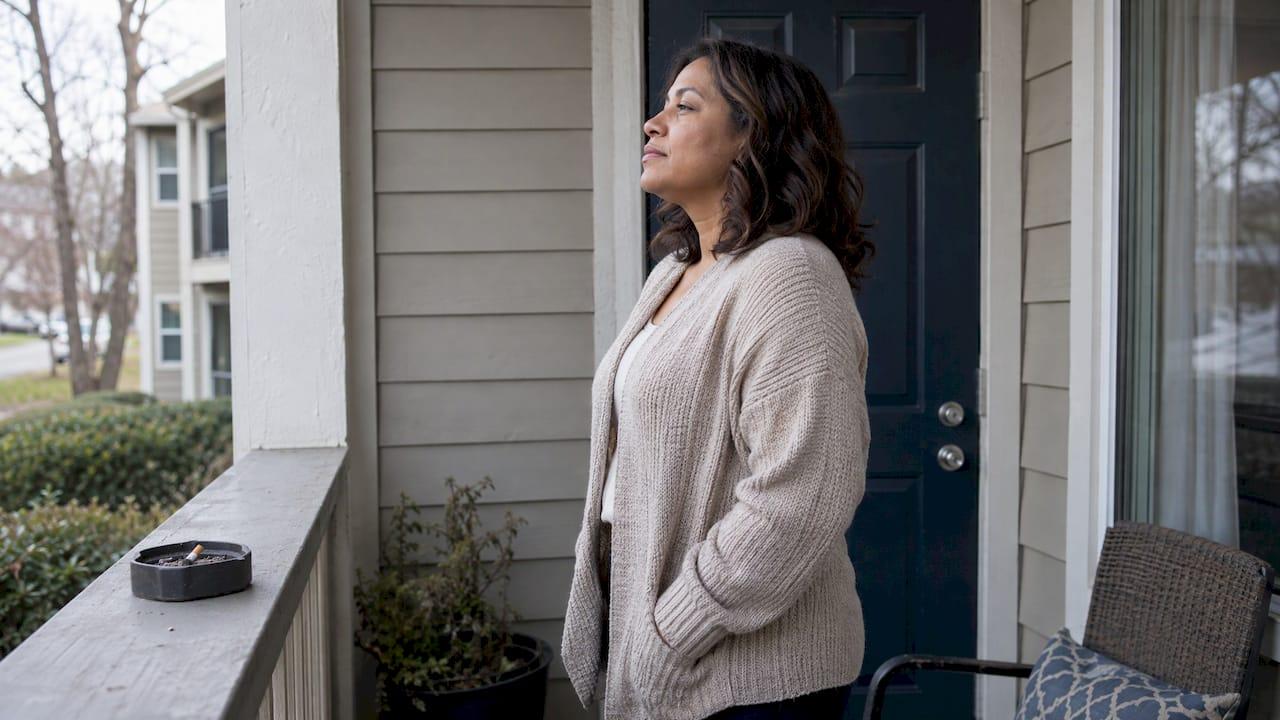
You threw the pack away. Weeks went by. Then a bad phone call, a long night, or one drink with friends, and a cigarette was in your hand. Now your chest is tight, your mind is racing, and one thought repeats: "I blew it." That spike of dread is the real danger, because anxiety is the fastest route from one cigarette back to a full pack. Hypnosis works on that stress response. It is meant to sit beside proven quit support, and a relapse is a reason to restart, not a verdict.
TL;DR
- A slip is common. The CDC describes tobacco dependence as a chronic, relapsing condition, and most people need several attempts to quit for good.
- Stress is a leading driver. In one 2019 study, 30% of participants named stress as their main reason for relapse, and 37% named habit-related cravings.
- After a slip, stop again right away, find the trigger, and plan a new response to it. Keep using any nicotine replacement you were on.
- Hypnosis targets the automatic anxiety-and-craving loop. The CDC says counseling and FDA-approved medication work best together, and hypnosis can be added to that base.
- Online sessions with a trained clinician are considered safe, according to the NCCIH.
Table of Contents
- The moment after the cigarette
- Lapse or relapse: what actually counts
- Why people go back to smoking
- What to do in the first 24 hours after a slip
- What the proven base looks like
- Where hypnosis fits after a relapse
- Building a relapse-proof week
- Warning signs that you need more than a slip plan
- Work with Kirk Hoffman online
- Is hypnosis safe?
- FAQ
- Sources
The moment after the cigarette
Most people describe the same sequence. First comes the cigarette. Then comes a wave of guilt, a hot face, a pounding heart. Then comes the sentence: "I always do this. I'll never quit."
That sentence does real damage. When you decide you have failed, your brain files the event as a threat. Your body responds the way it responds to any threat. Your heart rate goes up, your breathing gets shallow, and your muscles tighten. This is the fight-or-flight response. It is the same system that fires during panic attacks and phobias.
Now think about what nicotine has taught that system over the years. Every time you felt tense, a cigarette brought the tension down. Your subconscious mind, the part of you that runs habits without asking permission, learned a simple rule: tension means cigarette. So the stress of having slipped becomes the trigger for the next cigarette. The slip feeds itself.
Breaking that loop is the whole job. It does not require willpower in the moment of panic. It requires changing what your nervous system does when the alarm goes off.
Lapse or relapse: what actually counts
Researchers separate two things. A lapse is a single puff or cigarette after quitting, while a relapse is a return to regular smoking. The difference matters to you because a lapse is a short event. A relapse is a pattern that builds over days when the lapse is followed by shame and more cigarettes.
If you smoked once last night, you are in lapse territory. You have not lost your quit. You have a piece of information about a trigger you did not have a plan for.
The AHRQ clinical practice guideline says the risk of relapse is highest soon after quitting, but it can show up months or even years later. So a slip at month eight does not mean the earlier months were wasted.
Why people go back to smoking
A 2019 qualitative study of people in tobacco dependence treatment sorted the main reasons for relapse into four groups:
| Reason for relapse | Share of participants |
|---|---|
| Habit-related cravings | 37% |
| Stress | 30% |
| Specific life events | 22% |
| Social influences or lack of support | 11% |
The same study points out that even after intensive treatment, people returning to their normal surroundings can be thrown by events nobody planned for. That is why a quit plan that stops on day 30 often leaves a gap.
Look at the table through an anxiety lens. Cravings, stress and life events are three of the four reasons, and all three involve the body's alarm system. A craving is a small alarm. A stressful week is a bigger one. A death in the family, a job loss or a breakup is the biggest. If you already live with anxiety, panic or fear-based thinking, you have more alarms going off, so you have more moments where the old rule "tension means cigarette" gets a vote.
That is not a character flaw. It is a learned pattern, and learned patterns can be retrained.

What to do in the first 24 hours after a slip
The MedlinePlus guidance on dealing with a slip gives a short, clear order of operations: stop smoking again right away, work out what triggered the slip, and plan new ways to resist the urge. If you use nicotine replacement therapy, keep using it.
Here is how that looks in practice.
- Put the cigarette out and stop. One cigarette is a lapse. The next one is the start of a relapse. Decide now that this is the last one for today.
- Slow your body down first. Breathe in for four counts and out for six. A longer exhale tells your nervous system the threat is over. Do this for two minutes before you think about anything else.
- Write down the trigger in one line. Where were you? Who was there? What did you feel one minute before? "Argument with my sister, felt trapped, went outside" is useful. "I'm weak" is not.
- Choose one replacement response for that trigger. Walk around the block, call someone, chew gum, drink cold water. Pick one and name it in advance.
- Tell one person. Social support was one of the four reasons in the study above. Saying it out loud takes the shame out of it.
- Restart your support. The AHRQ guideline advises that people who relapse be asked whether they are willing to try again, and offered more intensive counseling or retreatment with effective medication.
The point of step three is to treat the slip as data. If your plan had no answer for "argument with my sister," you now know what to build.
What the proven base looks like
The CDC recommends behavioral counseling plus FDA-approved medication for adults who use tobacco, and says the two together can improve the chances of quitting. The approved medications it lists are nicotine replacement therapy, bupropion and varenicline. Talk to your doctor or pharmacist about which one fits you, especially if you take other medications or have a health condition.
The CDC also notes that tobacco dependence is a chronic, relapsing condition that often needs repeated intervention and long-term support. Read that as permission. You are not supposed to get this right in one try with no help.
Hypnosis does not replace that base. It addresses a piece the base does not: the automatic, subconscious reaction that fires before you have time to think.
Where hypnosis fits after a relapse
Hypnosis, in the AHRQ guideline's description, involves a clinician using suggestion to promote abstinence. Techniques vary widely from one practitioner to the next, so there is no single standard session. That is why the practitioner matters more than the label.
Here is what a clinical approach aims at, in plain terms.

The trigger link. Your mind has stored links such as coffee with a cigarette, stress with a cigarette, or being alone with a cigarette. In a relaxed, focused state, a clinician can work with those links directly. Guided imagery lets you rehearse the exact moment that tripped you, and respond differently while your body stays calm.
The alarm response. Deep relaxation is the opposite of fight-or-flight. Practicing it in session gives your nervous system a second option when tension rises. You learn what calm feels like in your body, so it becomes something you can reach for.
The self-judgment. The loop of "I failed, I'm weak, I'll always do this" is a thought pattern, and thought patterns respond to suggestion. Replacing it with a plain, factual one ("I slipped, I know the trigger, I'm back on track") removes the shame fuel.
The anxiety underneath. For many smokers, the cigarette was never about nicotine alone. It was the way they calmed a racing mind. If anxiety is the engine, treating the cigarette without treating the anxiety leaves the engine running. We have written more on this in our guide for anxiety-driven smokers using hypnosis, and on how hypnosis for smoking triggers works session by session.
What a session can and cannot promise
No ethical clinician can guarantee an outcome from a session, and the AHRQ guideline says as much about the field: protocols differ, so specific results cannot be promised. What a good session can do is give you a trained, repeatable response to your own trigger, plus practice using it. Many people also use a short self-hypnosis or relaxation routine between sessions to keep the skill fresh.
If cravings or withdrawal symptoms are your main concern, read about what nicotine withdrawal hypnosis can and can't do. If you are wondering how long the process takes, see our plan for how many hypnosis sessions to quit smoking. For the research picture, we keep a page on what studies show about success rates.
Building a relapse-proof week
Most relapse plans fail because they are vague. "Stay strong" is not a plan. Here is a concrete one for the first seven days after a slip.
Day 1. Stop. Write the trigger. Do the breathing drill. Tell one person.
Days 2 to 3. Expect cravings to come in short waves. Each one passes whether or not you smoke. Time them. Most people are surprised how brief they are.
Days 4 to 5. Rehearse your top trigger on purpose. Picture the situation, feel the first flicker of tension, and run your replacement response. Doing this in a relaxed state is the same principle hypnosis uses.
Days 6 to 7. Review. Which situation was hardest? Add support there: a call, a walk, a session.
Also look after the practical side of quitting. Weight worries push many people back to cigarettes, so it helps to know what to expect with smoking, weight gain and hypnosis. And as your body recovers, small wins add up. If stained teeth were part of what made you feel stuck, a guide to teeth whitening for smokers shows what to expect once you are smoke-free.
Warning signs that you need more than a slip plan
Some patterns call for more support than a one-line trigger note:
- You have slipped three or more times in a month.
- Every slip comes with panic, a racing heart or a sense of dread.
- You smoke mainly to get through anxiety, and you feel worse without the cigarette.
- You feel hopeless, or you have thoughts of harming yourself. In that case, call or text 988, the Suicide and Crisis Lifeline, or contact your doctor today.
The first three are exactly where anxiety-focused hypnotherapy is meant to help, because they point to a stress response that is doing the driving.
Our view: treat the alarm, not just the cigarette
When someone comes to me after a relapse, they usually open with an apology. They tell me they feel stupid, weak, ashamed. I tell them what I will tell you: the slip is not the problem. The problem is what your nervous system does in the ten seconds before you light up.
We design our sessions to work at the subconscious level, where the trigger-to-cigarette link lives. In a deeply relaxed state, using clinical hypnotherapy, NLP and guided imagery, we go after the pattern at its root rather than managing it day by day. For people whose smoking is tied to anxiety, that means addressing both together, because one keeps the other alive.
Sessions run online over Zoom, so you can do this from your own home, which matters when the urge hits in the place you actually live. Each plan is personal. Your triggers are not my other client's triggers.
A relapse is not the end of your quit. It is the clearest map you will ever get of what still needs work.
Kirk
Work with Kirk Hoffman online
Hypnotic Transformations offers online hypnotherapy to quit smoking and vaping, led by Certified Clinical Hypnotherapist Kirk Hoffman and available to clients across the United States. If anxiety is part of why you reach for a cigarette, the online hypnotherapy for anxiety page explains how the two are worked on together. Free consultations are available, and you can see all options on the services page.
Sessions take place over Zoom and draw on clinical hypnotherapy, NLP and guided imagery. Bring your last slip: where it happened, what you felt, and what you wished you had done instead. That is the material we work with.
Is hypnosis safe?
The NCCIH states that hypnosis is considered safe when performed by a health professional trained in hypnotherapy, and that self-hypnosis appears safe for most people, with no reported injuries. Hypnosis is a state of focused relaxation. You stay aware, and you cannot be made to do anything against your will.
Tell your clinician about any diagnosed mental health condition, and keep your doctor informed if you take medication to quit. If you are pregnant, read our page on quitting smoking while pregnant with hypnosis and speak with your OB provider first.
FAQ
Is one cigarette after quitting a full relapse?
No. Researchers call a single puff or cigarette a lapse, and a return to regular smoking a relapse. A lapse becomes a relapse when shame and stress lead to more cigarettes. Stop right away, note the trigger, and restart your plan.
How soon should I get help after a slip?
As soon as you can, ideally the same day or week. Relapse risk is highest soon after quitting, according to the AHRQ guideline. Early support keeps one lapse from turning into a habit again.
Can hypnosis help me quit again after relapsing?
Hypnosis aims at the subconscious trigger and the anxiety response behind a slip, which are common reasons people go back to smoking. It is best used alongside the counseling and FDA-approved medication the CDC recommends. A session cannot guarantee an outcome, but it gives you a practiced response to your own triggers.
Do I need to stop nicotine patches or gum before hypnosis?
No. MedlinePlus advises continuing nicotine replacement therapy if you are using it after a slip. Talk to your doctor or pharmacist before changing any medication.
Sources
- Patient Care, Smoking and Tobacco Use, CDC
- Clinical Interventions to Treat Tobacco Use and Dependence, CDC
- Treating Tobacco Use and Dependence: 2008 Update, AHRQ
- Cognitive, Behavioral, and Situational Influences on Relapse, 2019
- How can relapse be prevented? Tobacco in Australia
- How to stop smoking: Dealing with a slip up, MedlinePlus
- Complementary Health Approaches for Smoking Cessation, NCCIH
- Teeth Whitening for Smokers: What Works and What to Expect