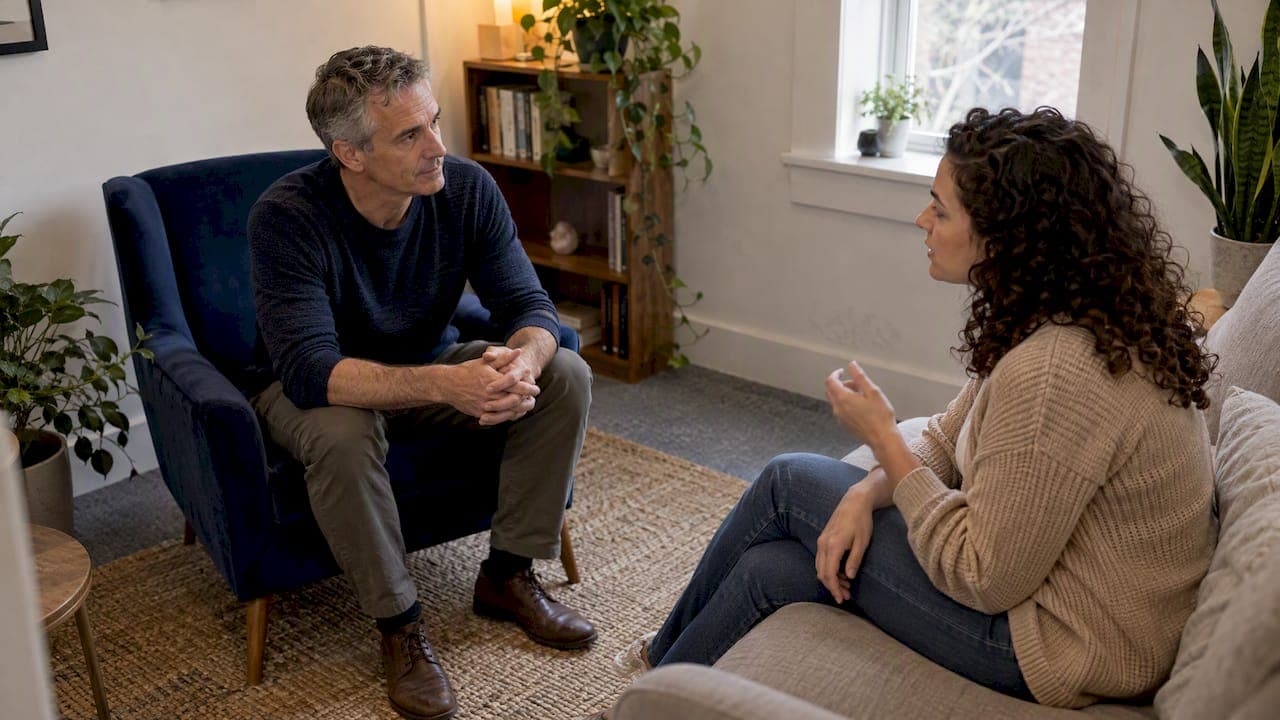
Many people notice change within a handful of hypnotherapy sessions for anxiety. Some mild or situational cases resolve after only a few sessions, while more complex or long-standing anxiety often requires more sessions. Sessions typically run 60 to 90 minutes, delivered online or in person. A 2019 meta-analysis backs this up.
TL;DR:
- A single, defined fear may fit 1 to 3 sessions, mild situational anxiety 2 to 4, generalized anxiety 4 to 6, and trauma related cases 6 to 9 or more.
- Weekly appointments suit standard anxiety, while acute panic or a disruptive phobia may call for twice weekly visits during the first two or three sessions.
- Years of symptoms, trauma, or substance use can extend treatment; practicing self hypnosis and combining hypnosis with cognitive behavioral therapy or exposure work may shorten it.
- Track symptoms and functional milestones, then revisit the plan after 2 to 4 sessions or sooner if progress stalls, rather than continuing without reassessment.
Table of Contents
- Common Session-Count Ranges and When Each One Fits
- Key Factors That Change the Number of Sessions You Need
- What Happens in a Session: From Intake to the Four Stages
- When to Expect Change and When to Reassess
- A Clinician's View on Planning an Efficient Anxiety Course
- Booking an Anxiety Hypnotherapy Package With Us
- FAQ
- Sources
Common Session-Count Ranges and When Each One Fits
The right number of sessions depends on what you're dealing with and how long it's been going on. Clinicians generally sort anxiety treatment into four brackets.
- Quick course (1 to 3 sessions): fits a single, well-defined fear, like a fear of flying before a specific trip or a one-time performance anxiety event.
- Short course (2 to 4 sessions): fits mild or situational anxiety, such as stress tied to a new job or a temporary life change.
- Standard course (4 to 6 sessions): fits generalized anxiety that shows up across multiple areas of life, like constant worry, racing thoughts, or trouble sleeping.
- Extended course (6 to 9 or more sessions): fits anxiety that's long-standing, tied to trauma, or layered with another condition like depression or substance use.
A Stanford Lane Blog summary of the research points to substantial reduction in anxiety symptoms across trials, with effects holding up well at follow-up. That durability is part of why shorter courses often work: the nervous system doesn't need constant retraining once a new response pattern takes hold.
Scheduling matters too. Weekly sessions give your subconscious mind time to practice a new response between appointments, which usually works well for standard anxiety. Closer spacing, like twice a week for the first two or three sessions, tends to help with acute panic or a phobia that's actively interfering with daily function, because it interrupts the fight-or-flight loop before it becomes more entrenched.

Key Factors That Change the Number of Sessions You Need
No two anxiety cases are identical, so the session count shifts based on a handful of specific variables.
- Severity and how long it's been going on: anxiety that's been present for years usually takes longer to shift than anxiety that started a few months ago.
- Type of anxiety: panic attacks, generalized worry, specific phobias, and performance anxiety each respond to different pacing. A phobia often resolves faster because it's tied to one trigger, while generalized anxiety touches more of daily life.
- Comorbid conditions: trauma history or substance use typically adds sessions, since the subconscious patterns are more layered.
- Between-session effort: clients who practice the self-hypnosis techniques given as homework tend to need fewer total sessions than those who don't.
- Combination with other support: pairing hypnosis with cognitive behavioral therapy or exposure work tends to shorten the overall course and deepen the result, according to the meta-analysis on hypnosis for anxiety, which found better outcomes when hypnosis was combined with other psychological interventions.
Pro Tip: Write down your anxiety triggers and physical symptoms for a week before your first session. It gives your clinician concrete data to build the session plan around, instead of general impressions.
Some clients explore medical options alongside hypnotherapy, especially for acute situational symptoms like public speaking. A resource on propranolol for anxiety explains how that medication is sometimes used for short-term, situational symptoms, which can be worth discussing with a physician if performance anxiety is the main concern.
What Happens in a Session: From Intake to the Four Stages
Before your first hypnotherapy session even starts, a clinician typically completes three preparatory steps.
- Intake interview: the clinician asks about your anxiety history, what triggers it, and what you've already tried.
- Goal setting: you and the clinician agree on measurable targets, like reducing panic frequency or sleeping through the night, as covered in this guide to preparing for hypnotherapy.
- Safety screening: the clinician checks for trauma indicators or conditions that need a different approach before hypnosis begins.
Once the session starts, anxiety-focused hypnotherapy generally follows four stages, detailed further in this breakdown of the four stages of a session:
- Induction: guided relaxation brings your body out of fight-or-flight and into a calmer nervous system state.
- Deepening: the clinician guides you further into focused attention, where the subconscious mind becomes more receptive to new suggestions.
- Therapeutic suggestion: specific language and imagery target the anxious pattern, replacing it with a calmer, more useful response.
- Reorientation: you're brought back to full awareness gradually, often with a suggestion that reinforces the new pattern outside the session.
Sessions run 60 to 90 minutes, which gives enough time for all four stages without rushing the deepening phase, a point covered in more detail in this overview of session length. Clinicians track progress by comparing symptom reports session to session and reassess the plan if results stall after the agreed number of sessions.
When to Expect Change and When to Reassess
Most people notice something shifting within the first 1 to 3 sessions, usually in the form of calmer sleep or less reactivity to a specific trigger. Broader, more generalized anxiety often needs 4 sessions before the change feels consistent rather than occasional.
- Early markers: better sleep, fewer intrusive worry loops, less physical tension within the first few sessions.
- Outcome measures: clinicians often track symptom scales alongside functional milestones, like returning to an avoided activity or getting through a trigger without a panic response.
- Reassessment point: after a short course of 2 to 4 sessions, or any time progress plateaus, it's worth revisiting the plan with your clinician rather than continuing on autopilot.
- Maintenance: many clients schedule a single follow-up session a few months out, paired with the self-hypnosis techniques learned in treatment, to reinforce the new response pattern.
A Clinician's View on Planning an Efficient Anxiety Course
I start most anxiety clients with a short, measurable course rather than an open-ended commitment. It's easier to judge what's working when you agree on a number up front and check progress against it.

I extend treatment when the nervous system shows a pattern that needs more repetition, not just when a client wants more sessions. Trauma and long-standing panic usually fall into that category.
Hypnotherapy works well on its own for many anxiety cases, and it also pairs naturally with other support, like counseling for attachment-related anxiety covered in this guide on anxious attachment, when the anxiety is tied to relationship patterns.
— Kirk
Booking an Anxiety Hypnotherapy Package With Us
We run Online Hypnotherapy for Anxiety: Permanent Relief, Not Management in 60 to 90 minute sessions, built around the same standard and extended courses described above. Our sessions run over Zoom, so you can book from anywhere.
- Sessions start with intake and goal setting so the plan is built around specific triggers, not a generic script.
- The first appointment includes safety screening and initial induction and deepening work.
- Follow-up sessions build on the same subconscious pattern, with homework between appointments.
| What to expect | Detail |
|---|---|
| Session length | 60 to 90 minutes |
| Delivery format | Online via Zoom |
| Typical course length | 4 to 6 sessions for generalized anxiety |
| First step | Free consultation |
Pricing for our anxiety packages is available on request through our services page. If you're ready to find out what a realistic course looks like for your specific anxiety, book an appointment and we'll build the plan from there.
FAQ
How to fall asleep when anxious?
Slow your breathing before bed, aiming for a longer exhale than inhale, which signals your nervous system to step out of fight-or-flight. Many clients also use a recorded self-hypnosis track at bedtime to guide the body into a relaxed state faster than lying awake with racing thoughts.
Is it normal to feel tired after hypnosis?
Yes, mild tiredness after a hypnotherapy session is common and usually passes within an hour or two. It reflects the deep relaxation your nervous system just moved through, not a negative reaction.
How to do self-hypnosis for anxiety?
Find a quiet spot, focus on slow breathing, and use a simple repeated phrase or image that represents calm, holding that focus for several minutes. Clinicians often teach a personalized version of this during sessions so it matches the specific pattern you're working on.
How to beat anxiety?
There's no single fix, since anxiety responds differently depending on its cause and how long it's been present, but reducing the nervous system's fight-or-flight reactivity is central to most effective approaches. A 2019 meta-analysis found hypnosis produced a meaningful reduction in anxiety symptoms, with stronger results when combined with other psychological interventions like CBT.
Sources
- The efficacy of hypnosis as a treatment for anxiety: a meta-analysis (PubMed)
- Hypnosis for Anxiety Relief — Lane Blog (Stanford)