
You stay awake and in control the entire time. That is the single fact that changes how you should prepare for hypnotherapy. Beyond that, three things matter most before your first session: sleep a full night, eat a light meal while skipping alcohol and recreational drugs, and walk in with clear, specific goals plus a quick note on your medications for the intake.
TL;DR:
- Adequate sleep, light eating, and mental clarity are crucial to stay alert and receptive during hypnotherapy sessions, especially to prevent falling asleep or becoming overstimulated.
- Bringing specific, measurable goals and notes on triggers and medications allows the hypnotherapist to tailor the session effectively and track progress over time.
- Physical preparation, such as avoiding heavy carbs, caffeine, alcohol, and recreational drugs, supports a calm nervous system essential for successful hypnosis induction.
- Genuine willingness and open participation matter more than belief in hypnosis, with daily pre-session habits like paced breathing and muscle relaxation enhancing receptivity.
- First sessions typically last 60 to 90 minutes, focusing on intake, induction, deepening, suggestion, and post-session reflection, with recordings recommended for reinforcement.
Table of Contents
- What Are the Three Essential Steps to Prepare for Hypnotherapy?
- Quick Day-Before and Day-Of Checklist
- How to Set Clear Goals Before Your Intake
- Physical Preparation: Sleep, Food, and What to Avoid
- Is It Better to Believe in Hypnosis or Just Be Open to It?
- What Happens During a First Hypnotherapy Session?
- Aftercare and Integration: What to Do After Your Session
- How Do You Choose a Qualified Hypnotherapist?
- How Do You Tell Your Hypnotherapist You're Nervous or Skeptical?
- Common Misconceptions That Keep People From Booking
- Clinician Perspective: Preparing the Nervous System, Not Just the Mind
- How Hypnotic Transformations Helps First-Time Clients
- Sources
What Are the Three Essential Steps to Prepare for Hypnotherapy?
The panic that keeps you from booking a session usually comes from one misconception: that hypnosis means losing control of your mind. It does not. Mayo Clinic is clear on this: you remain fully aware and in charge of your behavior throughout the process. Hypnosis is a tool for managing anxiety and fear responses, not a trapdoor into someone else's control.
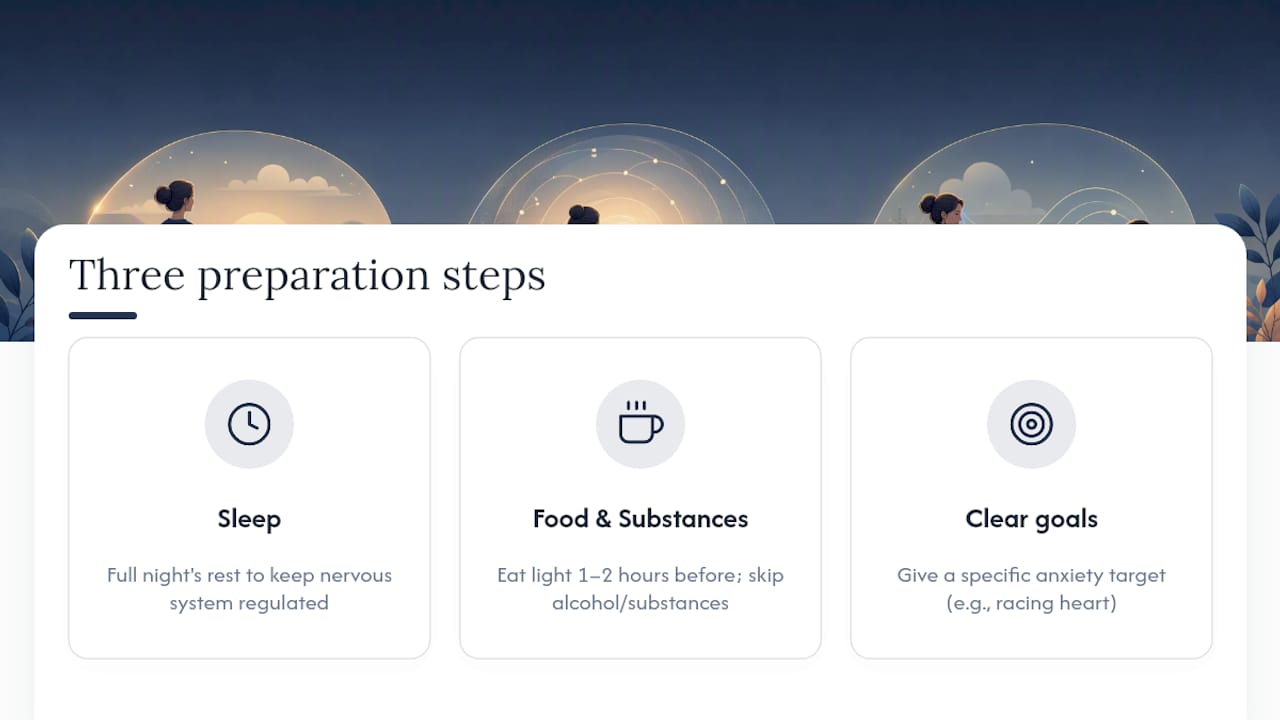
Once that fear is off the table, three preparation steps do the real work.
Sleep. A full night's rest keeps your nervous system regulated enough to focus. Show up exhausted and you will either fight to stay alert or, ironically, fall asleep during the induction instead of settling into the state your therapist is guiding you toward.
Food and substances. Mayo Clinic recommends eating something light one to two hours before your appointment, following practical advice from our Mindful Snacking Habits Checklist, and skipping alcohol or recreational substances beforehand. An empty stomach or a substance-altered brain both make it harder for your nervous system to settle.
Clear goals. Walking in with "I want to feel less anxious" is fine, but "I want to stop the racing heart that hits me before client meetings" gives your hypnotherapist something specific to work with.
Quick Day-Before and Day-Of Checklist
Preparation for a hypnotherapy session is not complicated, but a little planning removes a lot of unnecessary stress before you even sit down.
The day before:
- Get a full night's sleep. Treat this like the night before a big presentation, not a lazy Sunday.
- Skip alcohol.
- Write down your goals and list any medications you take.
- Pack your ID and payment method if you're seeing a hypnotherapist in person.
- Charge your laptop or phone if your session is over Zoom.
The day of:
- Eat something light one to two hours beforehand.
- Cut back on caffeine. Jittery is the opposite of receptive.
- Wear something comfortable. This is not the day for stiff work clothes.
- Log in or arrive 10 to 15 minutes early.
- Silence your phone completely, not just on vibrate.
Bring notes on your triggers, your medication list, a notebook, water, tissues, and your payment or insurance information.
How to Set Clear Goals Before Your Intake
Vague goals produce vague results. "I want to feel calmer" gives your hypnotherapist nothing to measure. "I want my panic attacks to drop from daily to once a week" gives them a number to track and a target to aim for.
A few examples of specific, trackable goals:
- Reduce panic attacks from daily occurrences to once or twice a week
- Stay smoke-free during the eight-hour workday before tackling evening cravings
- Sleep through the night without waking at 3 a.m. in a panic
At intake, be ready to talk about your triggers, how long the problem has gone on, any treatments you've already tried, your current medications, and whether you've done hypnosis before. A short note on your phone works well. Try this template: "Main issue: [specific fear or pattern]. When it started: [timeframe]. What triggers it: [situations]. Tried before: [therapies, medications]. Current meds: [list with dosages]."
Physical Preparation: Sleep, Food, and What to Avoid
Your body's state walking into a session matters as much as your mindset. Hypnosis relies on your nervous system settling into a calm, focused state, and certain physical habits either support that or work against it.
Pro Tip: If you're nervous about drowsiness, avoid a heavy carb-loaded lunch right before your appointment. A light meal keeps blood sugar steady without the post-meal crash.
A rested, properly fed body responds better to suggestion than an exhausted or overstimulated one. Roughly a third of American adults report getting less than the recommended seven hours of sleep on a typical night, which is exactly the kind of chronic fatigue that blunts focused awareness during induction.
Keep this list in mind on session day:
- Sleep a full night beforehand. Do not treat the session as a nap opportunity.
- Eat a light meal one to two hours before to avoid hunger pangs or nausea mid-session.
- Skip alcohol and recreational drugs, and go easy on caffeine the day of.
- Wear comfortable clothing, use the restroom beforehand, and keep water nearby without overdoing it right before you start.
Is It Better to Believe in Hypnosis or Just Be Open to It?
You do not need to believe in hypnosis for it to work. You need to be willing to participate. Cleveland Clinic frames hypnotherapy as a collaborative process, and your willingness to engage matters far more than blind faith that it will work.
That distinction matters if you're the type who walks into new things skeptical. Healthy skepticism, the kind that shows up and gives the process a real shot, is completely different from active resistance, where part of you is quietly working against the therapist the whole time. One is normal. The other undermines the session before it starts.
A few short daily habits in the days before your appointment build receptivity:
- Paced breathing for 5 to 10 minutes, inhaling for four counts and exhaling for six
- Progressive muscle relaxation, tensing and releasing each muscle group for a few seconds at a time
- A short guided imagery exercise or basic self-hypnosis practice most evenings
Pro Tip: Ten minutes before your session, sit somewhere quiet and run through four rounds of slow breathing while naming three things you can see, hear, and feel. It settles your nervous system before your therapist even says hello, whether you're in a waiting room or logging into Zoom.
What Happens During a First Hypnotherapy Session?
A typical first appointment runs 60 to 90 minutes, and most of that time goes to conversation, not the trance itself. Here's the rough breakdown:
- Intake (15 to 30 minutes): your therapist asks about triggers, history, medications, and goals
- Induction (5 to 15 minutes): guided relaxation brings you into a focused state
- Deepening (5 to 10 minutes): techniques that settle you further into that state
- Therapeutic suggestions (15 to 30 minutes): the actual work targeting your specific goal
- Post-session discussion (10 to 15 minutes): debriefing what you noticed and next steps
Induction methods vary. Some therapists use progressive relaxation, others use guided imagery or eye fixation. Responsiveness looks different for everyone. Some people feel heavy and drowsy, others stay alert but deeply calm, and your therapist will adjust the approach based on how you respond, not force a script that doesn't fit. Many practitioners send home recordings or short self-hypnosis assignments afterward to reinforce the work between sessions.
Aftercare and Integration: What to Do After Your Session
Plan something low-key for the 30 to 120 minutes after your appointment. Skip stressful meetings or errands if you can. Drink some water, and jot down whatever you noticed, even if it feels minor.
- Hydrate and rest before jumping back into your day
- Journal any shifts in thought patterns, mood, or physical sensations
- Use any recording your practitioner provided within the first day or two while it's fresh
- Track symptoms on a simple 1 to 10 scale daily to report at your next session
- Contact your clinician if you feel unusually unsettled or anxious afterward rather than waiting for the next appointment
How Do You Choose a Qualified Hypnotherapist?
Credentials matter more than confidence. A hypnotherapist should hold a real clinical certification, not just a weekend course completion certificate.
Look for these trust signals before booking:
- A recognized certification such as Certified Clinical Hypnotherapist (CCHt)
- Evidence of continuing education in the field
- A clear intake process before any therapeutic work begins
- Transparent pricing with no pressure to buy a package upfront
Questions worth asking during a consult: What's your training and licensing? Have you worked with clients on this specific issue before? How long do sessions typically run? Do you provide recordings afterward? What's your cancellation policy?
Red flags include vague answers about credentials, pressure to commit to a multi-session package before a single consultation, and no clear policy on privacy or client safety. If a practitioner ducks a direct question about training, that's your answer.
How Do You Tell Your Hypnotherapist You're Nervous or Skeptical?
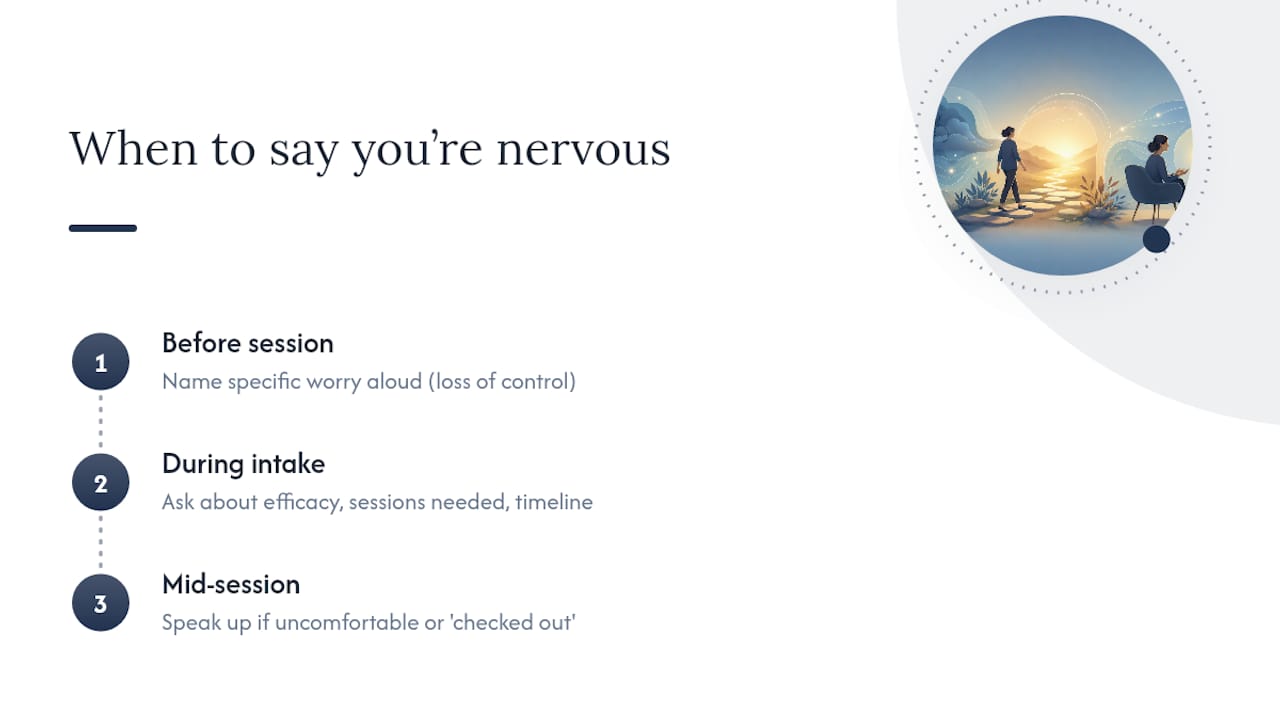
Say it out loud, before the session starts. A good hypnotherapist has heard every version of "I'm not sure this will work on me" and won't flinch. What matters is getting the specific worry on the table instead of sitting on it quietly.
If your fear is about losing control, name that directly: "I'm worried I won't be able to snap out of it" or "I'm afraid I'll say something embarrassing." A trained clinician will explain, again, that you remain aware and can open your eyes or speak at any point. That single clarification resolves most of the anxiety before induction even begins.
If your doubt is about whether hypnosis actually works for your issue, ask about it directly during intake. Ask how many sessions similar clients typically need, what a realistic timeline for change looks like, and whether their approach adjusts if the first technique doesn't click. A therapist who welcomes that question is doing their job well. One who gets defensive is a signal to look elsewhere.
Mid-session doubts deserve the same treatment. If something feels off, uncomfortable, or you simply don't feel like you're "doing it right," say so in that moment. Nothing about hypnosis requires silent suffering through discomfort. Your therapist would rather pause and adjust than have you white-knuckle through a session where you've mentally checked out. This is also where the earlier work on setting specific goals pays off again. When you've already named your exact fear and its trigger during intake, voicing a doubt mid-session becomes an extension of that same conversation instead of a scary interruption.
Common Misconceptions That Keep People From Booking
The biggest myth is that hypnosis is mind control, something a therapist does to you while your own will checks out. It isn't. You cannot be hypnotized against your will, and you cannot be made to do something that violates your values or safety while under hypnosis. Every reputable clinician will tell you this upfront because it's true, not because it's reassuring marketing.
A second myth: you have to be highly suggestible or "the right type of person" for it to work. In reality, most people can be hypnotized to some degree, and the deciding factor is willingness to participate, not some rare personality trait.
Third myth: hypnosis will make you unconscious, like a stage act or a nap. You'll typically stay aware of sounds, sensations, and your own thoughts the entire time, just in a narrower, more focused state of attention.
Fourth myth: one session fixes everything. Some issues do respond quickly, but most anxiety and fear patterns took years to build and typically need a handful of sessions to unwind, plus practice with recordings between appointments.
The best way to dispel any of these before you start is simple: ask your hypnotherapist directly during your consultation. A clinician confident in their training will walk you through exactly what will and won't happen, in plain terms, before you ever sit down for the real session.
Clinician Perspective: Preparing the Nervous System, Not Just the Mind
Most people booking their first session aren't managing generic stress. They're managing a specific fear response, a racing heart before a meeting, a phobia that's boxed in their life for years. The routine I recommend before any first appointment is simple: five minutes of paced breathing, four counts in, six counts out, followed by naming three things you can see and hear in the room. That alone lowers baseline arousal enough to make the work in session land better.
I emphasize measurable goals over vague ones because vague goals produce vague progress reports. And I always send a recording home, because a single session rarely rewires a pattern that took years to form. The daily five minutes between appointments does more than people expect.
— Kirk
How Hypnotic Transformations Helps First-Time Clients
Hypnotic Transformations offers online clinical hypnotherapy for anxiety and fear, led by Certified Clinical Hypnotherapist Kirk Hoffman, without the drive to an office or the waiting room nerves.
Your first appointment starts with an intake conversation covering your specific triggers, timeline, and goals, the exact preparation this article walks through. From there, sessions run over Zoom, and most clients receive a recording afterward to reinforce the work between appointments, along with simple guidance on what to track before the next session. If panic attacks, phobias, or fear-based thinking have been running your decisions for too long, book a consultation for online hypnotherapy for anxiety and bring the goals you've already written down. That's the whole starting point.
This article is general information, not a substitute for advice from a qualified doctor. Consult a qualified healthcare professional about your own circumstances before acting on anything here.
Sources
- Hypnosis - Mayo Clinic
- Hypnosis - Cleveland Clinic
- How to Prepare for Your First Hypnotherapy Session: A Complete Guide - Hypnotist Minds