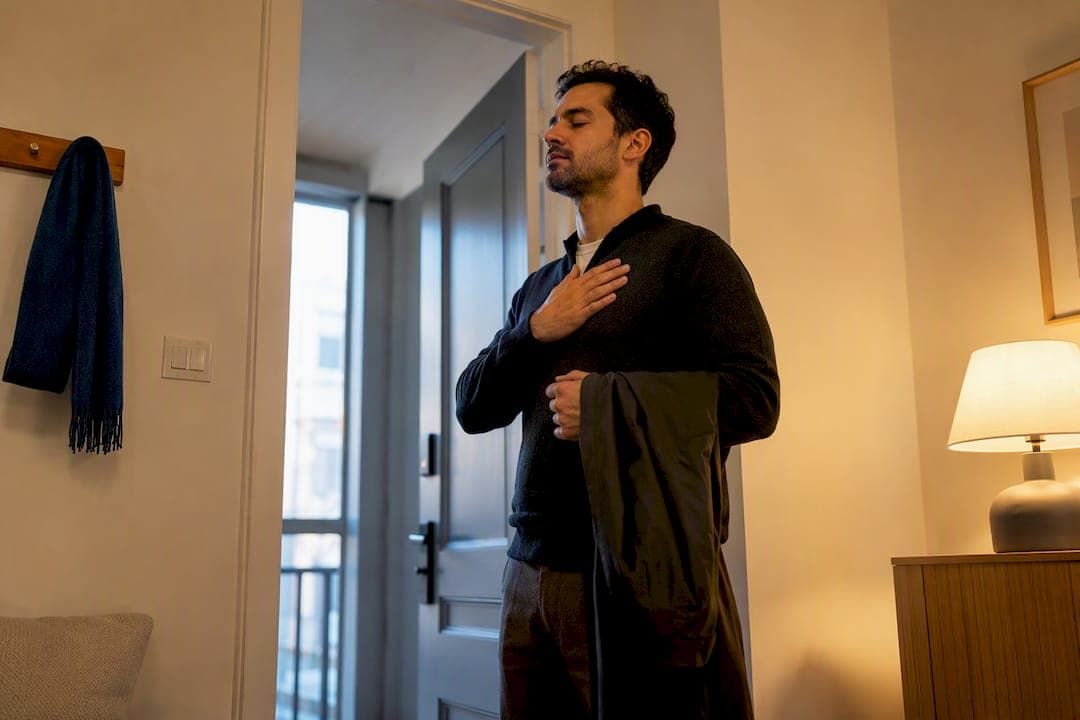
Clinical hypnosis can measurably reduce social anxiety symptoms for many people, and a randomized controlled trial using EEG biomarkers backs that up. The most useful next step is small: try a short guided self-hypnosis session this week or book a consultation with a certified clinical hypnotherapist. If your anxiety includes suicidal thoughts or leaves you unable to function, talk to a mental health professional first.
TL;DR:
- Hypnotherapy has been shown to reduce brain markers associated with threat perception, correlating with lower social anxiety scores in clinical trials.
- Short guided self-hypnosis recordings can help calm physical symptoms and prepare mentally for social situations, especially with a post-hypnotic cue.
- Professional sessions are most effective for long-standing or complex anxiety, with customizable suggestions based on specific triggers and measurable goals.
- Hypnosis should be avoided by individuals with active psychosis, severe dissociative disorders, or those experiencing suicidal thoughts without professional support.
- Combining hypnotherapy with cognitive behavioral therapy or ongoing support often yields the best results for social anxiety reduction.
Table of Contents
- What Is Social Anxiety and Where Does Hypnosis Fit?
- How Does Hypnosis Work on a Socially Anxious Brain?
- What Does the Research Actually Show?
- Professional Sessions, Online Therapy, or Self-Hypnosis: Which Fits You?
- What Happens in a Clinical Hypnotherapy Session?
- When Should You Be Cautious About Hypnosis?
- A Clinician's Notes on Individualized Treatment
- Your Next Four Steps
- How Hypnotic Transformations Can Help
- Sources
What Is Social Anxiety and Where Does Hypnosis Fit?
Social anxiety disorder is a persistent fear of being watched, judged, or embarrassed in front of others. It is not shyness. The fear shows up before an event, during it, and often for hours afterward.
Common symptoms include:
- Racing heart or shaking hands before speaking in a meeting
- Avoiding phone calls, parties, or eye contact
- Rehearsing conversations obsessively beforehand
- Blushing, sweating, or nausea in social settings
- Harsh self-criticism after any perceived misstep
Cognitive behavioral therapy and medication remain the first-line treatments recommended by the National Institute of Mental Health. Hypnosis is not a replacement for either. It works best as a complement, particularly for people who have already tried talk therapy and want a tool that targets the body's reaction, not just the thoughts.
How Does Hypnosis Work on a Socially Anxious Brain?
Social anxiety often runs on a hair-trigger threat detector. Your brain scans faces for disapproval before you've even said a word, and your nervous system reacts as if a real threat is present. Hypnosis appears to work by turning down that alarm at the source.
Researchers measure this with two markers: N170 and LPP. N170 is a fast electrical signal in the brain that fires within milliseconds of seeing a face, and it reflects how much attention your brain automatically pays to that face as a potential threat. LPP, the late positive potential, shows up a bit later and reflects how much emotional weight your brain assigns to what it just saw. In people with social anxiety, both tend to run hot.
A randomized controlled trial found that after hypnotherapy, participants showed reduced N170 and LPP amplitudes, and those reductions correlated with lower social anxiety scores. Smaller amplitudes mean the brain is treating neutral faces as less threatening.
During an induction, a hypnotherapist guides you into a state of deep physical relaxation, which lowers the physiological arousal that normally accompanies fight-or-flight. In that calmer state, you can mentally rehearse a feared situation, like walking into a crowded room, without your body reacting as if it's actually happening. That's imaginal exposure with the volume turned down.
Pro Tip: A post-hypnotic cue, something as simple as a slow exhale paired with a specific word, gets installed during a session so you can trigger a calmer state on your own before a real social situation.
What Does the Research Actually Show?
The strongest evidence right now comes from a Frontiers Psychiatry trial that ran participants through several weekly hypnotherapy sessions. The results showed significant improvements in Liebowitz Social Anxiety Scale (LSAS) scores, alongside the N170 and LPP changes described above. That pairing matters. It's not just self-reported "I feel better." The brain's own face-processing signals shifted in a direction that matched the symptom improvement.
A related study using similar EEG methodology found the same pattern: anxiety improvement tracked closely with reduced amplitude in these markers, reinforcing that the effect isn't a fluke of one research team.
Here's where honesty matters:
- Sample sizes in these trials are modest, and the findings need replication in larger groups.
- CBT has decades of research behind it and remains the better-documented option for most people.
- Hypnotherapy research is newer, but the mechanism findings are specific rather than vague, which is unusual for early-stage evidence.
The practical takeaway: hypnosis looks like a genuinely promising option, especially for the physical, automatic side of social fear. It's not yet positioned to replace CBT, but it doesn't need to. Used alongside it, or after it, the evidence suggests real value.
Professional Sessions, Online Therapy, or Self-Hypnosis: Which Fits You?
The right entry point depends on how entrenched your anxiety is and how much support you want along the way.
- Clinician-led sessions work best for complex or long-standing anxiety, especially when it's tangled up with other issues like panic attacks or a specific phobia. A hypnotherapist tailors the induction and suggestions to your specific triggers.
- Online video sessions deliver nearly the same individualized work as in-person care, minus the commute, and let you practice new responses in the actual environment (your home, your desk) where you'll use them.
- Guided audio recordings and self-hypnosis can calm autonomic symptoms like a racing heart before a specific event, and they're a reasonable adjunct for milder cases, though they don't adapt to your specific attention patterns the way a clinician does.
If you're evaluating a hypnotherapist, check for: a real certification (like Certified Clinical Hypnotherapist), a stated clinical focus on anxiety rather than general wellness, telehealth experience, clear informed consent about what a session involves, and a willingness to set a measurable goal with you, not just vague talk of relaxation.
Costs and session counts vary by provider and by how complex your case is, so ask directly during a consultation rather than assuming a flat rate.
What Happens in a Clinical Hypnotherapy Session?
A typical session runs about 45 to 60 minutes and follows a predictable arc:
- Intake conversation about your specific triggers, like presentations or small talk
- Induction into a relaxed, focused state
- Targeted suggestions addressing your attention bias and physical stress response
- Installation of a post-hypnotic cue you can use outside the session
- A short homework task, like practicing the cue before one low-stakes interaction
The research trial protocol used multiple weekly sessions as its benchmark, and many clinicians use a similar timeline as a starting point before adjusting based on your progress. Progress gets tracked with tools like the LSAS and with concrete behavioral goals: did you make the phone call, did you speak up in the meeting, did you stay at the party past the first ten minutes.
When Should You Be Cautious About Hypnosis?
Hypnosis is a state of focused attention where you remain aware and in control, not something done to you against your will. Still, it isn't right for every situation.
- People with active psychosis or severe dissociative disorders should avoid hypnosis or only use it under close psychiatric supervision.
- Suicidal thoughts, self-harm, or a level of anxiety that stops you from working or leaving the house call for a mental health professional or your doctor first, not a hypnosis session.
- A qualified hypnotherapist gets informed consent up front, explains what the session will involve, and checks in during the process if you show signs of distress.
If symptoms are severe or you're unsure where you fall, Mayo Clinic's guidance on psychotherapy and medication options is a solid starting point for what conventional care looks like.
A Clinician's Notes on Individualized Treatment
A certified clinical hypnotherapist builds each session around what a client's anxiety actually looks like in practice. Someone who freezes before presentations needs different suggestions than someone who avoids eye contact in one-on-one conversations. The technique gets matched to the pattern, not the other way around.
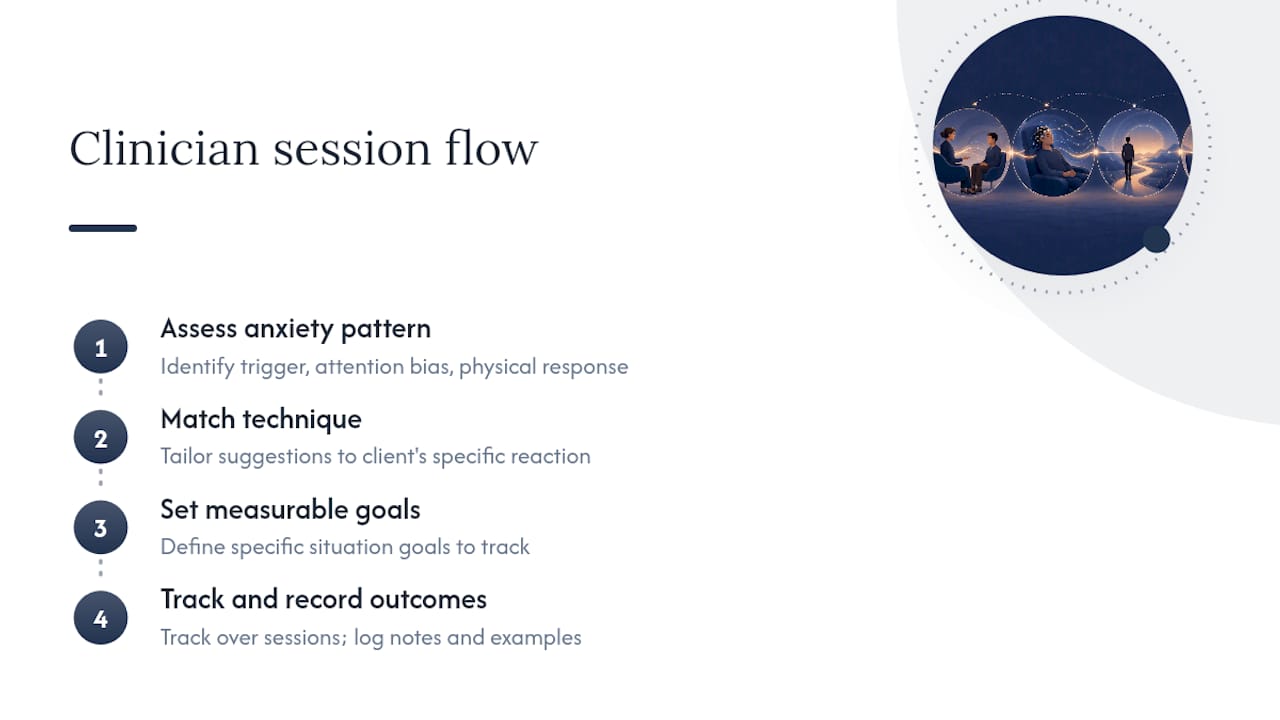
Practice notes and outcome examples from client work are kept on the public speaking anxiety guide on the site, which walks through how a session gets structured around one specific trigger.
Measurable goals stay central to the work: a specific situation the client wants to handle differently, tracked over several sessions, rather than a vague sense of "feeling calmer." That's also how the clinical research gets translated into a real session, matching suggestion and technique to the attention bias and physical response each client actually shows.
— Kirk
Your Next Four Steps
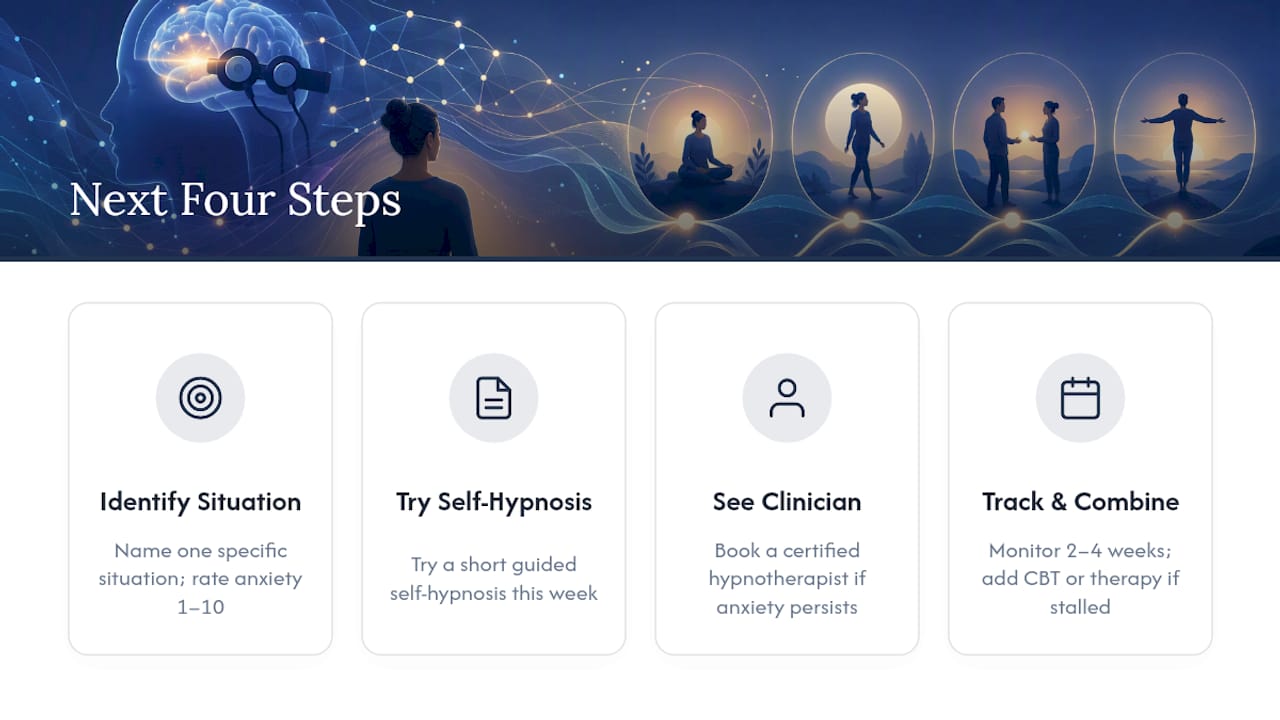
Start by naming one specific situation, not "social anxiety" in general. Maybe it's speaking up in team meetings, or making small talk at a family gathering. Rate how anxious it makes you from 1 to 10.
Second, try a short guided self-hypnosis recording this week, ideally before a lower-stakes version of that situation. Notice whether your body settles even slightly.
Third, if the anxiety has stuck around for months or interferes with work or relationships, book a consultation with a certified clinical hypnotherapist. A trained clinician can target your specific pattern in a way a generic recording cannot.
Fourth, track what changes over two to four weeks, and don't hesitate to pair the work with CBT skills or a therapist if progress stalls. Combining approaches beats waiting for one to work alone.
How Hypnotic Transformations Can Help
Online clinical hypnotherapy sessions are offered through Zoom, built specifically around your triggers rather than a one-size script. Unlike a self-guided recording, each session gets tailored to your specific attention patterns and physical stress responses, with post-hypnotic cues you can actually use before a real presentation or conversation.
A free consultation comes first, where you'll talk through your specific social anxiety pattern and what a realistic session plan looks like. From there, a short series of weekly sessions, similar in structure to what the clinical research describes, can be followed, with concrete goals tracked along the way. If you're ready to try clinician-led hypnotherapy instead of a generic app, book your free consultation and describe the specific situation you want to change.
Sources
- Hypnotherapy modulating early and late event-related potentials components of face processing in social anxiety
- Hypnotherapy modulating early and late event-related potentials components of face processing in social anxiety — Frontiers Psychiatry
- Hypnosis overview — Cleveland Clinic
- Social Anxiety Disorder: What You Need to Know — NIMH
- Social anxiety disorder — diagnosis and treatment — Mayo Clinic
This article is general information, not a substitute for advice from a qualified doctor. Consult a qualified healthcare professional about your own circumstances before acting on anything here.