Clinical hypnotherapy can meaningfully reduce or stop hair pulling in adults with trichotillomania. Peer-reviewed studies show it outperforms habit reversal therapy on both focused and automatic pulling, and a case series published in Acta Paediatrica documented resolution within 7–16 weeks with no recurrence over a 12–18 month follow-up for most patients. This is not a fringe claim. It is what the clinical literature consistently shows.
TLDR:
- Hypnotherapy produced a statistically greater reduction in hair pulling than habit reversal therapy in a comparative study.
- Resolution in select cases occurred in as few as seven sessions; most patients improve within weeks to a few months.
- Kirk Hoffman, Certified Clinical Hypnotherapist at Hypnotictransformations, offers online sessions for adults with trichotillomania and anxiety-linked pulling.
Table of Contents
- What does the research actually show about hypnotherapy for hair pulling?
- How does clinical hypnotherapy actually reduce the urge to pull?
- What does a typical treatment plan look like?
- Who is a good candidate, and when should you seek additional care?
- How do you choose a qualified clinical hypnotherapist?
- Practical supports to use alongside hypnotherapy
- How Hypnotictransformations treats trichotillomania
- Key Takeaways
- A clinician's perspective on what actually matters in treatment
- Ready to try clinical hypnotherapy for hair pulling?
- Sources and further reading
What does the research actually show about hypnotherapy for hair pulling?
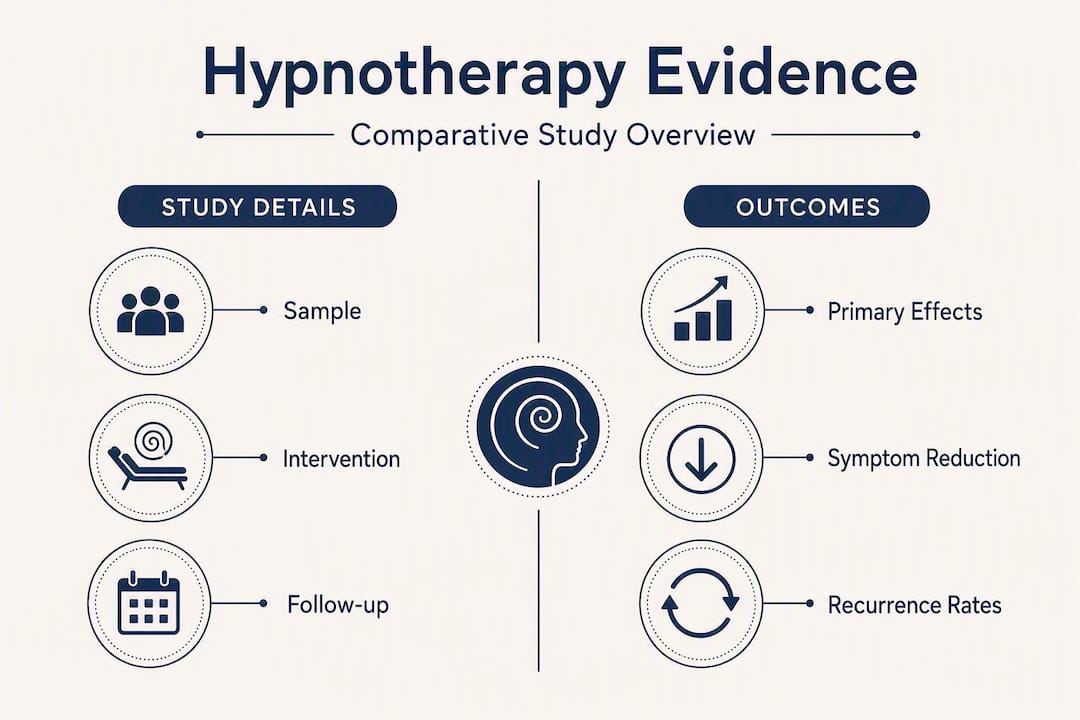
The strongest head-to-head evidence comes from a comparative study that measured both focused and automatic pulling. Hypnotherapy produced a more statistically significant reduction in both pulling subtypes than habit reversal therapy, and also showed a statistically significant increase in self-esteem versus the control group. That second finding matters clinically. Shame and self-esteem are tightly bound to trichotillomania, and a treatment that addresses both the behavior and the self-concept is doing something habit reversal alone does not.
A case series in Acta Paediatrica reported hair-pulling resolution within 7–16 weeks, with most patients showing no recurrence across a 12–18 month mean follow-up. Three adolescent cases using Ericksonian imaginative suggestion showed sustained improvement at six months. Three pediatric cases treated with hypnosis plus family agreements extinguished scalp pulling in seven visits or fewer with no relapse at up to six months follow-up.
The evidence base is primarily case series and small comparative studies, not large randomized controlled trials. That is a real limit. But the direction of findings is consistent across independent research groups, and the effect sizes are clinically meaningful.
| Study type | Sample | Intervention | Outcome | Follow-up |
|---|---|---|---|---|
| Comparative study | Students with trichotillomania | Hypnotherapy vs. habit reversal | Greater reduction in focused and automatic pulling; higher self-esteem | Not specified |
| Case series (Acta Paediatrica) | Children | Clinical hypnotherapy | Resolution in 7–16 weeks | 12–18 months, most relapse-free |
| Adolescent case reports | 3 adolescents | Ericksonian imaginative suggestion | Significant reduction, sustained | 6 months |
| Pediatric case reports | 3 children | Hypnosis plus family agreements | Pulling extinguished in ≤7 visits | Up to 6 months |
For readers who want to verify these findings, the hypnotherapy for OCD and anxiety overview covers the broader evidence base for repetitive behavior disorders.
How does clinical hypnotherapy actually reduce the urge to pull?
The core mechanism is physiological. Hair pulling is often triggered by sympathetic nervous system arousal: stress, boredom, or emotional tension activates the fight-or-flight response, and pulling becomes the body's way of self-soothing. Hypnotherapy works by shifting that arousal state. Diaphragmatic breathing taught in hypnosis triggers a parasympathetic relaxation response that reduces the physiological urgency to pull.
Specific mechanisms used in clinical sessions include:
- Diaphragmatic breathing: Slows heart rate and reduces cortisol-driven tension before pulling begins.
- Trance-based suggestion: Embeds new automatic responses at the subconscious level, where the pulling habit lives.
- Ericksonian imagery: Patients reframe hair as something they protect rather than pull. Assigning the role of "patron of the hair" converts the compulsion target into a personal possession the client guards.
- Awareness training: Sensitizing the client to the pre-pull impulse creates a conscious pause. That pause is where choice lives.
- Helping Hand technique: A physical interruption to the pulling loop, practiced during trance and then applied in daily life.
The awareness piece is underappreciated. Most automatic pulling happens below conscious attention. Sensitizing patients to the impending pull rather than ordering immediate cessation increases agency and reduces shame, which is why clinical outcomes tend to be more durable than willpower-based approaches.
Pro Tip: Keep a small textured object, like a smooth stone or a silicone ring, in the hand you pull with. When the pre-pull sensation rises, redirect the hand to the object. Pair this with the diaphragmatic breathing your clinician teaches, and the competing response becomes automatic faster.

What does a typical treatment plan look like?
A realistic course of care for adults with trichotillomania runs from a few weeks to a few months, depending on pulling severity, trigger complexity, and how consistently the client practices between sessions.
A single session typically includes:
- Intake or check-in on pulling frequency and triggers since the last session.
- Hypnotic induction using breathing and progressive relaxation.
- Targeted suggestions addressing the specific pulling pattern (scalp, eyebrows, eyelashes).
- Imagery work, often the patron-of-the-hair reframe or a safe-place visualization.
- Homework assignment: trigger log, competing response practice, or brief self-hypnosis.
Common milestones clients notice:
- Reduced pulling urges within the first 2–3 sessions.
- Fewer automatic pulling episodes by weeks 4–6.
- Improved self-esteem and reduced shame by the midpoint of treatment.
- Near-complete cessation or manageable control within 7–16 weeks for motivated adults.
Home practice between sessions is not optional. It is where the subconscious rewiring consolidates. Clients who practice the breathing and self-hypnosis exercises daily between appointments consistently show faster progress.
Pro Tip: Set a two-minute phone alarm at the time of day you pull most. When it goes off, do three slow diaphragmatic breaths and place your Helping Hand on your scalp or target area without pulling. This builds the awareness-to-choice gap your clinician is training.
Who is a good candidate, and when should you seek additional care?
Adults who tend to respond well to hair pulling hypnotherapy share a few characteristics: pulling is linked to anxiety or emotional tension, they have some awareness of triggers even if pulling feels automatic, and they are motivated to change rather than being pressured by someone else.
Good candidate profile:
- Anxiety-linked or stress-triggered pulling (focused or automatic)
- Willingness to practice between sessions
- No active psychosis or severe dissociative disorder
- Stable enough to engage with imagery and suggestion
Seek psychiatric evaluation first if you have:
- Active suicidal ideation
- Unmanaged psychosis or severe dissociation
- Active substance misuse that affects cognitive function
- Significant co-occurring OCD requiring medication management
When psychiatric conditions are stable, combining hypnotherapy with CBT, medication, or family agreements often produces better outcomes than any single approach. The anxiety physiology mechanisms that underlie trichotillomania respond well to this kind of layered care.
How do you choose a qualified clinical hypnotherapist?
Credentials matter more in hypnotherapy than in many fields because the term "hypnotherapist" is not uniformly regulated across U.S. states. Here is what to look for.
Credentials to verify:
- Certified Clinical Hypnotherapist (CCHt) designation from a recognized certifying body
- Documented experience with trichotillomania, OCD-spectrum disorders, or anxiety-linked behaviors
- Clear explanation of the techniques used and why
Questions to ask in a free consultation:
- What specific techniques do you use for hair pulling, and how do you adapt them to my pulling pattern?
- How do you measure progress between sessions?
- What does your retreatment policy look like if I relapse under stress?
- How many sessions do most of your trichotillomania clients need before they see consistent change?
Red flags:
- Guarantees of permanent cure after one session
- No intake process or trigger assessment before starting
- Inability to explain the mechanism behind their approach
- No follow-up or retreatment option
Pro Tip: Ask to see a sample session outline or a written description of the treatment protocol before you book. A qualified clinician will have one and will share it without hesitation.
Practical supports to use alongside hypnotherapy
Hypnotherapy outcomes are stronger when paired with structured adjuncts. Multi-component treatment that includes trigger identification and alternative self-soothing consistently outperforms hypnotherapy alone.
Start these before your first session:
- Trigger log: Record time of day, location, emotional state, and body sensation immediately before each pulling episode. Three days of data gives your clinician a clear map.
- Competing response: Choose a physical action that occupies the pulling hand: squeezing a stress ball, running fingers over a textured bracelet, or pressing fingertips together.
- Diaphragmatic breathing: Two minutes of slow belly breathing, three times daily, begins recalibrating the nervous system baseline before formal sessions start.
- Sensory substitution: Apply a light lotion or oil to the scalp or target area. The altered sensation interrupts the tactile trigger that precedes pulling.
- Brief self-hypnosis: Five minutes of eyes-closed breathing with a simple suggestion ("my hand stays in my lap") practiced daily between sessions accelerates subconscious learning.
For broader self-regulation strategies that complement this work, the mental and emotional healing resource covers practical nervous-system tools.
Pro Tip: Share your trigger log with your clinician at every session. The patterns you notice will directly shape the suggestions used in trance. The more specific the data, the more targeted the intervention.
How Hypnotictransformations treats trichotillomania
Hypnotictransformations uses a PAS (Problem, Agitation, Solution) framework to structure treatment. Sessions begin by mapping the specific problem: when pulling happens, what triggers it, and what emotional need it serves. That clarity drives the agitation phase, where the client becomes fully aware of the cost of the behavior at a subconscious level. The solution phase uses NLP, Ericksonian suggestion, guided imagery, and Helping Hand adaptations to install new automatic responses.
Kirk Hoffman, Certified Clinical Hypnotherapist, leads all sessions online via Zoom. He works with adults across the United States who are dealing with anxiety-linked behaviors including trichotillomania, and he tailors each session to the individual's pulling pattern, trigger profile, and treatment goals.
Sessions are available as individual bookings or multi-session packages. Follow-up and retreatment are built into the clinical model, because stress-related relapse is a documented reality and a good clinician plans for it from the start.
Pro Tip: Before your first session with Kirk, write down your three most common pulling triggers and the time of day you pull most. Bring that list to the intake. It cuts the assessment time and gets you into targeted work faster.
Key Takeaways
Clinical hypnotherapy is one of the most evidence-supported options for adults with trichotillomania, outperforming habit reversal therapy on both pulling frequency and self-esteem in comparative research.
| Point | Details |
|---|---|
| Efficacy vs. habit reversal | Hypnotherapy produced a statistically greater reduction in focused and automatic pulling than habit reversal therapy. |
| Typical timeline | Resolution in clinical cases occurred within several weeks to a few months; most patients remained relapse-free during follow-up. |
| Session count | Select cases resolved in seven sessions or fewer when hypnosis was combined with family agreements and trigger work. |
| When to add psychiatric care | Active psychosis, severe dissociation, or suicidal ideation require psychiatric evaluation before starting hypnotherapy. |
| Hypnotictransformations | Kirk Hoffman, CCHt, offers online hypnotherapy for trichotillomania via Zoom, with multi-session packages and retreatment built in. |
A clinician's perspective on what actually matters in treatment
Most adults who come to me with trichotillomania have already tried willpower. They have worn gloves, cut their nails, and set phone reminders. None of it worked long-term because none of it addressed the subconscious loop driving the behavior. The pull is not a decision. It is a nervous system response to tension, and the subconscious mind learned it as a solution.
What I measure in treatment is not just pulling frequency. I track the gap between impulse and action, because that gap is where the work happens. When a client goes from zero awareness to a two-second pause before pulling, that is clinical progress even if they still pull. The pause is the new neural pathway forming.
I refer out when I see active psychiatric instability. Hypnotherapy requires the client to engage with imagery and suggestion, and that engagement is not possible when someone is in acute crisis. My job is to know that line and respect it.
Ready to try clinical hypnotherapy for hair pulling?
If you have been pulling for years and nothing has stuck, the problem is probably not your motivation. The behavior is subconscious, and subconscious patterns need subconscious intervention.

Hypnotictransformations offers a free consultation with Kirk Hoffman, CCHt, so you can ask your questions, describe your pulling pattern, and find out whether clinical hypnotherapy is the right fit before you commit to a session. Sessions run online via Zoom, available to adults across the United States.
Bring your trigger log, a list of prior treatments you have tried, and any medications you are currently taking. That information shapes the first session directly.
Book your free consultation and find out what a targeted, clinician-led approach to trichotillomania actually looks like in practice.
Sources and further reading
The following peer-reviewed papers and clinical commentaries form the evidence base for this guide:
- Hypnotherapy: an effective treatment modality for trichotillomania (Acta Paediatrica, 1999) — case series documenting 7–16 week resolution and 12–18 month follow-up durability; also the source for stress-relapse and retreatment data.
- Hypnotherapy in Adolescents with Trichotillomania: Three Cases — Ericksonian imaginative suggestion technique, patron-of-the-hair reframe, and six-month sustained outcomes.
- Hypnosis as a vehicle for choice and self-agency in the treatment of children with Trichotillomania — family agreements, awareness sensitization, and seven-visit resolution cases.
- Comparing the Effect of Habit Reversal and Hypnotherapy on Increasing the Self-Esteem of Students with Trichotillomania — head-to-head comparative study showing hypnotherapy's statistically greater effect on both pulling subtypes and self-esteem.
- Treatment of Hair Pulling (Trichotillomania) with Hypnosis (Psychology Today) — accessible clinical commentary on self-soothing mechanisms, diaphragmatic breathing, trigger identification, and the Helping Hand technique.
This article is general clinical information, not a substitute for professional medical or psychiatric advice. Confirm whether hypnotherapy is appropriate for your specific situation with a qualified clinician.