
Most U.S. hypnotherapy sessions run at varied prices, with typical sessions ranging broadly depending on location and provider credentials. First sessions often cost more because they include intake and assessment, with follow-up sessions generally billed at a lower rate. For a standard anxiety program of several sessions, expect the total cost to vary substantially depending on your provider's credentials and location.
A few quick benchmarks:
- Low end: $75–$100 per session (training clinics, rural markets, group formats)
- Mid-range: $100–$250 per session (certified private practitioners, most metro areas)
- Premium: $250–$400 per session (licensed clinicians, urban West Coast, specialty programs)
Hypnotic Transformations, led by Kirk Hoffman CCHt, offers online sessions via Zoom with package pricing built around anxiety, phobia, smoking cessation, and weight management work. A free consultation is available before you commit to anything.
Table of Contents
- How hypnotherapy prices are actually structured
- How many sessions will you actually need?
- What actually drives the price difference
- Cost and session counts by treatment type
- Can insurance, HSA, or FSA cover hypnotherapy?
- How to estimate your total cost and budget for it
- Is hypnotherapy worth the cost?
- Questions to ask before you book, and red flags to watch for
- How Hypnotic Transformations prices and structures sessions
- Key Takeaways
- What I've seen that most pricing guides miss
- What Hypnotic Transformations offers and how to get started
- Useful sources
How hypnotherapy prices are actually structured
Per-session fees across the U.S. range from about $60 to $400, and that spread is not random. Three factors drive where a provider lands in that range: credentials, location, and whether you're paying session-by-session or buying a package.

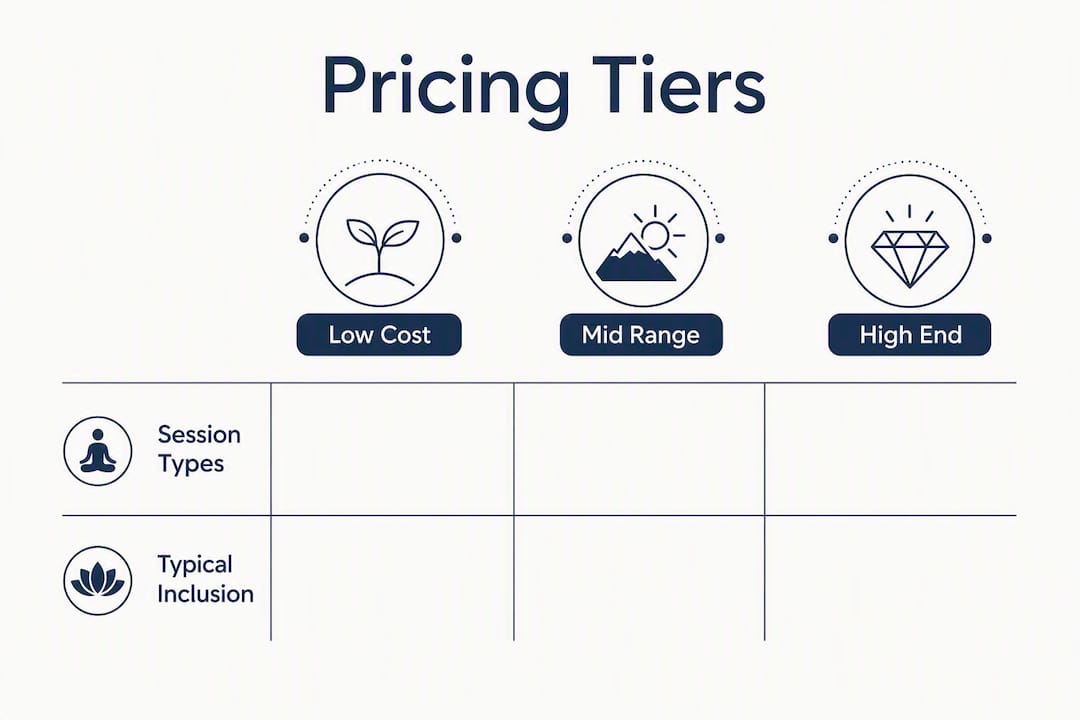
The three pricing bands
| Tier | Per-Session Cost | What You Typically Get |
|---|---|---|
| Low | $75–$100 | Certified hypnotherapist, smaller market, limited specialty |
| Mid | $100–$250 | Experienced CCHt or licensed clinician, private practice |
| Premium | $250–$400 | Licensed psychologist or LCSW with hypnotherapy training, urban market |
First sessions are frequently billed higher because they combine intake, clinical assessment, and initial treatment. That first appointment often runs 60–90 minutes. Follow-ups are shorter (45–60 minutes) and billed at a lower rate.
Package math: what a 6-session program actually costs
Here's how the numbers work out across the three tiers for a six-session anxiety program:
- Low-cost clinic: $150 intake + 5 follow-ups at $85 = $575 total
- Mid-range private practice: $250 intake + 5 follow-ups at $150 = $1,000 total
- Premium clinician: $400 intake + 5 follow-ups at $275 = $1,775 total
Most practitioners who sell packages discount the per-session rate by 10–20% compared to booking individually. That discount is real, but only matters if you actually complete the program.
Pro Tip: Ask for a written estimate before your first session. A good provider will give you a clear breakdown: intake fee, follow-up rate, package price, and what's included in each. If they won't put it in writing, that's worth noting.
How many sessions will you actually need?
The honest answer depends on what you're treating. Hypnotherapy is not a one-size-fits-all number of visits. Here's what clinical practice typically looks like by presenting issue:
- Smoking cessation: 3–6 sessions. Some practitioners offer a single intensive session ($200–$300), but multi-session programs produce more durable results for most people.
- Weight management: 6–12 sessions. This work involves retraining subconscious eating patterns and the nervous system's stress-eating response, which takes time.
- Specific phobias: 3–6 sessions. Phobias often respond faster than generalized anxiety because the trigger is specific and the subconscious pattern is more contained.
- General anxiety: 4–8 sessions. Calming a chronically activated fight-or-flight response requires consistent reinforcement across multiple sessions.
- Sleep issues: 4–6 sessions. Insomnia tied to anxiety often resolves as the underlying nervous system dysregulation is addressed.
- Habit change (nail biting, stress eating, etc.): 3–5 sessions.
Session length and spacing
- Intake session: 60–90 minutes
- Follow-up sessions: 45–60 minutes
- Typical spacing: Once per week or every two weeks
- Progress checkpoints: Usually after sessions 2–3 and again at the midpoint
A realistic timeline for a 6-session anxiety program looks like this: sessions 1–3 over three weeks, a short check-in, then sessions 4–6 over the following three to six weeks. Total calendar time: roughly 8–12 weeks.
What actually drives the price difference
Two factors consistently explain most of the price variation: location and the clinician's experience level. Everything else is secondary.

Credentials
A Certified Clinical Hypnotherapist (CCHt) has completed formal training and passed a credentialing exam through a recognized body such as the American Hypnosis Association or the American Association of Professional Hypnotherapists. A licensed clinician (LCSW, psychologist, or psychiatrist) who integrates hypnosis into psychotherapy sits at the top of the credential hierarchy and charges accordingly. The credential matters for pricing AND for insurance billing.
Geography
Urban West Coast markets (Los Angeles, San Francisco, Seattle) skew toward the $200–$400 range. Rural markets and smaller Midwest or Southern cities often sit closer to $75–$150. Online sessions can cut geographic premiums significantly because you're not paying for a provider's downtown office overhead.
Format and add-ons
Group hypnotherapy sessions run cheaper per person, sometimes $25–$75 per session, but the work is less targeted. Add-ons like custom audio recordings, between-session phone support, or written session summaries raise the total cost but can also reduce the number of sessions needed. Online delivery via Zoom tends to cost less than in-person for equivalent credentials.
The technique itself (NLP, guided imagery, advanced hypnotic modalities) matters less to pricing than the provider's credential level and market. A skilled CCHt using guided imagery in a rural practice will charge less than a licensed psychologist using the same technique in Manhattan, even if the session quality is comparable.
Pro Tip: When comparing providers, ask specifically whether the quoted fee includes any between-session support. Some practitioners include audio recordings or a follow-up email in their package price; others charge separately. The per-session number alone doesn't tell the whole story.
Cost and session counts by treatment type
Here's a focused breakdown of what to budget for the most common hypnotherapy goals:
- Smoking cessation: 3–6 sessions, typical total $300–$1,200. Single-session "guarantee" programs exist at $200–$300 but are best suited to highly motivated clients with short smoking histories.
- Weight management: 6–12 sessions, typical total $700–$2,400. Programs sometimes bundle sessions into a broader weight-loss package that includes audio support between appointments.
- Specific phobias (flying, needles, public speaking): 3–6 sessions, typical total $300–$1,200. The subconscious trigger is usually identifiable early, which speeds the work.
- General anxiety and panic: 4–8 sessions, typical total $500–$1,600. This is where consistent nervous system recalibration matters most.
- Sleep disorders tied to anxiety: 4–6 sessions, typical total $400–$1,200.
- Habit change: 3–5 sessions, typical total $300–$900.
For online hypnotherapy for weight loss, the session count tends toward the higher end because the subconscious patterns around food and body image are layered. Budget accordingly.
Can insurance, HSA, or FSA cover hypnotherapy?
The short answer: sometimes, but the rules are specific.
Insurance
Insurance coverage for hypnotherapy is limited. It generally applies only when the session is delivered by a state-licensed mental health clinician (LCSW, psychologist, psychiatrist) and billed as a psychotherapy session using standard mental health CPT codes. The hypnosis technique itself is rarely reimbursed as a standalone service. A certified hypnotherapist who is not also a licensed clinician is typically not billable to insurance.
For a full breakdown of what documentation to request and how to check your plan, see hypnotherapy insurance coverage.
HSA and FSA
Health Savings Accounts and Flexible Spending Accounts can cover hypnotherapy when the service is provided by a qualified medical or mental health professional and the treatment is for a diagnosed medical condition. You'll need an itemized receipt and, in some cases, a Letter of Medical Necessity from your physician.
HSA and FSA reimbursement is not automatic. The IRS determines eligibility based on whether the treatment is for a specific medical condition, not whether the technique is effective. A session billed as "wellness" or "stress relief" is less likely to qualify than one tied to a diagnosed anxiety disorder.
Pro Tip: Before booking, call your insurer with the provider's name, license number, and NPI (if applicable). Ask specifically: "Is this provider credentialed with my plan, and under what CPT codes would hypnotherapy sessions be billed?" That one call can save you hundreds of dollars or prevent a surprise denial.
Documentation checklist
- Provider's license number and credential (CCHt, LCSW, etc.)
- Itemized receipt showing date, service description, and fee
- Diagnostic code (ICD-10) if the session is tied to a clinical diagnosis
- Letter of Medical Necessity for HSA/FSA claims when required
How to estimate your total cost and budget for it
Use this formula before you book anything:
Total expected cost = Intake fee + (Number of follow-up sessions × Follow-up rate) + Add-ons
Example for a 6-session anxiety program at mid-range rates: $250 + (5 × $150) + $50 for audio recordings = $1,050 total.
When packages make sense
Packages make financial sense when you're confident you'll complete the program. A 6-session package at a 15% discount saves roughly $150–$200 compared to booking individually at mid-range rates. That savings is real, but only if you show up for all six sessions.
Lower-cost options worth knowing
- Group hypnotherapy: $25–$75 per session; less personalized but useful for common issues like stress or mild anxiety
- Sliding scale: Some practitioners offer income-based pricing; ask directly, since it's rarely advertised
- Training clinics: Supervised student practitioners charge significantly less, often $40–$75 per session
- Online vs. in-person: Online sessions with equivalent credentials typically cost 10–20% less because overhead is lower
Pro Tip: When negotiating a package, ask for an itemized session plan in writing: what each session will address, how progress will be measured, and what happens if you need more sessions than the package covers. A provider who can answer those questions clearly is one worth paying for.
Is hypnotherapy worth the cost?
For habit-based problems (smoking, stress eating, nail biting), hypnotherapy targets the subconscious patterns that drive the behavior rather than relying on willpower. For anxiety and phobias, the work focuses on calming the fight-or-flight response at a neurological level, not just managing symptoms. That distinction matters when you're comparing cost to outcome.
Per-session fees vary nationally, with total program costs differing based on session count and package structure. Compare that to years of ongoing therapy, prescription costs, or the financial and health costs of untreated anxiety or continued smoking.
The value question is not "Is $1,000 a lot for six sessions?" It's "What is the cost of not addressing this?" For someone spending $400 a month on cigarettes or losing income to panic attacks, a 6-session program that produces lasting change is not expensive. It's the cheaper option.
Clients who commit to a full program and engage actively between sessions tend to see the clearest outcomes. Hypnotherapy is not passive. The subconscious work done in session needs reinforcement, and that's where session spacing and between-session audios earn their place in the program design.
Questions to ask before you book, and red flags to watch for
Must-ask questions
- What are your credentials, and are you licensed in my state?
- How long is the intake session, and how long are follow-ups?
- How many sessions do you typically recommend for my specific issue?
- What does your package include, and what is your refund policy if I need to stop early?
- Do you provide between-session support (audio recordings, email check-ins)?
- Can you bill my insurance, and if so, under what CPT codes?
Red flags
- Vague or evasive answers about credentials or training
- Guarantees of specific outcomes ("You will quit smoking after one session, guaranteed")
- No intake assessment before recommending a session count or package
- Pressure to purchase a large package before the first session
- No written estimate or session plan
A note on credentials and insurance
If you plan to seek insurance reimbursement or HSA/FSA coverage, verify that the provider holds both a recognized hypnotherapy credential (CCHt) and a state clinical license (LCSW, psychologist, etc.). The credential alone is not enough for billing purposes. Ask to see both before booking.
How Hypnotic Transformations prices and structures sessions
Hypnotic Transformations operates as an online practice, which keeps overhead low and allows Kirk Hoffman CCHt to offer competitive rates without compromising session quality. All sessions are conducted via Zoom.
Sample package structure for anxiety work
| Package | Sessions | What's Included | Approximate Investment |
|---|---|---|---|
| Starter | 4 sessions | Intake + 3 follow-ups, custom audio | Contact for current pricing |
| Intensive | 6 sessions | Intake + 5 follow-ups, audio, between-session support | Contact for current pricing |
| Extended | 8 sessions | Intake + 5 follow-ups, full audio library, priority scheduling | Contact for current pricing |
Specific pricing is discussed during the free consultation, where Kirk reviews your presenting issue, history, and goals before recommending a package. No package is sold before that conversation.
Progress is tracked using behavioral benchmarks and symptom checklists after sessions 2–3 and again at the midpoint. If the presenting issue resolves early, the program closes. If more work is needed, that's discussed openly before extending.
The free consult is the right place to ask about current pricing, package options, and whether online delivery is appropriate for your situation. Learn more about how hypnotherapy works before your first call.
Key Takeaways
Hypnotherapy in the U.S. typically costs $75–$250 per session, with most anxiety programs running 4–8 sessions and a realistic total of $600–$1,400 at mid-range rates.
| Point | Details |
|---|---|
| Per-session range | Most U.S. providers charge $75–$250 per session. |
| Total program cost | A 4–8 session anxiety program typically totals $600–$1,400 at mid-range rates. |
| Insurance and HSA rules | Coverage applies only when a state-licensed clinician bills using standard mental health codes. |
| Questions to ask first | Confirm credentials, session count, refund policy, and whether a written estimate is available. |
| Hypnotictransformations | Kirk Hoffman CCHt offers online anxiety and phobia sessions via Zoom with a free consult before any commitment. |
What I've seen that most pricing guides miss
Most cost guides treat hypnotherapy pricing as a comparison exercise: find the cheapest credentialed provider and book them. That framing misses the actual variable that determines whether you get your money's worth.
The number of sessions matters less than the quality of the intake assessment. A provider who spends 15 minutes on intake and immediately recommends a 10-session package is not doing you a favor. A good intake takes 60–90 minutes because the clinician needs to understand the specific subconscious pattern driving the problem, not just the symptom label.
For anxiety work specifically, the fight-or-flight response is not a single switch. It's a conditioned pattern that the nervous system has rehearsed, sometimes for years. Calming it requires identifying the original trigger, reframing it at the subconscious level, and reinforcing the new response across multiple sessions. That's why 4–6 sessions for anxiety is not a sales tactic. It's the minimum for durable change.
The other thing guides rarely say: online delivery is not a compromise. For anxiety clients especially, working from a familiar, safe environment can actually accelerate the process. The nervous system is already calmer before the session starts.
Price is a reasonable starting point for comparison. But the question to ask is not "Who is cheapest?" It's "Who will tell me honestly what my situation requires and stop when the work is done?"
What Hypnotic Transformations offers and how to get started
If you're dealing with anxiety, a specific phobia, or a fear-based pattern that's affecting your daily life, Hypnotic Transformations provides online clinical hypnotherapy sessions via Zoom, available nationwide.
Kirk Hoffman CCHt works with clients on anxiety, panic, phobias, smoking cessation, and weight management using NLP, guided imagery, and advanced hypnotic modalities. Every program starts with a free consultation where Kirk reviews your situation and recommends a session plan, with no obligation to book.
Package options for anxiety work include a 4-session starter and a 6-session intensive, both with custom audio recordings for between-session reinforcement. HSA and FSA payments are accepted when documentation requirements are met. Pricing is discussed during the free consult.
To get started, book your free consultation or review the full range of online hypnotherapy services to find the right fit for your situation.
Useful sources
| Source | What It Covers |
|---|---|
| Thervo: How Much Does Hypnotherapy Cost? | Common per-session range |
| Cost Digest: Hypnosis Cost Guide | Per-session range ($60–$400) and package totals |
| Mass Mind Center: How Much Does Hypnosis Therapy Cost? | Intake vs. follow-up pricing and first-session premiums |
| Center for Natural Medicine: Hypnotherapy Cost | Per-hour range ($75–$200) and package discounts |
| TrueLifeCare Mental Health: Hypnotherapy Cost | Location and experience as primary price drivers |
| Verywell Health: Is Hypnosis Real? | Insurance coverage conditions and session bundling |
| American Hypnosis Association | CCHt credential standards and training requirements |
| American Association of Professional Hypnotherapists | Professional membership and credentialing standards |
| Hypnotic Transformations: Insurance Coverage Guide | HSA/FSA documentation and insurance billing guidance |