
Hypnosis for weight loss is a clinically recognized method that uses deep relaxation and focused attention to reshape the subconscious habits driving overeating, cravings, and emotional eating. Unlike fad diets, it targets the root of the behavior, not just the symptom. You stay fully conscious and in control throughout every session. Hypnosis is not mind control; it is a collaborative process where a trained hypnotherapist guides you into a receptive mental state so that positive suggestions can take hold. When combined with diet and exercise, hypnotherapy for weight management produces results that willpower alone rarely sustains.
How does hypnosis for weight loss actually work?
Hypnosis works by quieting the analytical part of your mind and making the subconscious more receptive to change. During a session, deep relaxation fades external distractions and sharpens your internal focus. That heightened concentration is exactly when behavioral suggestions land deepest, creating new mental pathways around food, hunger, and self-image.
The most direct benefit is reduced cravings. When your mind is calm and focused, a skilled hypnotherapist can introduce suggestions that reframe how you respond to triggers like stress, boredom, or social pressure. Those triggers are the real reason most diets fail. Addressing them at the subconscious level is what separates hypnotherapy from surface-level behavior coaching.
Stress reduction is a second, often overlooked mechanism. Deep relaxation lowers stress hormones, which directly reduces the impulse to reach for comfort food. That means hypnosis addresses the physiological side of emotional eating, not just the psychological one.
Key behavioral shifts hypnosis produces:
- Reduced urge to eat in response to stress or boredom
- Stronger awareness of hunger and fullness signals
- Improved self-regulation around portion sizes and food choices
- Greater motivation to follow through on exercise commitments
- A calmer, less reactive relationship with food cravings
Pro Tip: Record your hypnotherapy sessions when your practitioner allows it. Listening to the recording before bed reinforces the suggestions and accelerates behavioral change between formal sessions.
What are the most effective weight loss hypnosis techniques?
Weight loss hypnotherapy draws from several well-established techniques. Each one targets a different layer of the problem, from surface-level cravings to deep identity-level beliefs about your body and worth.
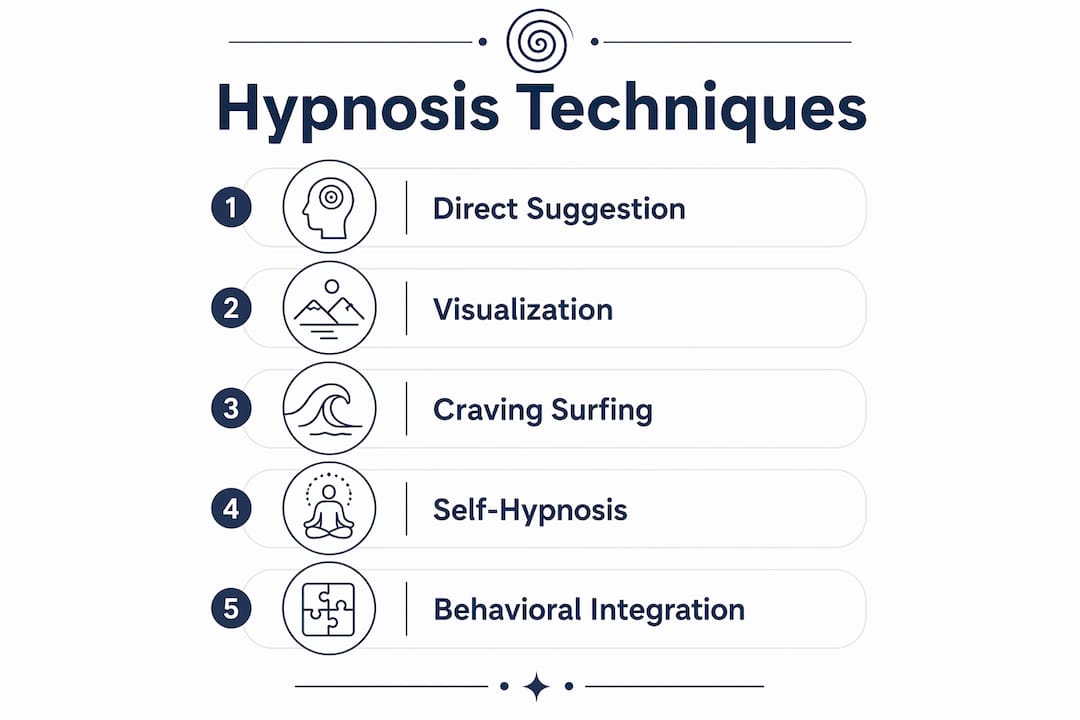
Direct suggestion
Direct suggestion is the most common technique. During a trance state, the hypnotherapist delivers clear, positive statements: "You prefer nourishing foods," or "You feel satisfied with smaller portions." These suggestions create mental imagery that the subconscious accepts as a new behavioral baseline. The effect builds with repetition across multiple sessions.
Visualization and future self-identity
Visualization guides you to mentally inhabit a future version of yourself who has already reached your weight goal. You see how that person moves, eats, and thinks. Hypnosis shapes subconscious identity through this kind of mental rehearsal, making the goal feel real and attainable rather than abstract.

Craving surfing
Craving surfing is a self-hypnosis technique where you observe a craving without acting on it. You enter a relaxed state, notice the craving as a sensation, and watch it rise and fall like a wave. This builds tolerance and reduces the craving's power over time.
Self-hypnosis for daily reinforcement
Self-hypnosis strengthens commitment to goals and supports healthier habits between professional sessions. A basic self-hypnosis practice takes 10–15 minutes: find a quiet space, slow your breathing, count down from 10 to 1 while relaxing each muscle group, then repeat your chosen affirmations or visualizations.
A structured approach to self-hypnosis for weight management:
- Set a clear, specific intention before each session ("I choose foods that fuel my body").
- Use a slow countdown induction to reach a relaxed, focused state.
- Visualize yourself making healthy choices in a specific upcoming situation.
- Repeat 2–3 positive suggestions slowly, with feeling.
- Count back up to full alertness and take a moment to anchor the feeling.
Pro Tip: Practice self-hypnosis at the same time each day. Consistency trains your brain to enter a receptive state faster, which makes each session more effective.
Consistency across multiple sessions is the single biggest predictor of lasting results. One session produces awareness. Repeated sessions produce change.
How does hypnosis fit with diet, exercise, and therapy?
Hypnosis alone does not replace a calorie deficit or physical activity. It works best as a force multiplier, making every other strategy you use more effective and easier to sustain.
| Approach | Role | How hypnosis amplifies it |
|---|---|---|
| Dietary counseling | Provides nutritional structure | Reduces cravings and emotional eating that undermine meal plans |
| Exercise program | Burns calories and builds habits | Strengthens motivation and reduces resistance to working out |
| Cognitive behavioral therapy (CBT) | Addresses thought patterns | Hypnosis deepens CBT's reach into subconscious beliefs |
| Mindfulness practice | Builds present-moment awareness | Hypnosis reinforces mindful eating cues and hunger awareness |
Clinical trials show greater weight loss when hypnotherapy is combined with behavior modification methods than with diet alone. That finding matters because it confirms hypnosis is not a replacement for lifestyle change. It is the ingredient that makes lifestyle change stick.
The CBT and hypnosis combination deserves special attention. Integrated hypnotherapy enhances the effectiveness of behavioral weight management programs, according to 2018 reviews. CBT identifies the distorted thoughts driving overeating. Hypnosis then plants corrective beliefs at a deeper level where CBT alone cannot always reach.
A typical program structure runs 6–10 sessions over 8–12 weeks. Early sessions focus on relaxation training and direct suggestion. Later sessions shift toward visualization, identity work, and relapse prevention. Maintenance sessions every few weeks help lock in long-term habits. Working with a Certified Clinical Hypnotherapist like Kirk Hoffman at Hypnotictransformations means your program adapts to your specific triggers and goals rather than following a generic script.
What challenges should you expect with weight loss hypnotherapy?
Skepticism is the most common obstacle. Many people arrive at their first session expecting either a magic fix or a theatrical performance. Neither expectation serves them. Educating yourself on the nature of hypnosis and setting realistic expectations is the single most important step before starting.
The fear of losing control stops some people from trying hypnotherapy at all. That fear is unfounded. You cannot be made to do anything against your values or wishes during a session. The hypnotherapist is a guide, not a controller. Your conscious mind remains active and protective throughout.
Inconsistency is the other major challenge. Skepticism, misconceptions, and inconsistency are the three factors most likely to reduce hypnosis effectiveness. Skipping sessions or abandoning self-hypnosis practice after a few weeks resets much of the progress made.
Practical tips to stay on track:
- Treat hypnotherapy sessions like medical appointments. Put them in your calendar and protect that time.
- Keep a brief journal after each session to note what felt different about your cravings or food choices.
- Pair hypnosis with one concrete dietary habit, such as eating without screens, to create a visible feedback loop.
- Talk openly with your hypnotherapist about what is and is not working. Sessions are adjustable.
- Give the process at least six weeks before evaluating results. Behavioral change is not linear.
Hypnosis creates a healthier self-image by shaping subconscious identity over time. That shift in how you see yourself is often what finally makes healthy choices feel natural rather than forced.
Key Takeaways
Hypnotherapy for weight loss works by changing subconscious patterns around food, cravings, and self-image, and it produces the strongest results when combined with behavioral therapy, consistent practice, and realistic expectations.
| Point | Details |
|---|---|
| Subconscious access | Hypnosis reaches behavioral patterns that willpower and dieting alone cannot consistently change. |
| Technique variety | Direct suggestion, visualization, and craving surfing each target different layers of eating behavior. |
| Best used in combination | Pairing hypnotherapy with CBT or dietary counseling produces greater weight loss than either approach alone. |
| Consistency drives results | Multiple sessions over 8–12 weeks outperform single sessions for lasting behavioral change. |
| Control stays with you | You remain fully conscious and in control throughout every hypnotherapy session. |
What I've learned from watching clients change their relationship with food
Most people who come to me for weight loss hypnotherapy have already tried everything. They have counted calories, cut carbs, hired personal trainers, and downloaded every wellness app available. They are not lazy. They are stuck at the subconscious level, and no amount of conscious effort fixes a subconscious problem.
What I consistently see is that the clients who get lasting results are not the ones who are most motivated at the start. They are the ones who stay curious and open throughout the process. Motivation fades. Curiosity keeps you engaged when the scale does not move for two weeks.
The biggest misconception I encounter is that hypnosis will do the work for you. It will not. What it does is remove the internal resistance that makes the work feel impossible. There is a real difference between those two things. Once a client stops fighting their own cravings and starts observing them, the whole dynamic shifts.
I also want to be direct about something most practitioners avoid saying: hypnotherapy is not equally effective for everyone. People who are highly resistant to relaxation or who come in deeply skeptical tend to need more sessions to see results. That is not a failure of the method. It is a signal to adjust the approach, not abandon it. The online hypnotherapy for weight loss work I do through Hypnotictransformations is built around that kind of flexibility.
The clients who surprise me most are the ones who come in focused entirely on the number on the scale and leave talking about how differently they feel in their own skin. That shift in self-perception is where the real and lasting change lives.
— Kirk
Ready to work on weight loss at the subconscious level?
Hypnotictransformations offers personalized online hypnotherapy sessions for weight loss, led by Certified Clinical Hypnotherapist Kirk Hoffman. Sessions are conducted entirely online, so you can access professional support from anywhere in the country without rearranging your schedule.
Kirk's approach targets the subconscious patterns behind emotional eating, cravings, and self-sabotage, not just the surface behaviors. Programs are built around your specific triggers and adjusted as you progress. If you are ready to address the root of your eating habits rather than manage symptoms, visit the weight loss hypnotherapy page to learn more or book a session directly.
FAQ
Can hypnosis really help you lose weight?
Yes. Clinical research shows that people using hypnotherapy alongside behavioral counseling lose more weight than those using counseling alone. Hypnosis works by changing subconscious responses to food triggers, not by suppressing appetite chemically.
How many sessions does weight loss hypnotherapy take?
Most structured programs run 6–10 sessions over 8–12 weeks. Consistency across multiple sessions produces significantly better results than a single session.
Will I lose control during a hypnosis session?
No. You remain fully conscious and aware throughout every session. Hypnotherapy is a collaborative process, and you cannot be made to act against your own values or wishes.
What is the difference between self-hypnosis and professional hypnotherapy?
Professional hypnotherapy provides guided, personalized sessions targeting your specific behavioral patterns. Self-hypnosis is a daily reinforcement practice you do independently to maintain and deepen the changes made in formal sessions. Both work best together.
Is hypnotherapy for weight loss safe?
Hypnotherapy is considered safe when conducted by a certified practitioner. It carries no chemical side effects and does not require any physical intervention, making it a low-risk complement to other weight management strategies.