
Hypnotherapy can help many adults with fear-driven blushing, particularly when the redness is maintained by the subconscious threat-response loops that drive sympathetic arousal and facial vasodilation. A 1993 physiological review confirms that social blushing combines cutaneous vasodilation with sympathetic activation and is linked to higher-order cognitive self-evaluation, which is exactly the territory hypnotherapy targets. If your redness is new, painful, or accompanied by skin changes, see a dermatologist or primary care physician first to rule out rosacea, medication side effects, or other medical causes. If the redness is clearly tied to social fear, a consult with a qualified clinical hypnotherapist such as Kirk Hoffman, CCHt at Hypnotictransformations is a practical next step.
Key Takeaways
Hypnotherapy can reduce fear-driven blushing by weakening the subconscious threat association that drives sympathetic arousal and facial vasodilation, with most clients completing a course of 4 to 8 sessions.
| Point | Details |
|---|---|
| Rule out medical causes first | Rosacea, medication side effects, and systemic conditions require medical evaluation before psychological treatment. |
| Hypnotherapy targets the subconscious loop | Imaginal exposure under hypnosis weakens the learned link between social situations and the sympathetic threat response. |
| Expect multiple sessions for lasting change. | Some clients notice early gains in 1 to 2 sessions; consolidation typically requires a full course. |
| Combine with CBT and behavioral experiments | Hypnotherapy works best alongside cognitive restructuring and real-world exposure between sessions. |
| Hypnotictransformations offers online sessions | Kirk Hoffman, CCHt provides structured erythrophobia treatment via Zoom with a free initial consultation. |
Table of Contents
- How does hypnotherapy actually reduce blushing?
- What does the research say, and how quickly do people improve?
- What does a typical hypnotherapy session for blushing look like?
- Self-help recordings versus working with a professional
- Where does hypnotherapy fit with CBT, medication, and medical causes?
- How do you find a qualified hypnotherapist in the United States?
- How Hypnotictransformations approaches blushing
- Three things to try right now between sessions
- A clinician's perspective on treating fear of blushing
- Ready to work with a qualified clinical hypnotherapist online?
- Sources
How does hypnotherapy actually reduce blushing?
The short answer: hypnosis creates a focused, relaxed state that lets a clinician interrupt the subconscious threat-response loop before it fires.
Here is the chain. You walk into a social situation. Your brain predicts embarrassment. Self-focused attention spikes. The sympathetic nervous system activates. Blood vessels in your face dilate. You blush. Then you notice the blush, catastrophize about it, and the loop tightens. The Social Anxiety Institute describes this cycle precisely: fear of blushing is maintained by self-focused attention and catastrophic meaning attached to redness, and interventions that change attention and expectations reduce the cycle's power.
Hypnotherapy works on that loop at the subconscious level. Under hypnosis, the brain is more receptive to new associations. A skilled clinician uses that window to weaken the learned link between social situations and the threat response. The main techniques used in-session include:
- Guided imagery: The client visualizes a calm, safe version of a feared social scenario, building a new emotional memory.
- Imaginal exposure: The therapist guides the client through progressively more challenging social scenes while maintaining a relaxed physiological state, which supports desensitization. Imaginal exposure under hypnosis allows clients to rehearse feared situations with lower autonomic arousal, which speeds new learning.
- Suggestion and anchoring: Direct suggestions reframe the meaning of facial warmth. Post-hypnotic cues, such as a breath or a hand gesture, become triggers for calm rather than panic.
- Post-hypnotic cues: These carry the calmer response into real-world situations between sessions.
A concrete example: the therapist might say, "Picture yourself at a work meeting. Someone asks you a question. Notice a slight warmth in your face. Your breathing stays slow. Your hands are relaxed. The warmth passes in seconds and no one reacts." That rehearsal, repeated under suggestion, builds a competing neural pathway to the catastrophic one.
What does the research say, and how quickly do people improve?
The honest answer is that the evidence base for hypnotherapy specifically targeting fear of blushing is limited. A University of Amsterdam treatment review notes that randomized controlled trial evidence specific to blushing is sparse, and that treatments effective for social anxiety disorder are a reasonable starting point for blushing interventions. That is an important caveat.
Within those limits, the signal is still encouraging. A pre-experimental study published in IJNMS reported statistically significant reductions in phobia symptoms after hypnotherapy, though the design and sample size limit how far those results generalize. Clinical practitioners report a similar pattern.
What clinical reports suggest: Some clients see measurable gains after a few sessions, with consolidation typically occurring over a course of multiple sessions. These are practitioner observations, not RCT findings, and individual results vary.
A practical timeline looks like this:
- Sessions 1 to 2: Initial assessment, induction, and first imaginal exposure work. Many clients notice reduced anticipatory anxiety and a slight loosening of the monitoring cycle.
- Sessions 3 to 6: Core desensitization work. Behavioral experiments begin between sessions. The blush may still occur but carries less catastrophic meaning.
- Sessions 7 to 8 and beyond: Consolidation, booster work, and self-practice recordings to maintain gains.
The Psychology Today review on hypnotherapy for phobias notes that some practitioners report measurable gains in 1 to 2 sessions, though longer courses are generally recommended for lasting change. That tracks with what most clinicians see in practice.
What does a typical hypnotherapy session for blushing look like?
Sessions follow a predictable structure: assessment, induction, therapeutic intervention, and consolidation. Knowing that structure in advance reduces the anxiety that sometimes keeps people from booking a first appointment.
Here is what to expect at each stage:
- Pre-session intake and goal setting: The clinician asks about the history of blushing, triggers, avoidance behaviors, and any prior treatment. Goals are set in specific, behavioral terms, not vague ones.
- Safety screening: Medical history review and a brief psychiatric screen. This flags contraindications such as active psychosis, severe dissociative disorders, or uncontrolled seizure disorders.
- Relaxation and induction: A guided process that slows breathing, reduces muscle tension, and shifts attention inward. This is not sleep and not unconsciousness. You remain aware throughout.
- Core therapeutic work: Imaginal exposure, cognitive rescripting, and direct suggestion. The clinician guides you through feared scenarios while keeping your nervous system calm.
- Anchoring: A post-hypnotic cue is installed, typically a physical gesture paired with a calm state, for use between sessions.
- Post-hypnosis debrief: You discuss what came up, what felt different, and what to practice before the next session.
- Homework: Brief self-hypnosis practice, imagery rehearsal, and small behavioral experiments in real social situations.
Online vs. in-person: Online sessions via Zoom work well for this type of work. The home environment is often less activating than a clinical office, which can actually support deeper relaxation. The clinician's ability to guide imagery and deliver suggestion is not meaningfully reduced by the screen. Safety screening still happens, and the clinician should have a clear protocol for what to do if a client becomes distressed mid-session.
Pro Tip: Before your first session, write down three specific social situations where blushing caused you to avoid or escape. Bring that list. It gives the clinician concrete material for imaginal exposure work and cuts intake time significantly.
Self-help recordings versus working with a professional
Self-help audio recordings can support relaxation and between-session practice, but professional therapy is the right call when blushing is tied to significant social anxiety, avoidance, or functional impairment.
| Self-Help Recordings | Professional Hypnotherapy | |
|---|---|---|
| Cost | Low to free | Higher per session; packages available |
| Tailoring | Generic scripts | Individualized to your triggers and history |
| Assessment | None | Medical and psychiatric screening included |
| Imaginal exposure | Limited | Clinician-guided, progressive, and responsive |
| Accountability | Self-directed | Structured sessions with follow-up |
| Best for | Mild symptoms, between-session practice | Persistent fear, avoidance, functional impairment |
The case for recordings is real. They are private, low-cost, and available at any hour. For someone with mild, situational blushing who wants a relaxation tool, a well-produced recording can take the edge off anticipatory anxiety.
The case for professional sessions is stronger when:
- Blushing has led you to avoid social situations, presentations, or career opportunities.
- You monitor constantly for signs of redness in social settings.
- Reassurance from others has not helped or has made the fear worse.
- You have tried self-help approaches without lasting change.
A clinician also catches things a recording cannot: a medical cause that needs referral, a psychiatric comorbidity that changes the treatment plan, or a pattern in your history that points to a more specific intervention.
Where does hypnotherapy fit with CBT, medication, and medical causes?
Hypnotherapy complements CBT and exposure therapy and can be safely combined with medication under medical supervision. It is not a replacement for any of them; it is an addition that addresses the subconscious conditioning layer those approaches sometimes leave untouched.
| Approach | Core Mechanism | Strongest Evidence | Best Combined With |
|---|---|---|---|
| CBT | Cognitive restructuring, behavioral experiments | Strong for social anxiety | Hypnotherapy, exposure |
| Exposure therapy | Habituation through repeated contact with feared stimuli | Strong for phobias | CBT, hypnotherapy |
| Applied relaxation | Physiological downregulation | Moderate for blushing | Any of the above |
| Hypnotherapy | Subconscious reconditioning, imaginal exposure under suggestion | Moderate, limited RCTs | CBT, exposure |
| Medication (SSRIs, beta-blockers) | Serotonin regulation, sympathetic dampening | Moderate for social anxiety | Psychotherapy |
The UvA treatment review identifies task concentration training, exposure, cognitive therapy, and applied relaxation as evidence-based options for fear of blushing, with hypnotherapy as a potential adjunct. Practitioners report that hypnotherapy is most effective when combined with CBT techniques and imaginal exposure, allowing clients to rehearse calmer responses while under suggestion.
Medical causes that require evaluation before starting any psychological treatment:
- Rosacea (chronic facial redness, often with visible blood vessels or skin texture changes)
- Allergic reactions or contact dermatitis
- Medication side effects (niacin, calcium channel blockers, certain antidepressants)
- Carcinoid syndrome or other systemic causes (rare but serious)
- Hormonal changes, including perimenopause
Red flags for immediate medical referral: sudden onset of facial redness with no social trigger, redness accompanied by pain, swelling, or skin changes, systemic symptoms such as flushing with diarrhea or palpitations, or redness that is focal and persistent rather than diffuse and transient.
How do you find a qualified hypnotherapist in the United States?
Choose clinicians with clinical hypnotherapy credentials, clear telehealth policies, and documented experience treating social anxiety or erythrophobia specifically.
Questions to ask on the first call:
- What is your training and credential? (Look for CCHt, ASCH membership, or equivalent clinical training with supervised hours.)
- How do you structure sessions for fear of blushing specifically?
- How many sessions do you typically recommend, and what does progress look like?
- What outcome measures do you use to track change?
- What is your cancellation and refund policy?
- How do you handle medical referrals if a physical cause is suspected?
Credential checklist:
- Certified Clinical Hypnotherapist (CCHt) or equivalent credential from an accredited body
- Supervised clinical hours, not just a weekend certification
- Malpractice or professional liability insurance
- Clear scope of practice (hypnotherapy for anxiety and phobias, not medical diagnosis or psychiatric prescribing)
Red flags to walk away from:
- Guaranteed cures or promises of results in a single session without assessment
- Pressure to purchase a large package upfront before any intake or evaluation
- No medical screening or psychiatric history questions
- Language that avoids nervous system and cognitive framing in favor of purely spiritual or energy-based explanations
- No clear process for referring out when a case exceeds their scope
The hypnotherapy for anxiety and depression overview at Hypnotictransformations covers the clinical methods used in practice and is worth reading before your first consult.
How Hypnotictransformations approaches blushing
Hypnotictransformations uses clinical hypnotherapy modalities including guided imagery, imaginal exposure, anchoring, and NLP, delivered online by Kirk Hoffman, CCHt. Sessions are conducted via Zoom, which means you access care from home without the added social pressure of a waiting room.
The typical treatment structure looks like this:
- Assessment session: Detailed intake covering blushing history, triggers, avoidance patterns, medical history, and treatment goals.
- 4 to 8 targeted sessions: Progressive imaginal exposure, cognitive suggestion work, and anchoring. Session content is adjusted based on what is and is not shifting.
- Booster sessions: Available as needed after the core course to reinforce gains or address new triggers.
- Self-practice recordings: Provided to support between-session work and long-term maintenance.
Kirk Hoffman holds the CCHt credential and specializes in anxiety-based conditions. The online hypnotherapy services page details the full range of anxiety-related offerings, including erythrophobia and social blushing.
Three things to try right now between sessions
Try these three brief practices to reduce arousal and break the monitoring cycle while you pursue longer-term work. They are safe for most adults, but stop immediately if you feel faint, dizzy, or notice panic symptoms worsening. Seek professional help if any practice consistently increases distress.
-
Box breathing (4-4-4-4): Inhale for 4 counts, hold for 4, exhale for 4, hold for 4. Repeat 4 to 6 cycles. This activates the parasympathetic nervous system and directly counters the sympathetic spike that precedes facial vasodilation. Practice it before entering a known trigger situation, not only during one.
-
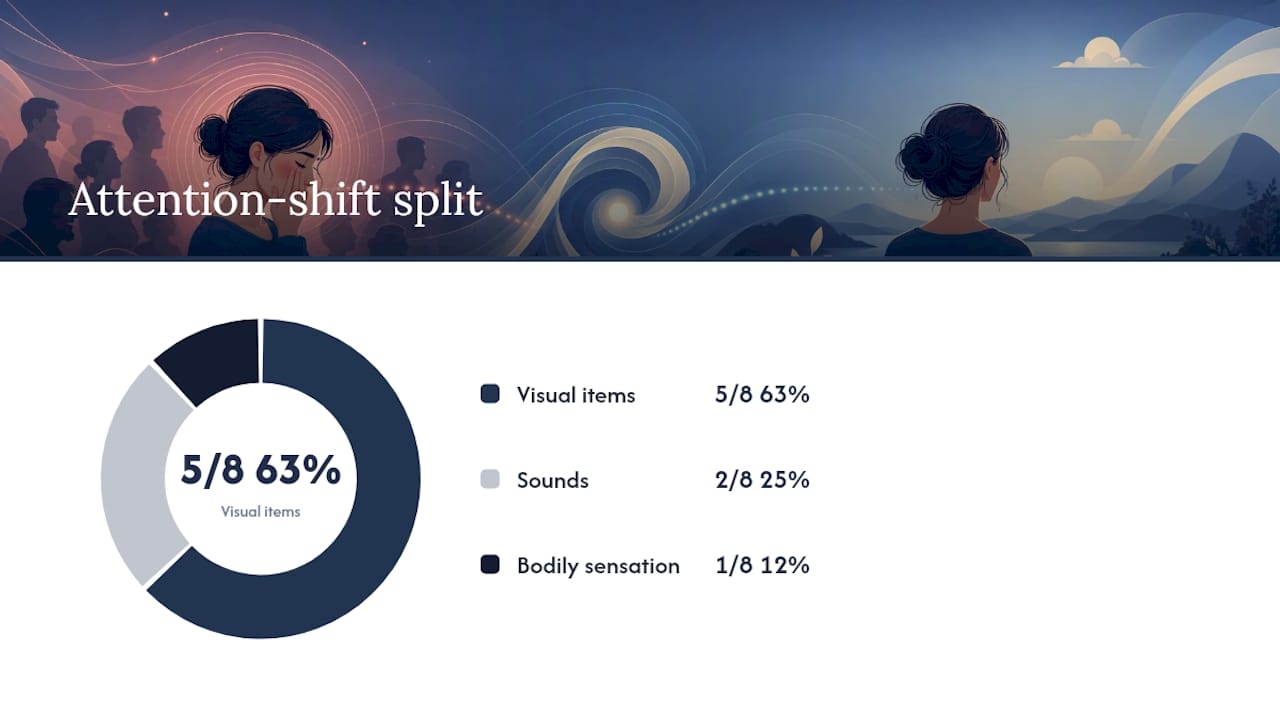
External attention shift: When you notice self-focused monitoring starting, name five things you can see in the room. Then name two sounds. Then one physical sensation that is not in your face. This is a simplified version of task concentration training, which the UvA blushing treatment review identifies as a promising approach. The goal is to redirect attention outward before the threat loop closes.
-
Brief imaginal rehearsal (5 minutes): Sit comfortably, close your eyes, and slow your breathing. Picture a low-stakes social situation where you might blush, a coffee order, a brief work question. See yourself staying calm. Notice any warmth in your face and let it pass without meaning. See the other person respond normally. Open your eyes. This is a condensed version of what happens in formal imaginal exposure under hypnosis, and it builds the same competing pathway, just more slowly. For a structured version of this technique applied to public speaking anxiety, the hypnotherapy for public speaking anxiety guide at Hypnotictransformations walks through the process in detail.
Pro Tip: Do the imaginal rehearsal daily for two weeks before expecting any shift. The nervous system learns through repetition, not insight. One session of visualization does nothing; fourteen does something measurable.
A clinician's perspective on treating fear of blushing
The priority in treating erythrophobia is safety first, then measurable behavior change, then nervous system downregulation. Those three things in that order.
What I see repeatedly is that clients arrive having already tried reassurance, concealer, and avoidance. None of it worked because none of it addressed the subconscious threat association. The brain had learned that a warm face equals social catastrophe, and no amount of conscious reasoning overrides that at the speed a social situation demands.
Combining imaginal exposure under hypnosis with small behavioral experiments between sessions works well for many clients because it addresses both layers simultaneously. The hypnosis session weakens the threat association at the subconscious level. The behavioral experiment, something as small as staying in a conversation after noticing warmth rather than escaping, provides real-world evidence that the catastrophe does not happen. Together, they update the nervous system's prediction model.

When referrals are appropriate: if a client's blushing is accompanied by significant depression, trauma history, or dissociative symptoms, I refer to a licensed mental health professional before or alongside hypnotherapy. If the redness has a physical pattern inconsistent with social triggers, I refer to a dermatologist. Hypnotherapy is a powerful tool for the right presentation. Knowing when it is not the right tool is equally important.
Ready to work with a qualified clinical hypnotherapist online?
If you have ruled out medical causes and you are ready to address the fear of blushing at its source, Hypnotictransformations offers discreet, nationwide online clinical hypnotherapy led by Kirk Hoffman, CCHt.
The process starts with a free consultation. Kirk reviews your history, explains the session structure, and answers your questions before you commit to anything. Sessions run via Zoom, so there is no waiting room, no commute, and no one to run into. The work is private, clinical, and structured around your specific triggers and goals.
Most clients complete a course of 4 to 8 sessions. Booster sessions and self-practice recordings are available to support long-term maintenance. Book your consultation or review the full anxiety hypnotherapy services to see what a treatment plan looks like before you schedule.
Sources
- Using Hypnotherapy to Treat Phobias | Psychology Today Australia
- Blushing: A Symptom of Social Anxiety | Social Anxiety Institute
- EFFECT OF HYPNOTHERAPY IN REDUCING PHOBIA SYMPTOMS | International Journal of Nursing and Midwifery Science (IJNMS)
- Treatment options for fear of blushing (UvA repository)
This article is general information, not a substitute for advice from a qualified doctor. Consult a qualified healthcare professional about your own circumstances before acting on anything here.