
What effective healing of deep emotional wounds actually requires
Healing deep emotional wounds starts with one thing most people skip: making your nervous system feel safe. Before you can process what happened, your body needs to exit fight-or-flight mode. Effective emotional healing follows phases, beginning with safety and nervous system regulation, then gently processing memories in small doses.
Here is what the research and clinical practice consistently point to:
- Safety comes first, both external and internal, before any trauma processing begins
- Healing means integrating pain into your self-understanding, not just analyzing why someone hurt you
- Clinical hypnotherapy targets subconscious patterns that keep anxiety and fear locked in place
- Combining therapist-led sessions with consistent self-help habits like mindfulness and journaling produces the most durable recovery
- Progress is not linear; setbacks are a normal part of nervous system recalibration, not evidence of failure
Table of Contents
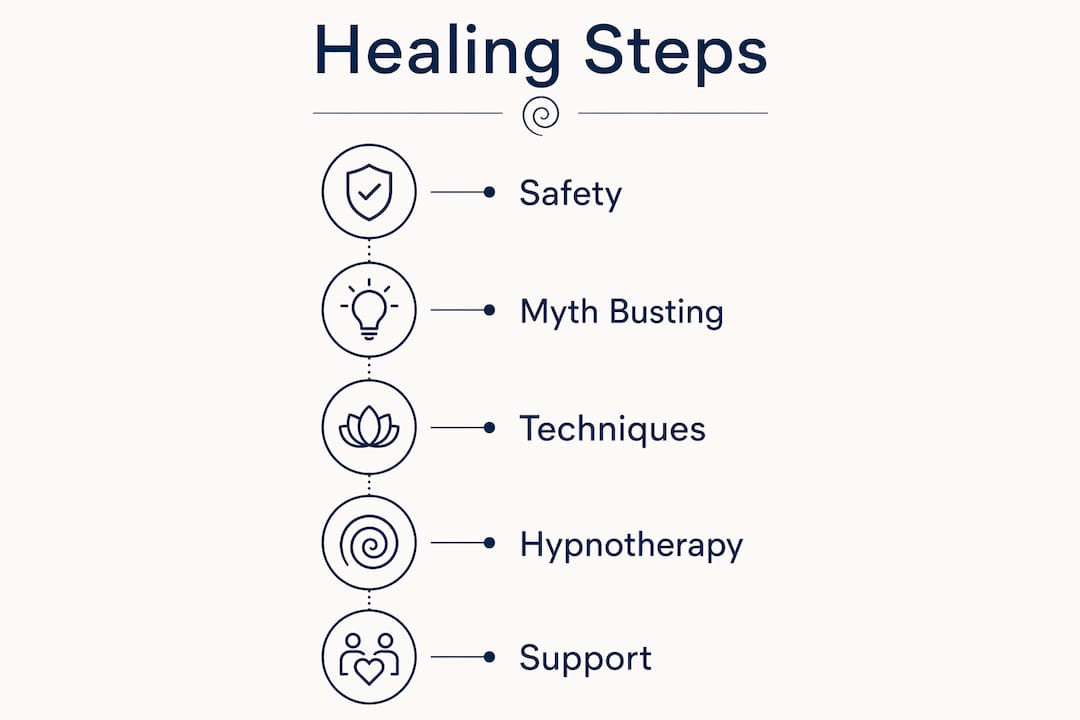
- ## 1. Your nervous system needs safety before healing can begin
- ## 2. Common myths about healing emotional wounds slow you down
- ## 3. Practical techniques that reduce the intensity of emotional pain
- ## 4. How clinical hypnotherapy and self-help work together for lasting relief
- ## 5. How to recognize progress and when to get more support
- Hypnotictransformations addresses the subconscious root, not just the symptoms
- Key Takeaways
## 1. Your nervous system needs safety before healing can begin
The nervous system cannot process emotional wounds while it is still scanning for threats. Safety and grounding must come before trauma processing, at the body level, not just the cognitive level.
- Identify where you feel safe physically: a specific room, a time of day, a person's presence
- Practice diaphragmatic breathing (four counts in, six counts out) to activate the parasympathetic nervous system
- Use grounding exercises like the 5-4-3-2-1 sensory method to anchor attention in the present
- Avoid pushing yourself to revisit painful memories before this foundation is solid
- Clinical hypnotherapy sessions can retrain subconscious nervous system responses, shifting the baseline from alert to calm
- Self-compassion actively supports nervous system downregulation; harsh self-criticism keeps cortisol elevated
Pro Tip: When you hit a rough patch, reframe it as your nervous system recalibrating, not as proof you are failing. That shift in interpretation reduces the secondary distress that often makes setbacks worse.
## 2. Common myths about healing emotional wounds slow you down
The biggest obstacle most people face is not the wound itself. It is a false belief about how healing works.
- Healing does not require the person who hurt you to apologize, explain, or change their behavior
- Emotional wounds heal when pain is integrated into a broader understanding of your own needs and choices, not when you finally decode someone else's motives
- Healing is not all-or-nothing; even partial progress measurably improves daily functioning, relationships, and mood
- Focusing on what the experience revealed about your unmet needs moves you forward faster than replaying what the other person did
- Clinicians consistently observe that shifting from "What is wrong with me?" to "What was injured here?" is one of the most effective reframes in recovery
The wound closes when the experience finds its place in your story without redefining your entire narrative.
## 3. Practical techniques that reduce the intensity of emotional pain
Emotional pain activates the nervous system similarly to physical pain. That means body-based tools are not optional extras; they are core to recovery.
- Name the emotion out loud or in writing. Labeling feelings reduces their intensity by creating psychological distance from the raw sensation
- Mindfulness and grounding anchor attention in the present and reduce acute distress without requiring you to suppress anything
- Expressive journaling for 15–20 minutes daily over three to four consecutive days lowers stress and helps you recover from difficult experiences, based on research by Dr. James Pennebaker
- Progressive muscle relaxation trains the nervous system to shift from a stressed state to a calm one by tensing and releasing muscle groups sequentially
- Biofeedback-assisted breathing gives you real-time data on heart rate variability, helping you learn to regulate your physiological stress response directly
- Acceptance practices reduce the secondary suffering that comes from fighting painful feelings; acknowledging "this hurts, and that is okay" often decreases the struggle more than avoidance does
- Start with one or two techniques, not all of them at once; small consistent steps rewire the brain more reliably than large one-time efforts
Pro Tip: Pair a body-based tool (progressive muscle relaxation, grounding) with a cognitive one (journaling, labeling) in the same session. Tackling pain from two angles simultaneously tends to reduce intensity faster than either approach alone.

## 4. How clinical hypnotherapy and self-help work together for lasting relief
Combining clinical hypnotherapy with structured self-care offers a sustainable path for anxiety and fear relief that symptom management alone cannot provide.
- Certified Clinical Hypnotherapist Kirk Hoffman uses NLP, guided imagery, and advanced hypnotic modalities to access the subconscious patterns that keep emotional wounds active
- Hypnotherapy complements cognitive-behavioral techniques, mindfulness-based approaches, and EMDR by working at the subconscious level where conditioned fear responses originate
- Consistent self-help habits between sessions, including journaling, mindfulness, and self-compassion practices, reinforce the nervous system changes initiated in hypnotherapy
- When choosing a hypnotherapist, verify certification (look for CCHt or equivalent credentialing), trauma-informed training, and a willingness to build a personalized session plan
- Track progress through a simple journal: note which coping tools you used, how long distress lasted, and what helped it pass. Realistic expectations and visible evidence of progress keep you persistent
- Hypnotictransformations specializes in online hypnotherapy for anxiety via Zoom, making qualified clinical support accessible nationwide without requiring in-person visits
- Integrating professional hypnotherapy with daily self-care promotes lasting nervous system regulation and gradually rewires the behavioral responses tied to old emotional wounds
## 5. How to recognize progress and when to get more support
Emotional healing is gradual enough that you can miss it while it is happening. Verywell Mind notes that signs of healing include being able to look back at a difficult situation without being overwhelmed by emotion, bouncing back from setbacks faster, and feeling a greater baseline sense of calm.
Concrete indicators worth tracking:
- Triggers that used to derail your whole day now pass within an hour
- You catch yourself using a coping tool before distress peaks, not after
- Relationships feel slightly less guarded, even with people you previously avoided
- Sleep quality improves, since the nervous system is spending less time in alert mode overnight
Seek additional professional support when emotional pain is consistently interfering with work, sleep, or relationships for more than a few weeks; when anxiety or fear feels physically unmanageable; or when self-help strategies are not producing any noticeable shift. A Certified Clinical Hypnotherapist, a licensed therapist trained in trauma, or a combination of both is appropriate at that point. There is no threshold of severity you need to reach before asking for help.
Hypnotictransformations addresses the subconscious root, not just the symptoms
Most approaches to overcoming emotional pain focus on managing how you feel in the moment. Hypnotictransformations works differently. Kirk Hoffman, Certified Clinical Hypnotherapist, guides you into a deeply relaxed state where the subconscious patterns driving anxiety and fear become accessible and changeable, not just observable.
Sessions are conducted entirely online via Zoom, so you get clinical-grade support from wherever you are in the United States. There is no commute, no waiting room, and no one-size-fits-all script. Each session is built around your specific fear or anxiety pattern, using NLP, guided imagery, and advanced hypnotic modalities to address what is actually maintaining the wound at the subconscious level.
If you have been working through the steps in this article and still feel stuck, that is often a sign the pattern lives below conscious reach. Book a free consultation with Kirk Hoffman to find out whether clinical hypnotherapy is the right next step for you.
Key Takeaways
Healing deep emotional wounds requires nervous system safety first, followed by gradual integration of pain through consistent clinical and self-directed practices.
| Point | Details |
|---|---|
| Safety precedes processing | The nervous system must exit fight-or-flight before emotional wounds can be worked through effectively. |
| Integration, not explanation | Wounds heal when pain is integrated into your self-understanding, not when you decode someone else's motives. |
| Small steps rewire the brain | Consistent micro-efforts like labeling emotions, journaling, and grounding produce more durable change than single breakthroughs. |
| Progress is non-linear | Setbacks represent nervous system recalibration; tracking coping tool use and trigger duration reveals real forward movement. |
| Hypnotictransformations | Kirk Hoffman's online clinical hypnotherapy sessions target subconscious anxiety patterns for adults seeking lasting relief nationwide. |