
Hypnotherapy can help change subconscious eating cues and reduce stress-driven eating when used alongside diet and exercise. The strongest clinical evidence comes from randomized controlled trials (RCTs), including the HYPNODIET trial, in which hypnosis normalized eating disinhibition in 67.7% of participants versus 11.1% in controls after 8 months. A separate RCT found that people who practiced self-hypnosis daily lost significantly more weight over a year than the control group, showing a meaningful difference with habitual use.
Here is what this article covers, in order:
- How the evidence stacks up: RCT results, sample sizes, and what the trials actually measured
- Why it works: the nervous system and behavioral mechanisms behind hypnotic suggestion
- What to expect: session structure, treatment length, and how often to practice
- How to choose a qualified hypnotherapist: credentials, red flags, and questions to ask
Table of Contents
- How does hypnotherapy for weight loss work? What the clinical trials show
- How hypnotherapy changes your brain, appetite, and eating habits
- What types of hypnotherapy are used for weight management?
- What to expect in a typical course of treatment
- How to use hypnotherapy alongside diet, exercise, and medical care
- Is hypnotherapy safe? Side effects and who should avoid it
- How to choose a qualified hypnotherapist for weight-loss work
- Who should try hypnotherapy for weight loss, and what to do next
- Key Takeaways
- What the evidence actually tells us about weight-loss hypnotherapy
- Work with Hypnotictransformations on the eating patterns that keep resisting change
- Useful sources for further reading
How does hypnotherapy for weight loss work? What the clinical trials show
Evidence supports modest-to-moderate benefits when hypnosis is combined with lifestyle change or cognitive behavioral therapy (CBT). Hypnotherapy alone, without dietary or activity changes, produces limited results. The trials that show the clearest outcomes all share two features: multiple clinician-led sessions and structured daily self-hypnosis practice between appointments.
Key findings from the research:
- HYPNODIET RCT: 67.7% of hypnosis participants normalized eating disinhibition (impulsive eating in response to cues) versus 11.1% of controls. The mean between-group difference in disinhibition scores was 4.2 (95% CI 2.8 to 5.5, P < 0.001). Weight favored the hypnosis group by 1.8 kg (95% CI -0.1 to 3.7; P = 0.052) over 8 months.
- 2018 self-hypnosis RCT: Habitual daily practitioners lost 9.6 kg over 12 months, infrequent users lost 6.5 kg, and the control group averaged 5.6 kg. Habitual users also reduced daily caloric intake by approximately 682.5 kcal.
- Audio-only pilot RCT: A 3-week audio self-hypnosis trial found no significant weight change (mean difference -0.63 ± 0.43 kg vs 0.0 ± 1.5 kg in controls, P = 0.148). Only 43.5% of participants listened to the audio daily, which likely explains the null result.
- Systematic reviews: Narrative reviews consistently find that hypnosis produces larger effect sizes when it augments CBT or structured behavioral programs rather than standing alone.
| Trial | Sample | Intervention | Primary Outcome | Follow-up |
|---|---|---|---|---|
| HYPNODIET RCT | Adults with obesity and high disinhibition | 8 sessions + daily self-hypnosis | 67.7% normalized disinhibition; 1.8 kg weight difference | 8 months |
| Self-hypnosis RCT (2018) | Adults with severe obesity | 3 sessions + daily self-hypnosis | 9.6 kg lost (habitual users) vs 5.6 kg (control) | 12 months |
| Audio self-hypnosis pilot | Adults seeking weight loss | Audio file + 3-week program | No significant weight change | 3 weeks |
| Narrative review (CBT+hypnosis) | Multiple pooled trials | Hypnosis augmenting CBT | Greater effect sizes vs CBT alone | Variable |
Limitations to keep in mind: Most trials use small cohorts. Methods vary widely across studies, making direct comparisons difficult. Short follow-up periods are common. And adherence to daily self-hypnosis practice is a consistent moderator of outcomes. Trials where participants practiced infrequently showed weaker results.
Statistic callout: In the HYPNODIET trial, 67.7% of hypnotherapy participants normalized eating disinhibition after 8 months compared to 11.1% in controls. Disinhibition, the tendency to eat impulsively in response to food cues, is one of the strongest behavioral predictors of weight regain.
How hypnotherapy changes your brain, appetite, and eating habits
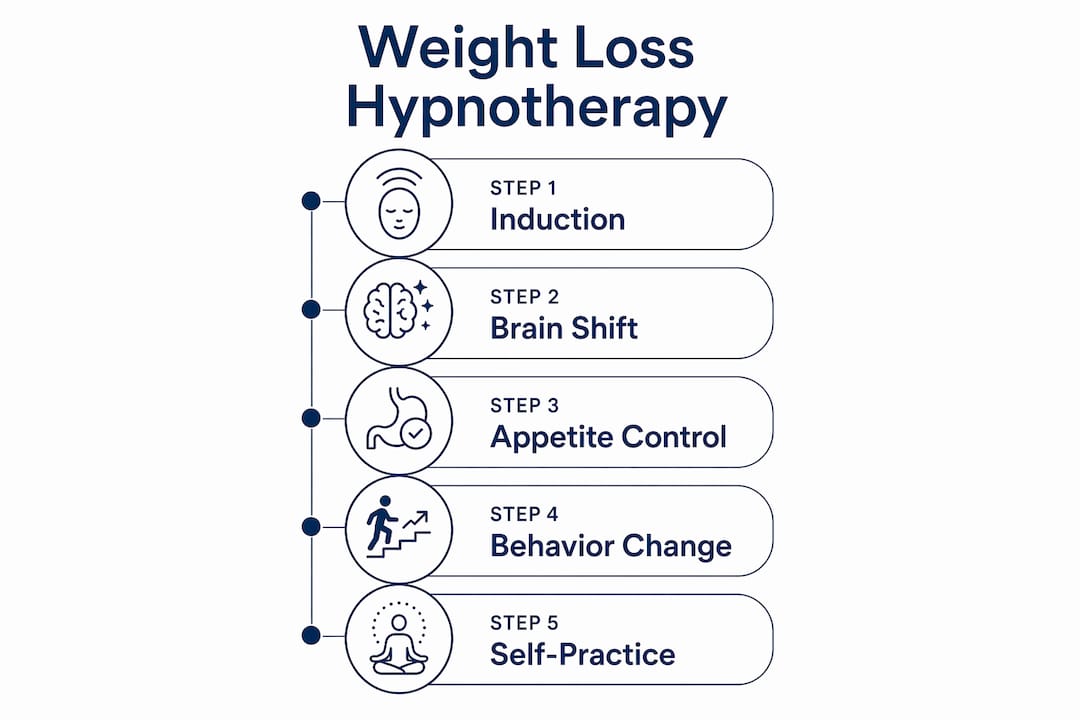
Hypnosis creates a state of focused attention and reduced peripheral awareness. In that state, the brain becomes more receptive to targeted suggestions. That is the core mechanism: not magic, not loss of control, but a narrowed attentional focus that makes rehearsal and suggestion more effective for shifting cue-response patterns.
The mechanistic chain works like this. A trained clinician guides you into an induction state, which quiets background mental chatter and reduces activation in the default mode network. Targeted suggestions are then delivered, such as imagining feeling full after a smaller portion, or noticing the physical discomfort that follows overeating. Repeated self-hypnosis practice between sessions consolidates those suggestions into habit-level responses through neuroplastic change.
On the nervous system side, hypnotic induction shifts activation away from the sympathetic fight-or-flight response toward parasympathetic regulation. This matters for weight because chronic stress elevates cortisol, which drives cravings for calorie-dense foods and disrupts satiety signaling. Reducing that cortisol spike through regular hypnotic practice can interrupt the stress-eat cycle at its physiological root. The 2018 RCT found that habitual self-hypnosis users showed lower C-reactive protein values and greater satiety scores alongside their greater weight loss, suggesting real physiological shifts, not just behavioral ones.

Behaviorally, hypnotherapy targets the cue-response loop. You see food, the brain fires a reward signal, you eat past fullness. Hypnotic suggestions can weaken that automatic response by inserting a pause, changing the reward association, or strengthening the internal signal that says "enough." Trials using ego-strengthening and satiety-focused suggestions tended to produce better long-term outcomes than aversion-based techniques, which rely on disgust or fear and tend to fade.
Pro Tip: Practice a brief self-hypnosis routine of 3 to 5 minutes immediately before meals. Anchor cues taught in-session, such as joining your thumb and index finger, can trigger a rapid relaxation response and heighten satiety awareness before you start eating. Trials that used pre-meal practice showed stronger caloric reduction than those that did not.
What types of hypnotherapy are used for weight management?
Several distinct approaches appear in the clinical literature, and they differ in cost, accessibility, and the evidence behind them.
- Clinical hypnotherapy with a certified therapist: The most studied format. A trained clinician conducts induction, delivers targeted suggestions, and teaches self-hypnosis techniques. Sessions typically include relaxation, guided imagery, satiety rehearsal, and anchor training. This is the format used in the HYPNODIET and 2018 self-hypnosis RCTs.
- Cognitive behavioral hypnotherapy (CBH): Combines CBT techniques, such as thought records and behavioral activation, with hypnotic induction. Meta-analytic data consistently show larger effect sizes for this combined approach compared to hypnosis alone.
- Ericksonian or indirect hypnotherapy: Uses permissive, metaphor-based language rather than direct commands. Commonly used when clients are resistant to direct suggestion. Less studied in weight-specific RCTs but widely practiced clinically.
- Self-hypnosis training: Taught in-session, then practiced independently at home. The 2018 RCT used a rapid-induction anchor technique (thumb-to-index-finger) that participants could trigger in under a minute. Daily practice was the key differentiator between the 9.6 kg and 6.5 kg outcome groups.
- Audio-guided self-hypnosis: Pre-recorded programs used without clinician oversight. Accessible and low-cost, but the 3-week pilot RCT found no significant weight change, partly because adherence was poor. Audio programs may work as a supplement to clinical sessions, not as a standalone treatment for complex cases.
The practical difference between formats comes down to two things: personalization and accountability. A clinician can adjust suggestions based on what is actually driving your eating behavior, whether that is anxiety, boredom, social pressure, or trauma. An audio file cannot.
What to expect in a typical course of treatment
A typical evidence-informed course is not a single session. Habit change operates on a timeline of months, not days, and the trials that showed the clearest results used multiple sessions spread over weeks or months, combined with daily home practice.
Here is what a structured treatment course generally looks like, based on the trial protocols:
- Intake and assessment (Session 1): The clinician gathers history on eating patterns, stress triggers, anxiety, and prior weight-loss attempts. This session establishes the behavioral targets for suggestion work.
- Induction and first suggestions (Session 1 or 2): You are guided into a relaxed, focused state using a progressive relaxation or eye-fixation induction. Initial suggestions focus on satiety awareness and reducing the urgency of food cues.
- Anchor training (Session 2 or 3): The clinician teaches a rapid self-hypnosis technique, typically a physical anchor like pressing thumb to index finger, that you can use independently before meals or during stress.
- Targeted suggestion work (Sessions 3 through 6+): Each session deepens the suggestion content, addressing specific triggers such as stress-eating, nighttime snacking, or emotional eating. Guided imagery is used to rehearse new responses.
- Self-hypnosis homework (between every session): Daily practice of 3 to 5 minutes using the anchor technique. The 2018 RCT found that habitual daily users lost significantly more weight than infrequent users, making this the most important variable in the entire treatment.
- Review and reinforcement (final sessions): Progress is assessed, suggestions are updated, and a maintenance plan is established for independent practice after the formal course ends.
The HYPNODIET trial used multiple sessions over several months. The 2018 self-hypnosis RCT used several clinician sessions plus daily self-hypnosis over about a year. Both produced significant outcomes. The common thread is consistent practice, not session count alone.
How to use hypnotherapy alongside diet, exercise, and medical care
Hypnotherapy is an adjunct. It does not replace a structured eating plan, physical activity, or medical oversight. What it does is strengthen the psychological capacity to follow through on those plans, particularly when stress, anxiety, or impulsive eating are the main obstacles.
What hypnotherapy can reasonably do when integrated well:
- Reduce stress-driven eating by downregulating the fight-or-flight response before meals
- Rehearse satiety cues so you recognize fullness earlier and stop eating before discomfort sets in
- Reinforce behavioral changes introduced through nutritional counseling by embedding them at a subconscious level
- Reduce the reward salience of specific trigger foods through repeated suggestion and imagery
- Support stress management practices that complement dietary change
What it should not be expected to do:
- Produce large weight loss without concurrent caloric and activity changes
- Replace medical evaluation for unexplained weight gain or metabolic conditions
- Substitute for a registered dietitian's guidance when significant dietary restructuring is needed
- Serve as the sole treatment for eating disorders with medical complications
If you have major medical comorbidities, unexplained weight changes, or a diagnosed eating disorder, see a primary care provider or registered dietitian before starting hypnotherapy. Hypnotherapy works best as one layer in a coordinated plan, not as the whole plan.

Is hypnotherapy safe? Side effects and who should avoid it
For most adults, hypnotherapy is low-risk. The most common side effects are mild and transient.
Common, mild side effects:
- Temporary drowsiness or light-headedness after a session
- Mild headache, especially in early sessions
- Emotional surfacing, where suppressed feelings briefly become more accessible
These typically resolve within an hour of a session and tend to decrease as the person becomes more familiar with the hypnotic state.
Red flags and contraindications requiring specialist referral:
- Active psychosis or a history of psychotic episodes: hypnotic induction can intensify dissociation in vulnerable individuals
- Severe dissociative disorder: the focused inward state of hypnosis may destabilize dissociative symptoms
- Unmanaged bipolar disorder: hypnotherapy should only proceed under coordination with a psychiatrist
- Active suicidal ideation: requires immediate referral to a licensed mental health professional before any hypnotherapy begins
A qualified hypnotherapist should conduct a thorough intake assessment and refer out when any of these conditions are present. Scope of practice matters. A Certified Clinical Hypnotherapist (CCHt) is trained to recognize when a client needs a mental health or medical referral, and ethical practice means making that referral rather than proceeding regardless.
One misconception worth addressing directly: hypnosis does not cause loss of control. Clinical guidance from the HYPNODIET research team emphasizes that hypnosis is heightened focus, not surrender. Clients remain aware and can reject any suggestion that feels wrong.
How to choose a qualified hypnotherapist for weight-loss work
Start with credentials, then assess fit. A practitioner's certification and clinical background matter more than their marketing language.
Credential checklist:
- CCHt (Certified Clinical Hypnotherapist): The primary clinical credential in the United States, issued by bodies such as the American Council of Hypnotist Examiners (ACHE) or the National Guild of Hypnotists (NGH)
- Licensed mental health background: A hypnotherapist who also holds a license in counseling, psychology, or social work can address co-occurring anxiety or trauma that drives eating behavior
- Training in CBT or CBH: Given that combined CBT and hypnosis consistently outperforms hypnosis alone, a practitioner trained in both is preferable
- Experience with self-hypnosis training: The evidence strongly favors practitioners who teach clients to practice independently between sessions
- Verified outcomes: Ask whether the practitioner tracks client progress and can speak to typical outcomes for weight-related work
Questions to ask during a consultation:
- What induction and suggestion methods do you use for weight-related eating behaviors?
- How many sessions do you typically recommend, and what does the homework involve?
- Do you teach self-hypnosis, and how do you structure that training?
- How do you track progress across a course of treatment?
- What is your cancellation and refund policy, and how is my data handled?
Red flags:
- Promises of guaranteed large weight loss or specific pound targets
- Pressure to purchase lengthy audio packages before any clinical assessment
- No referral pathway for clients with medical or psychiatric comorbidities
- Vague or evasive answers about credentials or training
For online sessions, verify that the practitioner's credentials are listed publicly and that the platform used for sessions is HIPAA-compliant or equivalent.
Who should try hypnotherapy for weight loss, and what to do next
Hypnotherapy is a reasonable adjunct for adults who struggle with stress-related or impulsive eating and who are willing to commit to regular self-hypnosis practice. The evidence is clearest for people whose main obstacle to weight management is behavioral, specifically cue-driven eating, emotional eating, or anxiety-driven food reward, rather than purely metabolic.
Practical next steps:
- Get medical clearance from your primary care provider if you have significant comorbidities or unexplained weight changes
- Choose a clinician with a CCHt credential and experience with eating-related behavior change (see the checklist above)
- Plan for concurrent dietary and activity support, not hypnotherapy as a standalone program
- Commit to daily self-hypnosis practice between sessions; the 2018 RCT data make clear that habitual practice is the strongest predictor of outcome
If you want a clinician-led option, the How to choose section above gives you the full evaluation framework. For a direct next step with a certified practitioner, the promo section below covers what Hypnotictransformations offers.
Key Takeaways
Hypnotherapy produces its strongest weight-loss results when combined with daily self-hypnosis practice and concurrent dietary change, not as a standalone treatment.
| Point | Details |
|---|---|
| Evidence is real but conditional | RCTs show significant outcomes, but only when hypnotherapy is paired with lifestyle change and consistent daily practice. |
| Disinhibition responds well | The HYPNODIET trial found 67.7% of hypnosis participants normalized impulsive eating versus 11.1% of controls after 8 months. |
| Practice frequency drives outcomes | Habitual daily self-hypnosis users lost 9.6 kg over 12 months; infrequent users averaged 6.5 kg; controls averaged 5.6 kg. |
| Safety is generally good | Side effects are mild and transient for most adults; psychosis, severe dissociation, and unmanaged bipolar disorder require specialist referral first. |
| Hypnotictransformations | Kirk Hoffman (CCHt) offers online clinical hypnotherapy for weight-related eating behavior, including self-hypnosis training, via Zoom. |
What the evidence actually tells us about weight-loss hypnotherapy
Framework: PAS (Problem, Agitation, Solution)
Most people who struggle with weight are not failing because of willpower. They are stuck in a loop where stress activates the fight-or-flight response, cortisol spikes, and the brain reaches for calorie-dense food as a fast reward. That loop runs below conscious awareness. Telling yourself to stop does not reach it.
That is the problem hypnotherapy is actually suited to address. Not weight loss as a number on a scale, but the subconscious pattern that keeps overriding your intentions. The HYPNODIET data show this clearly: the primary outcome was not pounds lost, it was disinhibition, the tendency to eat past fullness in response to external cues. Normalizing that response in 67.7% of participants is a meaningful clinical result, because disinhibition is one of the strongest predictors of long-term weight regain.
What I see clinically is that the people who get the most from this work are not the ones who want a quick fix. They are the ones who recognize that their eating is tied to anxiety, to stress, to a nervous system that has been running hot for years. When you address the fight-or-flight activation first, the behavioral changes become much easier to sustain. The self-hypnosis practice is not a nice extra. It is the mechanism. Daily repetition is how the subconscious learns.
The research on audio-only programs is worth taking seriously as a caution. When only 43.5% of participants used the audio daily, the results were not significant. Accountability and personalization matter. A pre-recorded file cannot adjust to what is actually driving your eating. A trained clinician can.
Work with Hypnotictransformations on the eating patterns that keep resisting change
If stress-driven or impulsive eating is the main thing standing between you and lasting weight change, clinician-led hypnotherapy addresses that at the level where it actually lives: the subconscious response patterns your conscious mind cannot simply override.
Hypnotictransformations offers online clinical hypnotherapy for weight-related behavior via Zoom, led by Kirk Hoffman, CCHt. Sessions incorporate self-hypnosis training, NLP, and CBT-informed suggestion work. That means you leave each session with a practice you can use independently, not just a recording to listen to passively.
A free initial consultation includes an intake assessment of your eating triggers and anxiety patterns, a proposed session plan, and a clear explanation of what the work involves and how outcomes are tracked. To book that consultation or review the full services and session options, visit Hypnotictransformations and schedule directly online.
Useful sources for further reading
- HYPNODIET RCT (PubMed, 2022): The strongest recent RCT on hypnotherapy and eating disinhibition. Reports the 67.7% vs 11.1% responder data and the 8-month follow-up outcomes.
- Self-hypnosis RCT in severe obesity (Wiley, 2018): Documents the 9.6 kg vs 5.6 kg weight-loss difference between habitual and non-practicing groups, plus caloric intake and CRP data.
- Audio self-hypnosis pilot RCT (PMC, 2022): Useful for understanding the limitations of audio-only programs and the role of adherence in outcomes.
- Narrative review: self-help strategies in obesity including hypnosis and mindfulness (PMC, 2021): Covers the broader evidence base, including meta-analytic comparisons of hypnosis alone versus hypnosis combined with CBT.