Hypnotherapy can reduce agoraphobia symptoms. That is the short answer, backed by a 2023 pilot randomized controlled trial by Fuhr et al. showing clinician-rated symptom reduction in a manualized 8–12 session protocol. The evidence is promising but not yet conclusive, and hypnotherapy works best as an adjunct to first-line treatments like CBT, not a replacement. If your symptoms are clinically significant, the most useful next step is a consultation with a Certified Clinical Hypnotherapist who specializes in anxiety disorders, not a YouTube recording.
Here is what this guide covers:
- What the clinical research actually shows, including study limits
- How sessions are structured and what techniques target the nervous system
- Practical resources (recordings, apps, clinician-led teletherapy) and when each is appropriate
- Safety, contraindications, and the truth about "losing control"
- How to find and vet a qualified hypnotherapist in the United States
Agoraphobia affects roughly 1.3% of U.S. adults at any given time and frequently co-occurs with panic disorder. Most people with the condition avoid situations where escape feels difficult, which progressively narrows their world. Hypnotherapy addresses that pattern at the subconscious level, targeting the fight-or-flight response rather than just the surface behavior.
Table of Contents
- What does the research say about hypnotherapy for agoraphobia?
- How does a hypnotherapy session for agoraphobia actually work?
- What practical resources can you use right now?
- Who should consider hypnotherapy, and what are the safety limits?
- How does hypnotherapy fit with CBT and medication?
- How do you find a qualified hypnotherapist in the United States?
- Clinician perspective from Hypnotictransformations
- Key Takeaways
- Hypnosis for agoraphobia works best when used honestly
- Online hypnotherapy for agoraphobia with Hypnotictransformations
- Useful sources and further reading
What does the research say about hypnotherapy for agoraphobia?
The strongest single piece of evidence is the Fuhr et al. 2023 pilot RCT, published in Frontiers in Psychology. Thirty-six patients were randomized to either manualized hypnotherapy or a waitlist control. The treatment group received 8–12 individual sessions over approximately three months. Clinician-rated scores on the Panic and Agoraphobia Scale (PAS) dropped meaningfully in the treatment group, and those reductions held at the three-month follow-up. Dropout was low and patient satisfaction was high.
"The results of this pilot study suggest that manualized hypnotherapy is a feasible and potentially efficacious treatment for agoraphobia, with symptom reductions observed at end of treatment and maintained at three-month follow-up." — Fuhr et al., Frontiers in Psychology, 2023
The WIKI-A trial registered on ClinicalTrials.gov (NCT03684577) used the same basic design: 8–12 individual hypnotherapy sessions, primary outcome measured as percentage change on the PAS clinician rating between baseline and 12 weeks, compared against a waitlist control. That registration documents the protocol in detail, including session counts and measurement endpoints.
A smaller pilot by Calzeroni et al., published in Evidence-Based Psychiatric Care, looked at hypnotic psychotherapy for panic disorder in six patients, some of whom had agoraphobia. Beyond symptom change, that study tracked reduced medication use and lower indirect costs at follow-up, which is a practical signal for anyone weighing the real-world value of adding hypnotherapy to a care plan.
Limitations you should know before drawing conclusions:
- Sample sizes are small. Thirty-six patients in a pilot study cannot support broad clinical guidelines.
- These are pilot trials, not large-scale RCTs comparing hypnotherapy head-to-head against CBT.
- Follow-up periods are short, typically three months.
- Hypnosis protocols vary considerably across studies, making direct comparisons difficult.
- No large trial has yet established superiority over first-line treatments.
The honest synthesis: hypnotherapy shows a consistent direction of effect in the available evidence, but the evidence base is still early-stage. It is not a fringe idea, and it is not a proven cure. For most adults with clinically significant agoraphobia, it belongs in a treatment plan alongside CBT or medication, not instead of them.
How does a hypnotherapy session for agoraphobia actually work?
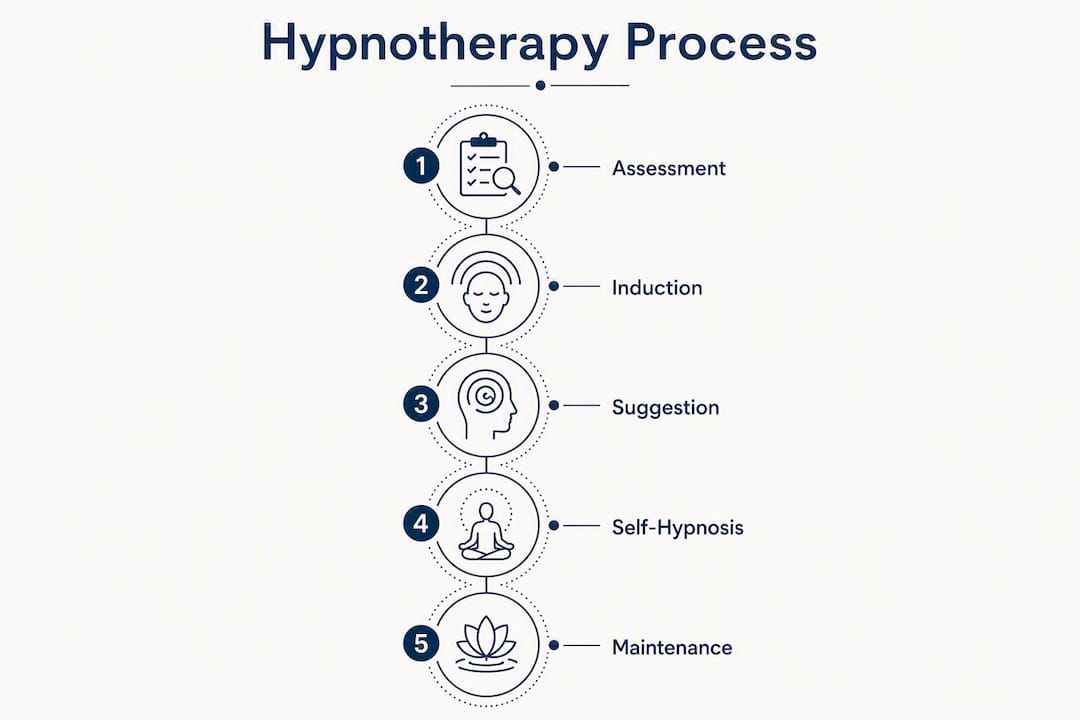
The standard protocol, as documented in the Fuhr et al. pilot study, runs 8–12 individual sessions over roughly three months. Each session typically lasts 50–60 minutes. The clinician guides the client into a focused, relaxed state, then uses structured techniques to address the subconscious patterns driving avoidance and panic.
Core techniques and what they target:
- Safe-place induction: Establishes a mental anchor for calm. The nervous system learns to associate a specific imagery cue with low arousal, which becomes a resource the client can access outside sessions.
- Symptom regression and imagery rescripting: The clinician guides the client back to an earlier memory linked to the fear response, then re-encodes it. The goal is not suppression but re-encoding: decoupling the original trigger from the current panic response.
- In-sensu exposure: Gradual imaginal exposure to feared situations while in a relaxed hypnotic state. This is virtual exposure, not real-world confrontation, and it reduces the nervous system's threat classification of those contexts.
- Posthypnotic suggestion: Suggestions delivered during the session that carry forward into waking behavior, such as maintaining calm in a crowded space or on public transit.
- Anchoring: A physical cue (pressing two fingers together, for example) is paired with a deeply relaxed state during the session. The client can then use that cue to downregulate arousal in real situations between appointments.
- Ideomotor signals: Subtle finger movements used to communicate subconscious responses without breaking the hypnotic state, allowing the clinician to track the client's internal experience in real time.
A rough session timeline:
- Session 1: Assessment, psychoeducation about the hypnotic state, and first induction. The clinician establishes baseline PAS score and sets measurable goals.
- Sessions 2–6: Core therapeutic work. Safe-place induction, symptom regression, imagery rescripting, and early in-sensu exposure. Anchoring is introduced and practiced.
- Sessions 7–12: Consolidation. Deeper exposure work, reinforcement of posthypnotic suggestions, and self-hypnosis practice to maintain gains between sessions and after treatment ends.
Pro Tip: Before your first session, ask your clinician to set a specific PAS score target for the end of treatment. Having a measurable goal changes the dynamic from "I hope this helps" to "we are tracking whether it is working." Practice your anchor cue daily between sessions, not just when you feel anxious.
Self-hypnosis recordings and guided audio can support the maintenance phase after clinician-led work. They are not a substitute for the structured therapeutic process, particularly for the regression and rescripting work that requires a trained clinician to navigate safely.

What practical resources can you use right now?
Clinician-led sessions are the preferred option for anyone with clinically significant agoraphobia. Self-help audio is appropriate for early practice, between-session reinforcement, or mild anxiety management, not as a primary treatment.
Resource types and what to look for:
- Clinician-led teletherapy: The most effective option for diagnosed agoraphobia. Look for a Certified Clinical Hypnotherapist with documented anxiety disorder experience. Hypnotictransformations offers online hypnotherapy for anxiety via Zoom with structured session packages.
- Structured audio programs: Products like the Audible "Overcome Agoraphobia Hypnosis" audiobook are widely available and can be useful for relaxation practice and between-session maintenance. They work best when you already understand the hypnotic process from working with a clinician.
- YouTube guided hypnosis recordings: Free and accessible. Search for calming hypnosis or guided imagery for panic specifically. Quality varies widely. Use them for relaxation and nervous system downregulation, not for regression or trauma processing.
- Self-hypnosis practice: After learning anchoring and induction techniques from a clinician, a self-hypnosis practice can extend the gains from formal sessions.
| Self-help audio / YouTube | Clinician-led hypnotherapy | |
|---|---|---|
| Accessibility | High — free or low cost, widely accessible | Moderate — requires scheduling, typically $100–$250/session |
| Personalization | None — generic scripts | High — tailored to your specific triggers and history |
| Safety controls | None — no clinician present if distress arises | High — clinician monitors and adjusts in real time |
| Likely efficacy for clinical agoraphobia | Low as standalone; useful for maintenance | Moderate to high based on pilot trial evidence |
Evaluating a recording before you use it:
Check that the recording is at least 15–20 minutes long (shorter tracks rarely achieve a meaningful hypnotic state), that the creator has a stated clinical credential, and that it does not make claims about curing panic disorder or replacing medical treatment. Avoid anything that promises results in a single session.
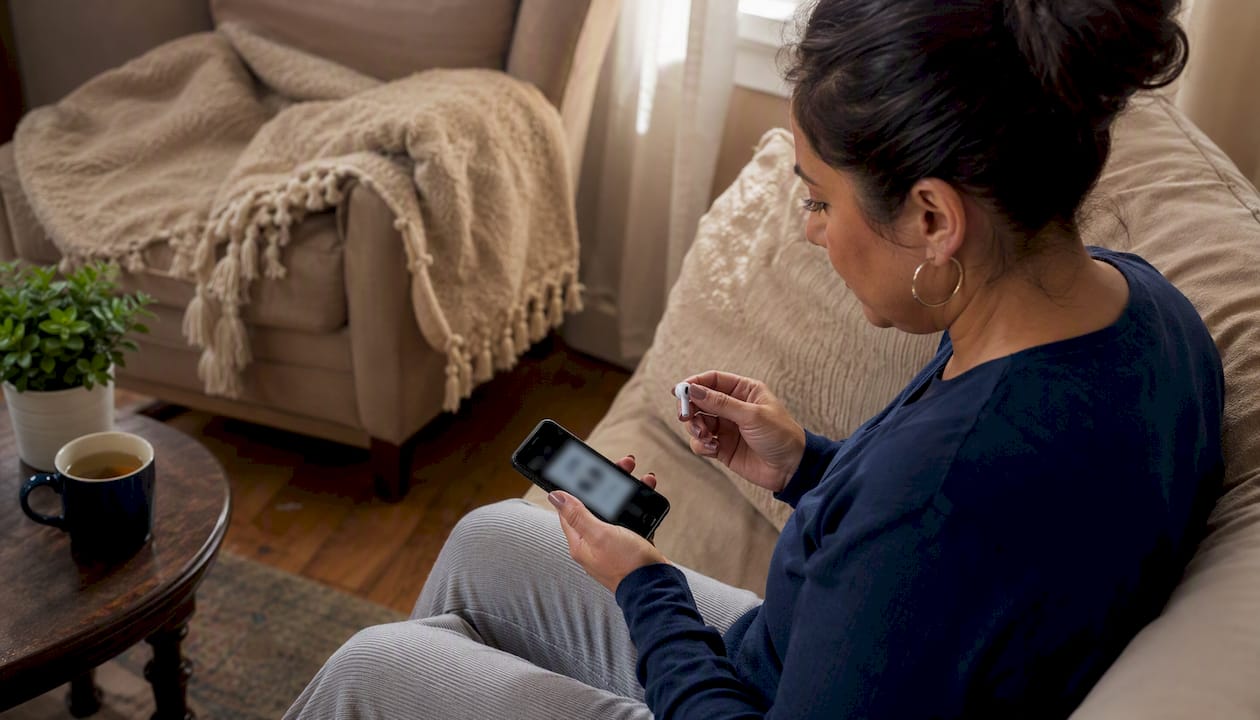
Testing a recording safely at home: Find a quiet space, sit in a comfortable chair rather than lying flat if you tend to fall asleep, and use headphones. Set a 20-minute window. If you feel distress at any point, open your eyes, orient to the room, and take a few slow breaths. You are in control throughout.
Who should consider hypnotherapy, and what are the safety limits?
Hypnotherapy is appropriate for adults with diagnosed agoraphobia or clinically significant avoidance and panic symptoms who want a subconscious-level intervention alongside or following CBT. It is particularly well-suited to people who have not responded fully to CBT alone, who want to reduce reliance on medication over time, or who find imaginal work more accessible than immediate in-vivo exposure.
Contraindications and situations that require caution:
- Active psychosis or a history of psychotic episodes
- Unmanaged dissociative disorders (hypnosis can deepen dissociation in vulnerable individuals)
- Recent traumatic memories without a trauma-specialist clinician present
- Severe or active substance use disorder
- Significant cognitive impairment that limits the ability to engage with imagery
Common misconceptions:
The most persistent myth is that hypnosis involves surrendering control to the clinician. According to the Mayo Clinic, clients remain aware and in control throughout the process. Hypnosis is not sleep, and a clinician cannot make you do or say anything against your will. The hypnotic state is closer to focused concentration than unconsciousness.
Hypnotherapy is also not an acute rescue tool. If you are in the middle of a full-blown panic attack, a guided audio track will not stop it. The intervention works preventatively, by gradually recalibrating the nervous system's baseline arousal and reclassifying previously threatening contexts as safe. That process takes sessions, not minutes. For more on what hypnosis actually is versus what popular culture suggests, the hypnosis vs. mind control explainer on the Hypnotictransformations blog covers the distinction clearly.
Pro Tip: Before your first hypnotherapy session, tell your prescribing clinician or primary care doctor that you are starting hypnotherapy. This is especially relevant if you are on benzodiazepines or beta-blockers, since those medications affect baseline arousal and may interact with how quickly you respond to relaxation-based techniques.
How does hypnotherapy fit with CBT and medication?
Hypnotherapy is an adjunct, not a replacement. The clinical consensus, reflected in the Fuhr et al. trial design and the broader anxiety disorder literature, is that hypnotherapy works best when integrated into a broader care plan rather than used as a standalone intervention.
How each modality contributes:
- CBT: Cognitive restructuring and graduated in-vivo exposure. This is the most evidence-supported first-line treatment for agoraphobia and panic disorder. It targets conscious thought patterns and behavioral avoidance directly.
- Medication (SSRIs, SNRIs, or short-term benzodiazepines): Symptom stabilization, particularly for severe panic. Reduces the intensity of the fight-or-flight response enough for other therapies to take hold.
- Hypnotherapy: Nervous system recalibration at the subconscious level. Imagery rescripting and posthypnotic suggestion address the encoded threat associations that CBT's conscious techniques sometimes cannot reach as efficiently.
A common sequencing approach is to use hypnotherapy first for stabilization, building a reliable safe-place anchor and reducing baseline arousal, then move into in-vivo exposure work with a CBT therapist. Some clinicians integrate both in the same treatment, a model sometimes called cognitive-behavioral hypnotherapy (CBH). The evidence on hypnotherapy for anxiety and depression suggests that combined approaches tend to outperform either modality alone, though large-scale comparative trials for agoraphobia specifically have not yet been completed.
One honest gap: no large RCT has yet compared combined CBT plus hypnotherapy against CBT alone for agoraphobia. The pilot data is encouraging, but the field has not yet produced the definitive head-to-head trial.
How do you find a qualified hypnotherapist in the United States?
Start with credential verification. The baseline credential to look for is a Certified Clinical Hypnotherapist (CCHt), issued by organizations such as the American Council of Hypnotist Examiners (ACHE) or the National Guild of Hypnotists (NGH). For agoraphobia specifically, also confirm that the clinician has a background in anxiety disorders, not just general wellness hypnosis.
Hard criteria checklist:
- CCHt credential from a recognized certifying body
- Documented experience treating panic disorder or agoraphobia specifically
- Telehealth capability (Zoom-based sessions expand your options significantly)
- Clear session plan with measurable outcomes (ask about PAS or equivalent tracking)
- Written cancellation and confidentiality policy
- Willingness to coordinate with your prescriber or CBT therapist
Questions to ask in a free consultation:
- How many clients with agoraphobia or panic disorder have you treated?
- What does your session plan look like, and how do you measure progress?
- Do you use imagery rescripting? How do you handle it if a traumatic memory surfaces?
- What is your protocol if I become distressed during a session?
- Do you offer a multi-session package, and what is your cancellation policy?
Cost expectations: Clinician-led clinical hypnotherapy in the United States typically runs $100–$250 per session for individual appointments. Multi-session packages often reduce the per-session cost. Most health insurance plans do not cover hypnotherapy as a standalone service, though some FSA and HSA accounts may apply. Confirm with your plan before booking.
Pro Tip: Use the free consultation to assess whether the clinician explains the process clearly and sets measurable goals. A clinician who cannot tell you how they will track your progress after four sessions is not running a clinical protocol. That is the single most useful filter.
Clinician perspective from Hypnotictransformations
Kirk Hoffman, Certified Clinical Hypnotherapist at Hypnotictransformations, works with adults experiencing anxiety, panic, and phobia-based avoidance through online hypnotherapy sessions delivered via Zoom.
The pattern that shows up most consistently in clinical practice is a nervous system that has been running at elevated baseline arousal for so long that the client no longer recognizes it as abnormal. They have adapted to hypervigilance. The presenting complaint is often a specific trigger, a grocery store, a highway, a crowded venue, but the underlying issue is a fight-or-flight response that never fully resets between episodes.
What the clinical work typically looks like:
- Session 1 focuses on psychoeducation, establishing the safe-place anchor, and taking a baseline measure of symptom severity
- Sessions 2–5 use imagery rescripting to address the encoded threat associations driving avoidance
- Sessions 6 onward consolidate gains, reinforce posthypnotic suggestions, and build a self-hypnosis practice the client can maintain independently
Hypnotictransformations is not a crisis service. If you are experiencing a psychiatric emergency, contact the 988 Suicide and Crisis Lifeline or go to your nearest emergency room. For clients on psychiatric medication, coordination with your prescriber before starting hypnotherapy is standard practice, not optional. Results vary based on symptom severity, treatment history, and engagement with between-session practice.
Key Takeaways
Hypnotherapy for agoraphobia shows clinically meaningful symptom reduction in pilot trial evidence, works best as an adjunct to CBT or medication, and requires a credentialed clinician for the regression and rescripting work that drives lasting change.
| Point | Details |
|---|---|
| Pilot evidence supports it | Fuhr et al. 2023 found clinician-rated symptom reduction in 36 patients over 8–12 sessions, maintained at three-month follow-up. |
| Adjunct, not replacement | Hypnotherapy works best alongside CBT or medication, not instead of them. |
| Self-help audio has limits | Recordings and YouTube tracks suit maintenance and relaxation practice; they cannot replace clinician-led regression work. |
| Credential matters | Look for a Certified Clinical Hypnotherapist with documented anxiety disorder experience and a measurable session plan. |
| Hypnotictransformations | Kirk Hoffman CCHt offers structured online hypnotherapy for agoraphobia and panic via Zoom, with a free consultation to assess fit. |
Hypnosis for agoraphobia works best when used honestly
The PAS framework (Problem, Agitation, Solution) drives the structure of this article because it mirrors how most people arrive at a decision about hypnotherapy. They have a problem that has not fully resolved with what they have already tried. They feel the weight of how much avoidance has cost them. And they want a solution that addresses the source, not just the surface.
What I see missing in most discussions of hypnotherapy for agoraphobia is an honest accounting of what the intervention can and cannot do. The pilot data is real. The nervous system mechanisms are real. But hypnotherapy is not a shortcut, and it is not a rescue tool for acute panic. It is a skill-building intervention that recalibrates baseline arousal over multiple sessions. The clients who get the most from it are the ones who show up consistently, practice their anchors between sessions, and treat it as part of a broader care plan rather than a last resort.
The ethical boundary is clear: when symptoms are severe, when trauma is present, or when a client is in crisis, the right move is referral, not another session. That is not a limitation of the method. That is what responsible clinical practice looks like.
Online hypnotherapy for agoraphobia with Hypnotictransformations
Most adults with agoraphobia have already tried something. Maybe CBT helped with the cognitive piece but the physical dread in certain situations never fully shifted. Maybe medication reduced the intensity but did not touch the avoidance. Hypnotherapy addresses what those approaches sometimes leave behind: the subconscious encoding that keeps the nervous system treating a parking lot like a threat.
Hypnotictransformations offers structured online hypnotherapy for anxiety via Zoom, led by Kirk Hoffman CCHt. Sessions follow a clinical protocol with measurable goals, not a generic relaxation script. A free consultation is available to assess fit before you commit to a package. Hypnotictransformations is not an emergency service. If you are currently in psychiatric care or on medication, coordinate with your prescriber before starting. To book a consultation or review session options, visit the appointments page.
Useful sources and further reading
- Fuhr et al. 2023, Frontiers in Psychology: The primary pilot RCT. Read this for the full protocol, session structure, PAS outcome data, and the three-month follow-up results.
- Full text via PubMed Central (PMC): The PMC mirror of the Fuhr et al. study. Useful for accessing the methods section and endpoint definitions in detail.
- WIKI-A trial, ClinicalTrials.gov (NCT03684577): The registered trial entry. Shows the intervention design, session counts, primary outcome measure, and eligibility criteria.
- Calzeroni et al., Evidence-Based Psychiatric Care: Small pilot on hypnotic psychotherapy for panic disorder. Relevant for the socioeconomic angle, including reduced medication use and indirect costs at follow-up.
- National Institute of Mental Health (NIMH): The source for the 1.3% U.S. adult prevalence figure for agoraphobia and for general clinical context on panic and anxiety disorders.
- Mayo Clinic: Hypnosis overview: Authoritative plain-language explanation of what hypnosis is, how it works, and the evidence on common misconceptions including loss of control.
This article is general information, not medical or psychiatric advice. Confirm current treatment guidelines and your specific situation with a licensed clinician or your prescribing physician.